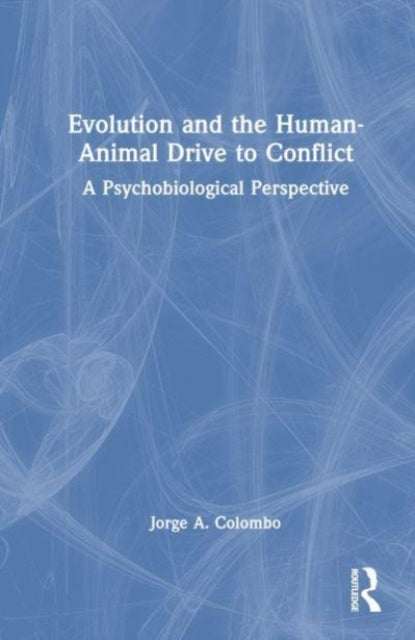
Jorge A. Colombo
Evolution and the Human-Animal Drive to Conflict: A Psychobiological Perspective
Evolution and the Human-Animal Drive to Conflict: A Psychobiological Perspective
💎 Earn 811 Points (£8.11) on this item.
We can order this item for you. Delivery usually takes about 4 to 6 weeks.
This item is not held in our immediate stock. We will order it for you after checkout.
Estimated delivery: About 4 to 6 weeks
YOU SAVE £9.63
- Condition: Brand new
- UK Delivery times: Usually arrives within 2 - 3 working days
- UK Shipping: Fee starts at £3.89. Subject to product weight & dimension
Bulk ordering. Want 15 or more copies? Get a personalised quote and bigger discounts. Learn more about bulk orders.
Couldn't load pickup availability
- More about Evolution and the Human-Animal Drive to Conflict: A Psychobiological Perspective
Evolution and the Human-Animal Drive to Conflict explores how universal animal drives, such as dominance/prevalence, survival, kinship, and profit, provide the basis for the evolutionary trap that promotes unstable, conflictive, dominant-prone individual and group human behaviors. It argues that we should enhance our resources to promote solidarity, accept cultural differences, deter expansionist and uncontrolled profit drives, and achieve collective access to knowledge and progress in living conditions. This entails promoting the redistribution of resources and creative labor access and avoiding policies that generate a fragmented world with collective and individual development disparities that invite and encourage dominance behaviors.
Format: Hardback
Length: 232 pages
Publication date: 31 July 2023
Publisher: Taylor & Francis Ltd
Evolution and the Human-Animal Drive to Conflict delves into the profound interplay between fundamental animal drives, including dominance, survival, kinship, and profit (greed, advantage, whether material or social), and the evolutionary trap that perpetuates unstable, conflict-prone behaviors in humans. This book explores the behavioral tension arising from these innate features, arguing that while they predispose behaviors influenced by social inequalities, the strategies employed to mitigate them often resort to emotional and intellectual approaches that foster fanaticism and perpetuate the very behaviors they aim to alleviate. In addressing these concerns, the book advocates for enhancing our resources to promote solidarity, embrace cultural differences, deter expansionist and uncontrolled profit drives, and achieve collective access to knowledge and progress in living conditions. This entails promoting resource redistribution, facilitating access to creative labor, and avoiding policies that create fragmented worlds with collective and individual development disparities that foster dominance behaviors. This resource redistribution asserts the need to reorient global human priorities towards increased access to better living conditions, cognitive enhancement, a more harmonious interaction with the ecosystem, and non-aggressive cultural differences. These behavioral changes involve a partial derangement of our ancestral animal drives, which are often disguised under different cultural profiles, until the species succeeds in replacing the dominance of basic animal drives with prosocial, collective behaviors.
Evolution and the Human-Animal Drive to Conflict delves into the profound interplay between fundamental animal drives, including dominance, survival, kinship, and profit (greed, advantage, whether material or social), and the evolutionary trap that perpetuates unstable, conflict-prone behaviors in humans. This book explores the behavioral tension arising from these innate features, arguing that while they predispose behaviors influenced by social inequalities, the strategies employed to mitigate them often resort to emotional and intellectual approaches that foster fanaticism and perpetuate the very behaviors they aim to alleviate. In addressing these concerns, the book advocates for enhancing our resources to promote solidarity, embrace cultural differences, deter expansionist and uncontrolled profit drives, and achieve collective access to knowledge and progress in living conditions. This entails promoting resource redistribution, facilitating access to creative labor, and avoiding policies that create fragmented worlds with collective and individual development disparities that foster dominance behaviors. This resource redistribution asserts the need to reorient global human priorities towards increased access to better living conditions, cognitive enhancement, a more harmonious interaction with the ecosystem, and non-aggressive cultural differences. These behavioral changes involve a partial derangement of our ancestral animal drives, which are often disguised under different cultural profiles, until the species succeeds in replacing the dominance of basic animal drives with prosocial, collective behaviors.
Dimension: 234 x 156 (mm)
ISBN-13: 9781032481616
UK and International shipping information
UK and International shipping information
We deliver throughout the United Kingdom and to 128 countries and territories worldwide, including the United States, Australia, Canada, Germany, Spain and France.