Peter Enns
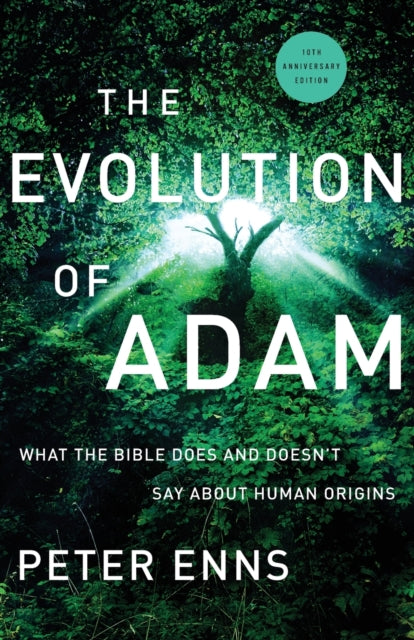
Evolution of Adam: What the Bible Does and Doesn't Say about Human Origins
Evolution of Adam: What the Bible Does and Doesn't Say about Human Origins
💎 Earn 56 Points (£0.56) on this item.
YOU SAVE £4.67
- Condition: Brand new
- UK Delivery times: Usually arrives within 2 - 3 working days
- UK Shipping: Fee starts at £3.89. Subject to product weight & dimension
Bulk ordering. Want 15 or more copies? Get a personalised quote and bigger discounts. Learn more about bulk orders.
Couldn't load pickup availability
- More about Evolution of Adam: What the Bible Does and Doesn't Say about Human Origins
Traditional Christian teaching presents Jesus as reversing the effects of the fall of Adam, but an evolutionary view of human origins doesn't allow for a literal Adam. Peter Enns offers a way forward by explaining how this tension is caused by false expectations about the biblical texts.
\n Format: Paperback / softback
\n Length: 272 pages
\n Publication date: 19 October 2021
\n Publisher: Baker Publishing Group
\n
Can Christianity and evolution coexist?
Traditional Christian teaching presents Jesus as reversing the effects of the fall of Adam. But an evolutionary view of human origins doesn't allow for a literal Adam, making evolution seemingly incompatible with what Genesis and the apostle Paul say about him. For Christians who both accept evolution and want to take the Bible seriously, this can present a faith-shaking tension.
Popular Old Testament scholar Peter Enns offers a way forward by explaining how this tension is caused not by the discoveries of science but by false expectations about the biblical texts. In this 10th anniversary edition, Enns updates readers on developments in the historical Adam debate, helping them reconcile Genesis and Paul with current views on evolution and human origins. This edition includes an afterword that explains Enns's own theological evolution since the first edition released.
The historical Adam debate has been a topic of discussion among Christians for many years. While some believe that Adam was a literal, historical figure created by God, others argue that he was a metaphor or a symbolic representation of human origins. The debate has been particularly intense in recent years, as advances in science and genetics have challenged traditional views of human evolution.
One of the most prominent figures in the historical Adam debate is Peter Enns, a professor of Old Testament at Pittsburgh Theological Seminary. Enns has written several books on the topic, including "The Evolution of Adam: A Biblical and Scientific Perspective" and "The Sin of Adam: How Redemption Makes Sense of the Human Story." In these books, Enns argues that the tension between evolution and the Bible is not caused by the discoveries of science but by false expectations about the biblical texts.
Enns explains that the Bible is not a scientific textbook but a collection of stories and teachings that were written by different authors over thousands of years. These authors had different perspectives and worldviews, and their writings reflect their own cultural and historical contexts. As a result, the Bible does not present a unified, coherent account of human origins.
Enns argues that the traditional view of Adam as a literal, historical figure created by God is not supported by the evidence of science. He points out that the fossil record does not provide any evidence of a single, universal ancestor that lived millions of years ago. Instead, the fossil record shows that humans evolved over a long period of time, with different populations developing their own unique characteristics.
Enns also argues that the concept of a "fall" from a perfect state of innocence is not supported by the Bible. Instead, the Bible teaches that humans are born with a sin nature, which is a result of the fall of Adam. However, Enns argues that this sin nature does not mean that humans are inherently evil or destined to fail. Instead, it means that humans are capable of making mistakes and that they need to rely on God's grace and forgiveness to overcome their sin.
Enns's approach to the historical Adam debate has been controversial among some Christians, who argue that he is compromising the authority
The historical Adam debate has been a topic of discussion among Christians for many years. While some believe that Adam was a literal, historical figure created by God, others argue that he was a metaphor or a symbolic representation of human origins. The debate has been particularly intense in recent years, as advances in science and genetics have challenged traditional views of human evolution.
One of the most prominent figures in the historical Adam debate is Peter Enns, a professor of Old Testament at Pittsburgh Theological Seminary. Enns has written several books on the topic, including "The Evolution of Adam: A Biblical and Scientific Perspective" and "The Sin of Adam: How Redemption Makes Sense of the Human Story." In these books, Enns argues that the tension between evolution and the Bible is not caused by the discoveries of science but by false expectations about the biblical texts.
Enns explains that the Bible is not a scientific textbook but a collection of stories and teachings that were written by different authors over thousands of years. These authors had different perspectives and worldviews, and their writings reflect their own cultural and historical contexts. As a result, the Bible does not present a unified, coherent account of human origins.
Enns argues that the traditional view of Adam as a literal, historical figure created by God is not supported by the evidence of science. He points out that the fossil record does not provide any evidence of a single, universal ancestor that lived millions of years ago. Instead, the fossil record shows that humans evolved over a long period of time, with different populations developing their own unique characteristics.
Enns also argues that the concept of a "fall" from a perfect state of innocence is not supported by the Bible. Instead, the Bible teaches that humans are born with a sin nature, which is a result of the fall of Adam. However, Enns argues that this sin nature does not mean that humans are inherently evil or destined to fail. Instead, it means that humans are capable of making mistakes and that they need to rely on God's grace and forgiveness to overcome their sin.
Enns's approach to the historical Adam debate has been controversial among some Christians, who argue that he is compromising the authority
The historical Adam debate has been a topic of discussion among Christians for many years. While some believe that Adam was a literal, historical figure created by God, others argue that he was a metaphor or a symbolic representation of human origins. The debate has been particularly intense in recent years, as advances in science and genetics have challenged traditional views of human evolution.
One of the most prominent figures in the historical Adam debate is Peter Enns, a professor of Old Testament at Pittsburgh Theological Seminary. Enns has written several books on the topic, including "The Evolution of Adam: A Biblical and Scientific Perspective" and "The Sin of Adam: How Redemption Makes Sense of the Human Story." In these books, Enns argues that the tension between evolution and the Bible is not caused by the discoveries of science but by false expectations about the biblical texts.
Enns explains that the Bible is not a scientific textbook but a collection of stories and teachings that were written by different authors over thousands of years. These authors had different perspectives and worldviews, and their writings reflect their own cultural and historical contexts. As a result, the Bible does not present a unified, coherent account of human origins.
Enns argues that the traditional view of Adam as a literal, historical figure created by God is not supported by the evidence of science. He points out that the fossil record does not provide any evidence of a single, universal ancestor that lived millions of years ago. Instead, the fossil record shows that humans evolved over a long period of time, with different populations developing their own unique characteristics.
Enns also argues that the concept of a "fall" from a perfect state of innocence is not supported by the Bible. Instead, the Bible teaches that humans are born with a sin nature, which is a result of the fall of Adam. However, Enns argues that this sin nature does not mean that humans are inherently evil or destined to fail. Instead, it means that humans are capable of making mistakes and that they need to rely on God's grace and forgiveness to overcome their sin.
Enns's approach to the historical Adam debate has been controversial among some Christians, who argue that he is compromising the
The historical Adam debate has been a topic of discussion among Christians for many years. While some believe that Adam was a literal, historical figure created by God, others argue that he was a metaphor or a symbolic representation of human origins. The debate has been particularly intense in recent years, as advances in science and genetics have challenged traditional views of human evolution.
One of the most prominent figures in the historical Adam debate is Peter Enns, a professor of Old Testament at Pittsburgh Theological Seminary. Enns has written several books on the topic, including "The Evolution of Adam: A Biblical and Scientific Perspective" and "The Sin of Adam: How Redemption Makes Sense of the Human Story." In these books, Enns argues that the tension between evolution and the Bible is not caused by the discoveries of science but by false expectations about the biblical texts.
Enns explains that the Bible is not a scientific textbook but a collection of stories and teachings that were written by different authors over thousands of years. These authors had different perspectives and worldviews, and their writings reflect their own cultural and historical contexts. As a result, the Bible does not present a unified, coherent account of human origins.
Enns argues that the traditional view of Adam as a literal, historical figure created by God is not supported by the evidence of science. He points out that the fossil record does not provide any evidence of a single, universal ancestor that lived millions of years ago. Instead, the fossil record shows that humans evolved over a long period of time, with different populations developing their own unique characteristics.
Enns also argues that the concept of a "fall" from a perfect state of innocence is not supported by the Bible. Instead, the Bible teaches that humans are born with a sin nature, which is a result of the fall of Adam. However, Enns argues that this sin nature does not mean that humans are inherently evil or destined to fail. Instead, it means that humans are capable of making mistakes and that they need to rely on God's grace and forgiveness to overcome their sin.
Enns's approach to the historical Adam debate has been controversial among some Christians, who argue that he is compromising the
The historical Adam debate has been a topic of discussion among Christians for many years. While some believe that Adam was a literal, historical figure created by God, others argue that he was a metaphor or a symbolic representation of human origins. The debate has been particularly intense in recent years, as advances in science and genetics have challenged traditional views of human evolution.
One of the most prominent figures in the historical Adam debate is Peter Enns, a professor of Old Testament at Pittsburgh Theological Seminary. Enns has written several books on the topic, including "The Evolution of Adam: A Biblical and Scientific Perspective" and "The Sin of Adam: How Redemption Makes Sense of the Human Story." In these books, Enns argues that the tension between evolution and the Bible is not caused by the discoveries of science but by false expectations about the biblical texts.
Enns explains that the Bible is not a scientific textbook but a collection of stories and teachings that were written by different authors over thousands of years. These authors had different perspectives and worldviews, and their writings reflect their own cultural and historical contexts. As a result, the Bible does not present a unified, coherent account of human origins.
Enns argues that the traditional view of Adam as a literal, historical figure created by God is not supported by the evidence of science. He points out that the fossil record does not provide any evidence of a single, universal ancestor that lived millions of years ago. Instead, the fossil record shows that humans evolved over a long period of time, with different populations developing their own unique characteristics.
Enns also argues that the concept of a "fall" from a perfect state of innocence is not supported by the Bible. Instead, the Bible teaches that humans are born with a sin nature, which is a result of the fall of Adam. However, Enns argues that this sin nature does not mean that humans are inherently evil or destined to fail. Instead, it means that humans are capable of making mistakes and that they need to rely on God's grace and forgiveness to overcome their sin.
Enns's approach to the historical Adam debate has been controversial among some Christians, who argue that he is compromising the
The historical Adam debate has been a topic of discussion among Christians for many years. While some believe that Adam was a literal, historical figure created by God, others argue that he was a metaphor or a symbolic representation of human origins. The debate has been particularly intense in recent years, as advances in science and genetics have challenged traditional views of human evolution.
One of the most prominent figures in the historical Adam debate is Peter Enns, a professor of Old Testament at Pittsburgh Theological Seminary. Enns has written several books on the topic, including "The Evolution of Adam: A Biblical and Scientific Perspective" and "The Sin of Adam: How Redemption Makes Sense of the Human Story." In these books, Enns argues that the tension between evolution and the Bible is not caused by the discoveries of science but by false expectations about the biblical texts.
Enns explains that the Bible is not a scientific textbook but a collection of stories and teachings that were written by different authors over thousands of years. These authors had different perspectives and worldviews, and their writings reflect their own cultural and historical contexts. As a result, the Bible does not present a unified, coherent account of human origins.
Enns argues that the traditional view of Adam as a literal, historical figure created by God is not supported by the evidence of science. He points out that the fossil record does not provide any evidence of a single, universal ancestor that lived millions of years ago. Instead, the fossil record shows that humans evolved over a long period of time, with different populations developing their own unique characteristics.
Enns also argues that the concept of a "fall" from a perfect state of innocence is not supported by the Bible. Instead, the Bible teaches that humans are born with a sin nature, which is a result of the fall of Adam. However, Enns argues that this sin nature does not mean that humans are inherently evil or destined to fail. Instead, it means that humans are capable of making mistakes and that they need to rely on God's grace and forgiveness to overcome their sin.
Enns's approach to the historical Adam debate has been controversial among some Christians, who argue that he is compromising the
The historical Adam debate has been a topic of discussion among Christians for many years. While some believe that Adam was a literal, historical figure created by God, others argue that he was a metaphor or a symbolic representation of human origins. The debate has been particularly intense in recent years, as advances in science and genetics have challenged traditional views of human evolution.
One of the most prominent figures in the historical Adam debate is Peter Enns, a professor of Old Testament at Pittsburgh Theological Seminary. Enns has written several books on the topic, including "The Evolution of Adam: A Biblical and Scientific Perspective" and "The Sin of Adam: How Redemption Makes Sense of the Human Story." In these books, Enns argues that the tension between evolution and the Bible is not caused by the discoveries of science but by false expectations about the biblical texts.
Enns explains that the Bible is not a scientific textbook but a collection of stories and teachings that were written by different authors over thousands of years. These authors had different perspectives and worldviews, and their writings reflect their own cultural and historical contexts. As a result, the Bible does not present a unified, coherent account of human origins.
Enns argues that the traditional view of Adam as a literal, historical figure created by God is not supported by the evidence of science. He points out that the fossil record does not provide any evidence of a single, universal ancestor that lived millions of years ago. Instead, the fossil record shows that humans evolved over a long period of time, with different populations developing their own unique characteristics.
Enns also argues that the concept of a "fall" from a perfect state of innocence is not supported by the Bible. Instead, the Bible teaches that humans are born with a sin nature, which is a result of the fall of Adam. However, Enns argues that this sin nature does not mean that humans are inherently evil or destined to fail. Instead, it means that humans are capable of making mistakes and that they need to rely on God's grace and forgiveness to overcome their sin.
Enns's approach to the historical Adam debate has been controversial among some Christians, who argue that he is compromising the
The historical Adam debate has been a topic of discussion among Christians for many years. While some believe that Adam was a literal, historical figure created by God, others argue that he was a metaphor or a symbolic representation of human origins. The debate has been particularly intense in recent years, as advances in science and genetics have challenged traditional views of human evolution.
One of the most prominent figures in the historical Adam debate is Peter Enns, a professor of Old Testament at Pittsburgh Theological Seminary. Enns has written several books on the topic, including "The Evolution of Adam: A Biblical and Scientific Perspective" and "The Sin of Adam: How Redemption Makes Sense of the Human Story." In these books, Enns argues that the tension between evolution and the Bible is not caused by the discoveries of science but by false expectations about the biblical texts.
Enns explains that the Bible is not a scientific textbook but a collection of stories and teachings that were written by different authors over thousands of years. These authors had different perspectives and worldviews, and their writings reflect their own cultural and historical contexts. As a result, the Bible does not present a unified, coherent account of human origins.
Enns argues that the traditional view of Adam as a literal, historical figure created by God is not supported by the evidence of science. He points out that the fossil record does not provide any evidence of a single, universal ancestor that lived millions of years ago. Instead, the fossil record shows that humans evolved over a long period of time, with different populations developing their own unique characteristics.
Enns also argues that the concept of a "fall" from a perfect state of innocence is not supported by the Bible. Instead, the Bible teaches that humans are born with a sin nature, which is a result of the fall of Adam. However, Enns argues that this sin nature does not mean that humans are inherently evil or destined to fail. Instead, it means that humans are capable of making mistakes and that they need to rely on God's grace and forgiveness to overcome their sin.
Enns's approach to the historical Adam debate has been controversial among some Christians, who argue that he is compromising the
\n Weight: 329g\n
Dimension: 216 x 140 (mm)\n
ISBN-13: 9781587435201\n
Edition number: 10th Anniversary Edition\n
UK and International shipping information
UK and International shipping information
We deliver throughout the United Kingdom and to 128 countries and territories worldwide, including the United States, Australia, Canada, Germany, Spain and France.