Shulph Ink
Evolution of Neurosensory Cells and Systems: Gene regulation and cellular networks and processes
Evolution of Neurosensory Cells and Systems: Gene regulation and cellular networks and processes
💎 Earn 811 Points (£8.11) on this item.
We can order this item for you. Delivery usually takes about 4 to 6 weeks.
This item is not held in our immediate stock. We will order it for you after checkout.
Estimated delivery: About 4 to 6 weeks
YOU SAVE £9.63
- Condition: Brand new
- UK Delivery times: Usually arrives within 2 - 3 working days
- UK Shipping: Fee starts at £2.39. Subject to product weight & dimension
Bulk ordering. Want 15 or more copies? Get a personalised quote and bigger discounts. Learn more about bulk orders.
Couldn't load pickup availability
- More about Evolution of Neurosensory Cells and Systems: Gene regulation and cellular networks and processes
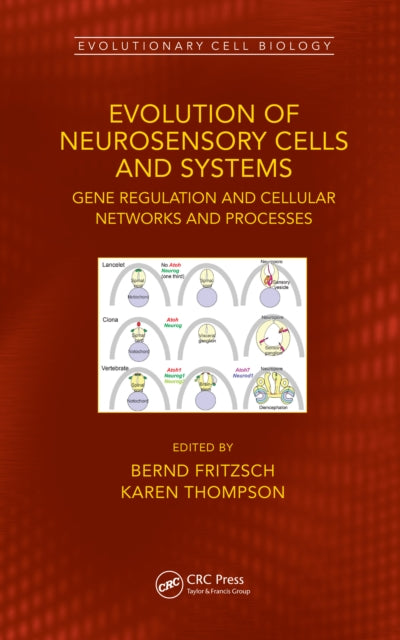
This book provides an overview of primary sensory maps of vertebrates, including their unique features and molecular cues. It covers eight sensory senses and their evolution and gene regulatory networks.
Format: Hardback
Length: 298 pages
Publication date: 09 May 2022
Publisher: Taylor & Francis Ltd
This comprehensive book delves into the intricate world of primary sensory maps in vertebrates, showcasing their continuous and discrete properties. It explores the unique characteristics of the eight primary sensory maps found in these animals and highlights the distinct molecular cues, cell cycle exit, and activity combinations employed during development, regeneration, and plasticity. Serving as an introduction and overview, the book offers a concise yet comprehensive exploration of all eight sensory senses, providing insights into their evolution and the molecular mechanisms underlying sensory processing. Additionally, independent contributions are included for olfactory, vision, trigeminal, taste, vestibular, auditory, lateral line, and electroreception, each offering valuable perspectives on these sensory systems.
Vertebrates possess a remarkable array of sensory systems that enable them to perceive and interact with their environment. Among these sensory systems, primary sensory maps play a crucial role in organizing and processing sensory information. These maps are specialized neural networks that are responsible for the perception of specific sensory modalities, such as vision, hearing, touch, taste, and smell.
Primary sensory maps are characterized by their continuous and discrete properties. Continuous properties refer to the spatial arrangement of sensory cells or receptors within the sensory map. Discrete properties, on the other hand, refer to the distinct patterns of sensory information that are generated by the sensory cells or receptors.
The eight primary sensory maps of vertebrates are olfactory, visual, trigeminal, taste, vestibular, auditory, lateral line, and electroreception. Each of these maps has unique features and utilizes distinct molecular cues, cell cycle exit, and activity combinations during development, regeneration, and plasticity.
Olfactory sensory map: The olfactory sensory map is located in the nasal cavity and is responsible for the perception of smell. It is characterized by a high density of olfactory receptor neurons (ORNs) that are specialized for detecting various odorant molecules. The olfactory sensory map is continuous and has a spatial arrangement that resembles a map of the world.
Visual sensory map: The visual sensory map is located in the retina of the eye and is responsible for the perception of vision. It is characterized by a high density of photoreceptor cells that are specialized for detecting light. The visual sensory map is continuous and has a spatial arrangement that resembles a map of the world.
Trigeminal sensory map: The trigeminal sensory map is located in the brainstem and is responsible for the perception of pain, touch, and temperature. It is characterized by a high density of sensory neurons that are specialized for detecting different types of stimuli. The trigeminal sensory map is continuous and has a spatial arrangement that resembles a map of the body.
Taste sensory map: The taste sensory map is located in the oral cavity and is responsible for the perception of taste. It is characterized by a high density of taste receptor cells that are specialized for detecting various taste substances. The taste sensory map is continuous and has a spatial arrangement that resembles a map of the tongue.
Vestibular sensory map: The vestibular sensory map is located in the inner ear and is responsible for the perception of balance and movement. It is characterized by a high density of vestibular receptor cells that are specialized for detecting rotational and translational movements. The vestibular sensory map is continuous and has a spatial arrangement that resembles a map of the inner ear.
Auditory sensory map: The auditory sensory map is located in the cochlea of the inner ear and is responsible for the perception of sound. It is characterized by a high density of auditory receptor cells that are specialized for detecting sound waves. The auditory sensory map is continuous and has a spatial arrangement that resembles a map of the cochlea.
Lateral line sensory map: The lateral line sensory map is located along the body of fish and is responsible for the perception of water flow and vibrations. It is characterized by a network of sensory neurons that are specialized for detecting changes in water pressure and electrical fields. The lateral line sensory map is continuous and has a spatial arrangement that resembles a map of the body.
Electroreception sensory map: The electroreception sensory map is located in the skin of fish and other aquatic animals and is responsible for the perception of electrical fields. It is characterized by a network of sensory neurons that are specialized for detecting changes in electrical potentials. The electroreception sensory map is continuous and has a spatial arrangement that resembles a map of the body.
The development and organization of primary sensory maps are influenced by a complex interplay of genetic factors and environmental cues. During development, sensory neurons undergo a process called sensory cell differentiation, which involves the expression of specific genes and the formation of specialized cell structures. Environmental cues, such as sensory stimulation, can also influence the development and organization of sensory maps.
In addition to their development, primary sensory maps are also subject to plasticity and adaptation. Sensory neurons can undergo changes in their activity, connectivity, and responsiveness to sensory stimuli, allowing them to adapt to changing environmental conditions. Plasticity is particularly important in animals that are constantly adapting to their environment, such as fish and insects.
The study of primary sensory maps has important implications for understanding the nervous system and the evolution of sensory systems. By understanding the molecular mechanisms underlying sensory processing, researchers can develop new treatments for sensory disorders, such as blindness and deafness. Additionally, by studying the evolution of sensory systems, researchers can gain insights into the mechanisms that have allowed animals to survive and thrive in different environments.
In conclusion, primary sensory maps are a fascinating and complex system that plays a crucial role in the perception and behavior of vertebrates. By exploring the unique features and molecular cues of these maps, researchers can gain a deeper understanding of the nervous system and the mechanisms that have allowed animals to survive and thrive in different environments.
Weight: 730g
Dimension: 234 x 156 (mm)
ISBN-13: 9780367552114
This item can be found in:
UK and International shipping information
UK and International shipping information
UK Delivery and returns information:
- Delivery within 2 - 3 days when ordering in the UK.
- Shipping fee for UK customers from £2.39. Fully tracked shipping service available.
- Returns policy: Return within 30 days of receipt for full refund.
International deliveries:
Shulph Ink now ships to Australia, Belgium, Canada, France, Germany, Ireland, Italy, India, Luxembourg Saudi Arabia, Singapore, Spain, Netherlands, New Zealand, United Arab Emirates, United States of America.
- Delivery times: within 5 - 10 days for international orders.
- Shipping fee: charges vary for overseas orders. Only tracked services are available for most international orders. Some countries have untracked shipping options.
- Customs charges: If ordering to addresses outside the United Kingdom, you may or may not incur additional customs and duties fees during local delivery.