Emilia Yustiningrum
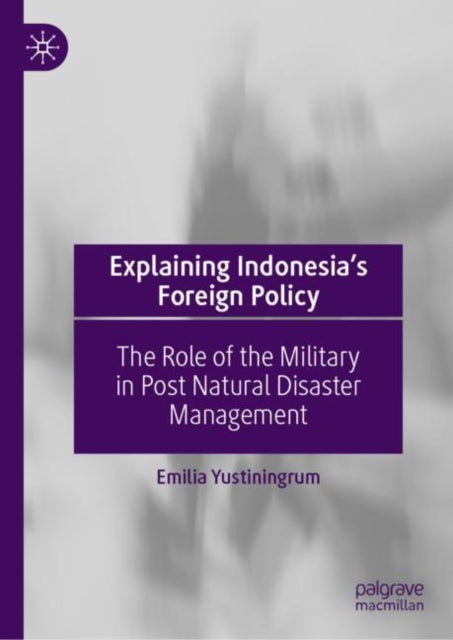
Explaining Indonesia’s Foreign Policy: The Role of the Military in Post Natural Disaster Management
Explaining Indonesia’s Foreign Policy: The Role of the Military in Post Natural Disaster Management
💎 Earn 454 Points (£4.54) on this item.
We can order this item for you. Delivery usually takes about 4 to 6 weeks.
This item is not held in our immediate stock. We will order it for you after checkout.
Estimated delivery: About 4 to 6 weeks
YOU SAVE £19.14
- Condition: Brand new
- UK Delivery times: Usually arrives within 2 - 3 working days
- UK Shipping: Fee starts at £2.39. Subject to product weight & dimension
Bulk ordering. Want 15 or more copies? Get a personalised quote and bigger discounts. Learn more about bulk orders.
Couldn't load pickup availability
- More about Explaining Indonesia’s Foreign Policy: The Role of the Military in Post Natural Disaster Management
This book examines Indonesia's post-Aceh tsunami disaster management through the lens of a multifaceted foreign policy decision-making process involving bureaucratic actors. It argues that organizational structure and bargaining aspects are as important as power and interests in explaining foreign policy-making in the Indonesian context. The unprecedented decision by the government to approve foreign military assistance for military operations other than war was a result of domestic and international factors.
Format: Hardback
Length: 264 pages
Publication date: 08 February 2024
Publisher: Springer Verlag, Singapore
The 2004 Aceh tsunami was a devastating natural disaster that struck Indonesia, resulting in significant loss of life and infrastructure damage. In the aftermath of the tsunami, the Indonesian government faced a complex decision regarding the use of foreign military assets to assist in the disaster management efforts. This decision was influenced by a variety of factors, including domestic political considerations, international pressure, and the specific circumstances of the disaster.
Prior to the Aceh tsunami, natural disaster management in Indonesia was primarily a domestic political issue. The Indonesian government had traditionally emphasized the importance of non-interference in foreign affairs and had avoided involving foreign military enclaves within its own territories. However, the magnitude of the Aceh tsunami and the extent of the damage it caused compelled the government to consider accepting offers of international assistance.
One of the key factors that influenced the Indonesian government's decision to approve foreign military assistance was the international pressure exerted on it by countries such as Australia. Following the tsunami, Australia offered to provide humanitarian assistance to Indonesia, including medical aid, food supplies, and equipment. The Indonesian government was initially hesitant to accept this assistance, as it did not want to appear to be relying on foreign powers. However, the government was also aware of the need for immediate and substantial assistance to the affected population, and it recognized that it could not provide this assistance on its own.
In addition to international pressure, the specific circumstances of the Aceh tsunami also played a role in the government's decision to approve foreign military assistance. The tsunami caused widespread destruction and left many people in need of immediate assistance. The Indonesian government was unable to provide this assistance on its own due to the scale of the disaster and the limited resources available to it. Therefore, it was necessary to seek assistance from other countries, including Australia.
The Indonesian government's decision to approve foreign military assistance was a difficult one, as it went against the country's traditional policy of non-interference in foreign affairs. However, the government was also aware of the need for immediate and substantial assistance to the affected population and was willing to accept offers of international assistance from countries such as Australia.
Once the government approved foreign military assistance, it was tasked with managing the assistance provided by Australia. This involved coordinating with various governmental agencies, including the military and the Ministry of Health, to ensure that the assistance was delivered effectively and efficiently. The Indonesian government also worked to ensure that the assistance provided by Australia did not interfere with its own domestic policies or sovereignty.
Overall, the 2004 Aceh tsunami was a significant event in Indonesian history, and the government's decision to approve foreign military assistance was a critical factor in the response to the disaster. This book examines the decision-making process that led to the involvement of foreign militaries in the disaster management efforts and explores the factors that influenced the government's decision to approve this assistance. The book also provides an analysis of the management of the assistance provided by Australia and the challenges that were faced in the aftermath of the tsunami.
Weight: 503g
Dimension: 210 x 148 (mm)
ISBN-13: 9789819981540
Edition number: 1st ed. 2024
This item can be found in:
UK and International shipping information
UK and International shipping information
UK Delivery and returns information:
- Delivery within 2 - 3 days when ordering in the UK.
- Shipping fee for UK customers from £2.39. Fully tracked shipping service available.
- Returns policy: Return within 30 days of receipt for full refund.
International deliveries:
Shulph Ink now ships to Australia, Belgium, Canada, France, Germany, Ireland, Italy, India, Luxembourg Saudi Arabia, Singapore, Spain, Netherlands, New Zealand, United Arab Emirates, United States of America.
- Delivery times: within 5 - 10 days for international orders.
- Shipping fee: charges vary for overseas orders. Only tracked services are available for most international orders. Some countries have untracked shipping options.
- Customs charges: If ordering to addresses outside the United Kingdom, you may or may not incur additional customs and duties fees during local delivery.