DR. Mauricio Nieto Olarte
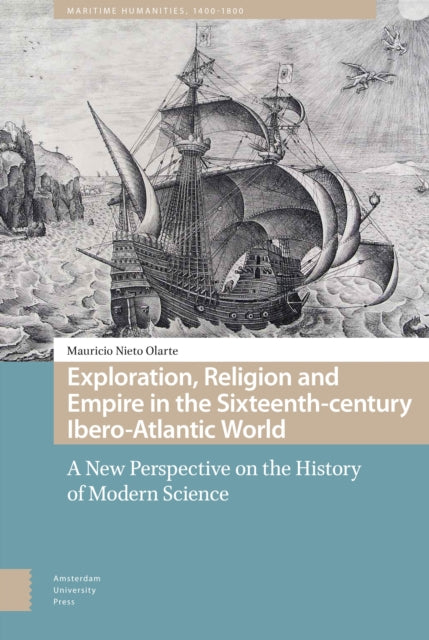
Exploration, Religion and Empire in the Sixteenth-century Ibero-Atlantic World: A New Perspective on the History of Modern Science
Exploration, Religion and Empire in the Sixteenth-century Ibero-Atlantic World: A New Perspective on the History of Modern Science
💎 Earn 811 Points (£8.11) on this item.
We can order this item for you. Delivery usually takes about 4 to 6 weeks.
This item is not held in our immediate stock. We will order it for you after checkout.
Estimated delivery: About 4 to 6 weeks
YOU SAVE £9.63
- Condition: Brand new
- UK Delivery times: Usually arrives within 2 - 3 working days
- UK Shipping: Fee starts at £2.39. Subject to product weight & dimension
Bulk ordering. Want 15 or more copies? Get a personalised quote and bigger discounts. Learn more about bulk orders.
Couldn't load pickup availability
- More about Exploration, Religion and Empire in the Sixteenth-century Ibero-Atlantic World: A New Perspective on the History of Modern Science
The Iberian conquest of the Atlantic in the 16th century led to the formation of a new world order, with Christian Europe controlling a significant portion of the planet. This was due to the development of new technical capabilities, favorable geographical conditions, the Christian mandate to extend the faith, the need for new trade routes, and an imperial organization aspiring to global dominance. The author explores new methods for approaching old historiographical problems of the Renaissance in reference to actors and regions scarcely visible in the history of modern Europe.
Format: Hardback
Length: 330 pages
Publication date: 21 December 2021
Publisher: Amsterdam University Press
The Iberian conquest of the Atlantic at the beginning of the sixteenth century had a profound impact on the formation of the new world order, in which Christian Europe claimed control over a significant portion of the planet. This achievement was made possible by a convergence of various and interconnected factors: the development of new technical capabilities and favorable geographical conditions for navigating the vast oceans; the Christian mandate to spread the faith; the need for new trade routes; and an imperial organization aspiring to global dominance.
In order to understand the complexities of the Renaissance, the author proposes exploring new approaches to old historiographical problems, such as the discovery and conquest of America, the birth of modern science, and the issue of Eurocentrism. These issues were previously studied within the context of complex history of modern Europe, primarily focusing on European actors and regions. However, the author suggests that we should also consider the ships, wind, navigators, instruments, gods, saints, and demons that played crucial roles in these events.
The development of new technical capabilities was a significant factor in the Iberian conquest of the Atlantic. The ships used by the Spanish and Portuguese were much larger and more advanced than those of their European counterparts, allowing them to travel further and faster. The use of navigational instruments such as the compass, astrolabe, and sextant helped sailors navigate their way across the ocean, enabling them to reach new lands and establish colonies.
Geographical conditions also played a crucial role in the conquest. The Atlantic Ocean was a vast and unpredictable body of water, but the Spanish and Portuguese were able to exploit its currents and winds to their advantage. The Gulf Stream, for example, provided a favorable current that helped ships travel from Europe to the Americas in a relatively short amount of time. Additionally, the presence of landmasses such as the Azores and Canary Islands provided stopping points and resupply points for Spanish and Portuguese ships.
The Christian mandate to extend the faith was another factor that contributed to the Iberian conquest of the Atlantic. The Spanish and Portuguese were motivated by their religious beliefs to spread the Christian message to new lands and peoples. This mission was not only religious in nature but also economic, as the establishment of Christian colonies in the Americas provided new opportunities for trade and commerce.
The need for new trade routes was also a significant factor in the Iberian conquest of the Atlantic. The Spanish and Portuguese were eager to explore new markets and expand their trade networks. The discovery of the New World provided them with access to valuable resources such as gold, silver, and spices, which were in high demand in Europe. This led to the establishment of trade routes that linked Europe to the Americas, and eventually to the establishment of colonies and trade networks that extended across the globe.
Finally, the imperial organization aspiring to global dominance played a crucial role in the Iberian conquest of the Atlantic. The Spanish and Portuguese were part of a larger imperial network that included other European powers such as France, England, and the Netherlands. These powers were competing for control over the world's resources and trade networks, and the Iberian conquest was a part of their efforts to establish dominance in the region.
In conclusion, the Iberian conquest of the Atlantic at the beginning of the sixteenth century had a profound impact on the formation of the new world order. The development of new technical capabilities, favorable geographical conditions, the Christian mandate to extend the faith, the need for new trade routes, and an imperial organization aspiring to global dominance all contributed to this achievement. By exploring these factors in greater detail, we can gain a deeper understanding of the complexities of the Renaissance and the role that ships, wind, navigators, instruments, gods, saints, and demons played in shaping its history.
Dimension: 234 x 156 (mm)
ISBN-13: 9789463725316
This item can be found in:
UK and International shipping information
UK and International shipping information
UK Delivery and returns information:
- Delivery within 2 - 3 days when ordering in the UK.
- Shipping fee for UK customers from £2.39. Fully tracked shipping service available.
- Returns policy: Return within 30 days of receipt for full refund.
International deliveries:
Shulph Ink now ships to Australia, Belgium, Canada, France, Germany, Ireland, Italy, India, Luxembourg Saudi Arabia, Singapore, Spain, Netherlands, New Zealand, United Arab Emirates, United States of America.
- Delivery times: within 5 - 10 days for international orders.
- Shipping fee: charges vary for overseas orders. Only tracked services are available for most international orders. Some countries have untracked shipping options.
- Customs charges: If ordering to addresses outside the United Kingdom, you may or may not incur additional customs and duties fees during local delivery.