Shulph Ink
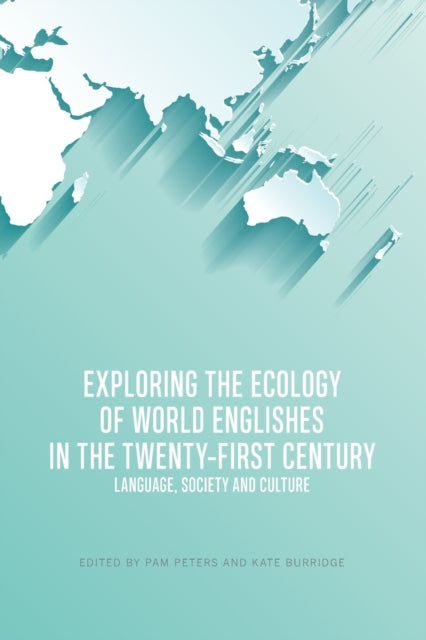
Exploring the Ecology of World Englishes in the Twenty-First Century: Language, Society and Culture
Exploring the Ecology of World Englishes in the Twenty-First Century: Language, Society and Culture
💎 Earn 107 Points (£1.07) on this item.
We can order this item for you. Delivery usually takes about 4 to 6 weeks.
This item is not held in our immediate stock. We will order it for you after checkout.
Estimated delivery: About 4 to 6 weeks
YOU SAVE £6.53
- Condition: Brand new
- UK Delivery times: Usually arrives within 2 - 3 working days
- UK Shipping: Fee starts at £2.39. Subject to product weight & dimension
Bulk ordering. Want 15 or more copies? Get a personalised quote and bigger discounts. Learn more about bulk orders.
Couldn't load pickup availability
- More about Exploring the Ecology of World Englishes in the Twenty-First Century: Language, Society and Culture
The book explores the adaptability of English in contact with other languages, cultures, and societies, and in diverse regional habitats. It examines features of world Englishes in their sociocultural contexts, with studies on South Africa, the Cocos Island, Singapore, Uganda, China, the Philippines, Micronesia, Australia, New Zealand, and Germany. It also presents fresh empirical evidence to discuss language variation using data from text corpora, speech recordings, social surveys, and interviews. The book brings together an international range of contributors from Hong Kong, Australia, New Zealand, Germany, Switzerland, Uganda, and South Africa. Its ecological perspective offers a fresh theoretical framework for analyzing both outer- and inner-circle Englishes, investigating the varieties of English spoken as a second language by bi- or multilingual speakers in South Africa, India, Singapore, Hong Kong, and the Philippines, and by some lesser-known oceanic varieties in Micronesia and Polynesia.
Format: Paperback / softback
Length: 392 pages
Publication date: 31 May 2023
Publisher: Edinburgh University Press
English, as a language, possesses remarkable adaptability, allowing it to seamlessly integrate with other languages, cultures, and societies across diverse regional habitats. This adaptability is further highlighted through comprehensive examinations of world Englishes in their sociocultural contexts. The book delves into the features of these Englishes, exploring their unique characteristics and adaptations in various parts of the world.
In Chapter 1, "World Englishes in Contact," the authors provide an overview of the diverse linguistic landscapes and the complex processes of language contact and change. They discuss the historical, social, and cultural factors that contribute to the development of world Englishes and their impact on local languages and cultures. The chapter also highlights the importance of studying world Englishes in their sociocultural contexts to gain a deeper understanding of their evolution and usage.
Chapter 2, "Sociocultural Contexts of World Englishes," explores the sociocultural factors that shape the development and usage of world Englishes. The authors examine the role of education, social class, ethnicity, gender, and power dynamics in shaping language variation and identity. They also discuss the impact of globalization, technology, and media on the spread and evolution of world Englishes.
Chapter 3, "Features of World Englishes," provides a detailed analysis of the linguistic characteristics that distinguish world Englishes from each other. The authors examine the phonology, morphology, syntax, and vocabulary of world Englishes, highlighting their unique features and adaptations. They also discuss the influence of other languages and cultures on the development of world Englishes and the ways in which they have incorporated elements from these languages and cultures into their own language.
Chapter 4, "Studies of World Englishes in South Africa, the Cocos Island, Singapore, Uganda, China, the Philippines, Micronesia, Australia, and New Zealand," presents a comprehensive examination of world Englishes in different regions of the world. The authors explore the linguistic variations and adaptations of world Englishes in South Africa, the Cocos Island, Singapore, Uganda, China, the Philippines, Micronesia, Australia, and New Zealand. They discuss the historical, social, and cultural factors that contribute to these variations and their impact on language usage and communication.
Chapter 5, "Lexical and Constructional Innovations in English," explores the linguistic innovations that have taken place in English as a result of contact with other languages, cultures, and societies. The authors discuss the emergence of new words, phrases, and constructions in English, as well as the processes of lexical borrowing and adaptation. They also examine the role of English as a global language and its influence on the development of other languages.
Chapter 6, "Fresh Empirical Evidence to Discuss Language Variation Using Data from Text Corpora, Speech Recordings, Social Surveys, and Interviews," presents fresh empirical evidence to discuss language variation across the globe. The authors use data from text corpora, speech recordings, social surveys, and interviews to explore the linguistic characteristics and usage patterns of world Englishes. They discuss the implications of these findings for language teaching, education, and society.
Chapter 7, "Bringing Together an International Range of Contributors from Hong Kong, Australia, New Zealand, Germany, Switzerland, Uganda, and South Africa," showcases the international diversity of contributors to the book. The authors introduce the backgrounds and expertise of the contributors and discuss the contributions they have made to the understanding of world Englishes. They also highlight the importance of collaboration and exchange between different regions and cultures in the study of language variation.
In conclusion, English as a language possesses remarkable adaptability, allowing it to seamlessly integrate with other languages, cultures, and societies across diverse regional habitats. This adaptability is further highlighted through comprehensive examinations of world Englishes in their sociocultural contexts. The book provides a rich and comprehensive analysis of the features, sociocultural contexts, and linguistic innovations of world Englishes, offering valuable insights into the complex dynamics of language variation and change. By bringing together an international range of contributors from diverse regions and cultures, the book fosters collaboration and exchange, contributing to the development of a deeper understanding of language and its role in shaping our world.
Weight: 620g
Dimension: 156 x 236 x 27 (mm)
ISBN-13: 9781474462860
This item can be found in:
UK and International shipping information
UK and International shipping information
UK Delivery and returns information:
- Delivery within 2 - 3 days when ordering in the UK.
- Shipping fee for UK customers from £2.39. Fully tracked shipping service available.
- Returns policy: Return within 30 days of receipt for full refund.
International deliveries:
Shulph Ink now ships to Australia, Belgium, Canada, France, Germany, Ireland, Italy, India, Luxembourg Saudi Arabia, Singapore, Spain, Netherlands, New Zealand, United Arab Emirates, United States of America.
- Delivery times: within 5 - 10 days for international orders.
- Shipping fee: charges vary for overseas orders. Only tracked services are available for most international orders. Some countries have untracked shipping options.
- Customs charges: If ordering to addresses outside the United Kingdom, you may or may not incur additional customs and duties fees during local delivery.