LMK Sheppard
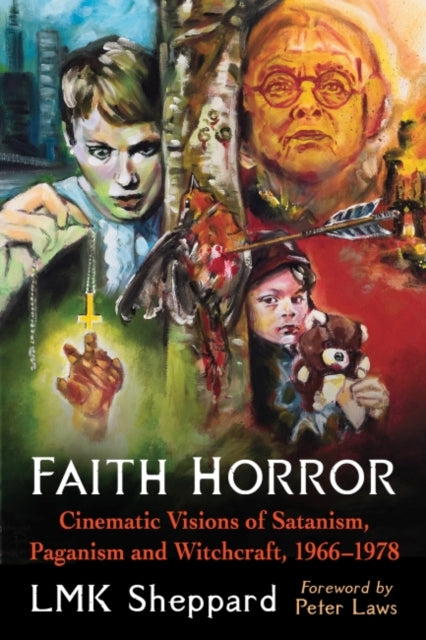
Faith Horror: Cinematic Visions of Satanism, Paganism and Witchcraft, 1966-1978
Faith Horror: Cinematic Visions of Satanism, Paganism and Witchcraft, 1966-1978
💎 Earn 235 Points (£2.35) on this item.
We can order this item for you. Delivery usually takes about 4 to 6 weeks.
This item is not held in our immediate stock. We will order it for you after checkout.
Estimated delivery: About 4 to 6 weeks
YOU SAVE £2.80
- Condition: Brand new
- UK Delivery times: Usually arrives within 2 - 3 working days
- UK Shipping: Fee starts at £2.39. Subject to product weight & dimension
Bulk ordering. Want 15 or more copies? Get a personalised quote and bigger discounts. Learn more about bulk orders.
Couldn't load pickup availability
- More about Faith Horror: Cinematic Visions of Satanism, Paganism and Witchcraft, 1966-1978
In the mid-1960s and 1970s, a subgenre of horror emerged known as "faith horror," which depicted non-Christian communities of evil-doers and their activities. Unlike classical horror villains who were isolated and easily defeated, the villains in faith horror were organized into identity-affirming religious congregations that posed a threat to the protagonists. This trend emerged during a cultural period of debate over the Death of God and the legitimacy of alternative spiritualities.
Format: Paperback / softback
Length: 277 pages
Publication date: 21 March 2022
Publisher: McFarland & Co Inc
Faith horror emerged as a significant genre in the mid-1960s and 1970s, encompassing a collection of films and adaptative novels that portrayed non-Christian communities as the embodiment of evil and their nefarious activities. Prior to this era, the traditional horror villain often proved ineffectual, with the demonic monster portrayed as an isolated and solitary individual easily defeated by the virtuous and altruistic Christian protagonist. In contrast, faith horror introduced a novel twist by presenting the villain as an organized group, united by shared religious beliefs and goals, who posed a formidable challenge to the protagonists.
This shift in narrative was driven by the cultural context of the time, marked by a profound deliberation over the "Death of God." During this period, there was a growing skepticism towards traditional religious institutions and a search for alternative spiritualities. The faith horror genre capitalized on this skepticism, presenting Satanism, witchcraft, and paganism as viable alternatives to Christianity. It challenged the notion of a monolithic and all-powerful God and explored the darker aspects of human nature, including greed, lust, and power.
The popularity of faith horror was fueled by a combination of factors. Firstly, it tapped into the growing interest in the supernatural and the occult, particularly among young audiences who were seeking a more unconventional and edgy form of entertainment. Secondly, it resonated with the broader cultural debate over the legitimacy of alternative spiritualities and the value of faith in a secular world. The films and novels of faith horror offered a commentary on the complexities of religious belief and the potential for evil to manifest within even the most devout individuals.
One of the defining characteristics of faith horror was its use of religious symbolism and imagery. Films and novels often depicted characters engaged in ritualistic practices, such as summoning demons, practicing witchcraft, or engaging in other dark arts. These symbols and images were used to evoke a sense of fear and dread, as well as to explore the moral and ethical dilemmas that arise when individuals align themselves with forces that are considered evil.
One of the most notable works of faith horror is Rosemary's Baby, a 1968 film directed by Roman Polanski. The film follows a young couple who move into a new apartment building, only to discover that they are being monitored by a coven of Satanists who are attempting to use their unborn
newborn child as a vessel for the devil. The film is a chilling portrayal of the power of evil and the lengths that people will go to in order to achieve their goals, even if it means sacrificing the lives of others.
Another notable example of faith horror is The Wicker Man, a 1973 film directed by Robin Hardy. The film follows a police officer who travels to a remote Scottish island to investigate the disappearance of a young girl, only to discover that the island is inhabited by a pagan community that worships the ancient god of fertility and death. The film is a tense and atmospheric exploration of the clash between modern civilization and ancient paganism, and the dangers that arise when individuals are drawn to the dark side of religion.
The Omen, a 1976 film directed by Richard Donner, is another classic example of faith horror. The film follows the story of an American diplomat who discovers that his son is the Antichrist, destined to bring about the end of the world. The film is a suspenseful and chilling portrayal of the power of evil and the lengths that people will go to in order to prevent the birth of the Antichrist.
In addition to films, faith horror also had a significant impact on literature. Many authors of the time were influenced by the genre, and their works explored similar themes and motifs. For example, Stephen King's novel The Exorcist, published in 1971, is a classic example of faith horror. The novel follows the story of a young girl who is possessed by a demon and the efforts of a Catholic priest to exorcise the demon from her body. The novel is a powerful exploration of the intersection of religion, science, and the supernatural, and the dangers that arise when individuals are unable to reconcile their beliefs with the reality of the world around them.
Overall, faith horror was a genre that emerged as a response to the cultural and spiritual challenges of the mid-1960s and 1970s. It depicted non-Christian communities as the embodiment of evil and their nefarious activities, challenging the traditional horror villain and exploring the darker aspects of human nature. The genre's popularity was fueled by a combination of factors, including the growing interest in the supernatural and the occult, the broader cultural debate over the legitimacy of alternative spiritualities, and the power of religious symbolism and imagery to evoke fear and dread. Despite its controversial nature, faith horror remains a significant and influential genre in the history of cinema and literature, offering a unique perspective on the complexities of religious belief and the potential for evil to manifest within even the most devout individuals.
Weight: 352g
Dimension: 151 x 225 x 18 (mm)
ISBN-13: 9781476681610
UK and International shipping information
UK and International shipping information
UK Delivery and returns information:
- Delivery within 2 - 3 days when ordering in the UK.
- Shipping fee for UK customers from £2.39. Fully tracked shipping service available.
- Returns policy: Return within 30 days of receipt for full refund.
International deliveries:
Shulph Ink now ships to Australia, Belgium, Canada, France, Germany, Ireland, Italy, India, Luxembourg Saudi Arabia, Singapore, Spain, Netherlands, New Zealand, United Arab Emirates, United States of America.
- Delivery times: within 5 - 10 days for international orders.
- Shipping fee: charges vary for overseas orders. Only tracked services are available for most international orders. Some countries have untracked shipping options.
- Customs charges: If ordering to addresses outside the United Kingdom, you may or may not incur additional customs and duties fees during local delivery.