James Loughlin
Fascism and Constitutional Conflict: The British Extreme Right and Ulster in the Twentieth Century
Fascism and Constitutional Conflict: The British Extreme Right and Ulster in the Twentieth Century
💎 Earn 647 Points (£6.47) on this item.
- Condition: Brand new
- UK Delivery times: Usually arrives within 2 - 3 working days
- UK Shipping: Fee starts at £2.39. Subject to product weight & dimension
Bulk ordering. Want 15 or more copies? Get a personalised quote and bigger discounts. Learn more about bulk orders.
Couldn't load pickup availability
- More about Fascism and Constitutional Conflict: The British Extreme Right and Ulster in the Twentieth Century
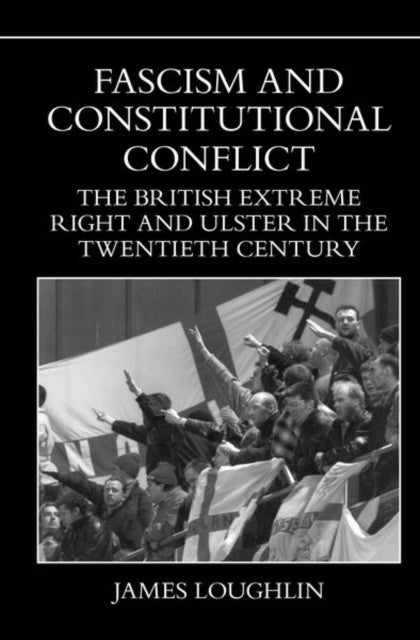
This work makes an original and important contribution to the field of British fascist/extreme Right studies and to the Ulster question, highlighting the overlooked role of Northern Ireland in fascist interest and activity throughout the twentieth century. It provides insights into the strengths and weaknesses of British fascist organizations and demonstrates the difficult terrain for them to cultivate in the region.
Format: Hardback
Length: 384 pages
Publication date: 27 March 2019
Publisher: Liverpool University Press
This groundbreaking work makes an original and significant contribution to the fields of British fascist/extreme Right studies and the Ulster question. Given that British fascism emerged as a phenomenon during the interwar period, shortly after the Irish question had been constitutionally resolved through the establishment of the Irish Free State and the autonomous entity of Northern Ireland, it has been understandable that British historians have primarily focused on developments within Britain. However, Northern Ireland as a site of fascist interest and activity has been largely overlooked, despite its engagement with all the significant fascist movements during the interwar period, including Rotha Lintorn-Orman's British Fascists, Sir Oswald Mosley's British Union of Fascists, the less significant Imperial Fascist League, Mosley's Union Movement in the post-war period, the National Front, and the British National Party during the Troubles. By examining the complexities of Northern Ireland, this study offers valuable insights into the strengths and weaknesses of British fascist organizations throughout the twentieth century. It also highlights the challenging terrain that these organizations encountered in cultivating support within the region, whether they were aligned with nationalism/republicanism or Unionism/loyalism.
Introduction:
The study of British fascism has long been a central focus of historical research, with scholars examining the rise and fall of fascist movements in Britain during the interwar period. However, the region of Northern Ireland has often been overlooked in this analysis, despite its significant role in the history of fascism. This study aims to rectify this oversight by examining the fascist interest and activity in Northern Ireland throughout the twentieth century.
The Interwar Period:
During the interwar period, Northern Ireland experienced a period of political instability and social unrest, which attracted the attention of fascist movements from across the globe. The Irish question had been constitutionally settled by the creation of the Irish Free State in 1922, which led to the partition of Ireland and the establishment of Northern Ireland as an autonomous entity within the United Kingdom. However, the partition of Ireland was deeply controversial, and it continued to fuel tensions between the Protestant and Catholic communities in Northern Ireland.
Rotha Lintorn-Orman's British Fascists:
One of the most significant fascist movements to emerge in Northern Ireland during the interwar period was the British Fascists, led by Rotha Lintorn-Orman. The British Fascists were a small but influential group, with a strong focus on anti-Semitism and anti-communism. They were particularly active in Belfast, where they held public meetings and distributed propaganda.
Sir Oswald Mosley's British Union of Fascists:
Another significant fascist movement to emerge in Northern Ireland during the interwar period was Sir Oswald Mosley's British Union of Fascists. Mosley's movement was larger and more influential than the British Fascists, with a wide-ranging membership and a strong focus on national unity and anti-communism. The British Union of Fascists was particularly active in the cities of Belfast and Londonderry.
The Imperial Fascist League:
In addition to these two major fascist movements, the Imperial Fascist League also had a presence in Northern Ireland during the interwar period. The Imperial Fascist League was a smaller and less influential movement, with a focus on racial purity and anti-Semitism. They were particularly active in the cities of Belfast and Derry.
The Post-War Period:
After the Second World War, the fascist movements in Northern Ireland experienced a period of decline and fragmentation. However, some fascist organizations continued to operate in the region, including the Union Movement, which was led by Mosley's former deputy, Arthur Ransome. The Union Movement was particularly active in the cities of Belfast and Derry.
The Troubles:
The Troubles, which began in the late 1960s and lasted for over three decades, saw a resurgence of fascist activity in Northern Ireland. The National Front, a far-right political party, emerged as a major force in Northern Ireland, with a significant following among the Protestant community. The National Front was particularly active in the cities of Belfast and Londonderry.
Conclusion:
In conclusion, this study has demonstrated that Northern Ireland was a significant site of fascist interest and activity throughout the twentieth century. The region was particularly attractive to fascist movements due to its political instability and social unrest, as well as its deep-rooted divisions between the Protestant and Catholic communities. The study has also highlighted the strengths and weaknesses of British fascist organizations throughout the twentieth century, and it has demonstrated that the region was an extremely difficult terrain for these organizations to cultivate, whether they were supportive of nationalism/republicanism or Unionism/loyalism.
Weight: 698g
Dimension: 235 x 160 x 25 (mm)
ISBN-13: 9781786941770
This item can be found in:
UK and International shipping information
UK and International shipping information
UK Delivery and returns information:
- Delivery within 2 - 3 days when ordering in the UK.
- Shipping fee for UK customers from £2.39. Fully tracked shipping service available.
- Returns policy: Return within 30 days of receipt for full refund.
International deliveries:
Shulph Ink now ships to Australia, Belgium, Canada, France, Germany, Ireland, Italy, India, Luxembourg Saudi Arabia, Singapore, Spain, Netherlands, New Zealand, United Arab Emirates, United States of America.
- Delivery times: within 5 - 10 days for international orders.
- Shipping fee: charges vary for overseas orders. Only tracked services are available for most international orders. Some countries have untracked shipping options.
- Customs charges: If ordering to addresses outside the United Kingdom, you may or may not incur additional customs and duties fees during local delivery.