Shulph Ink
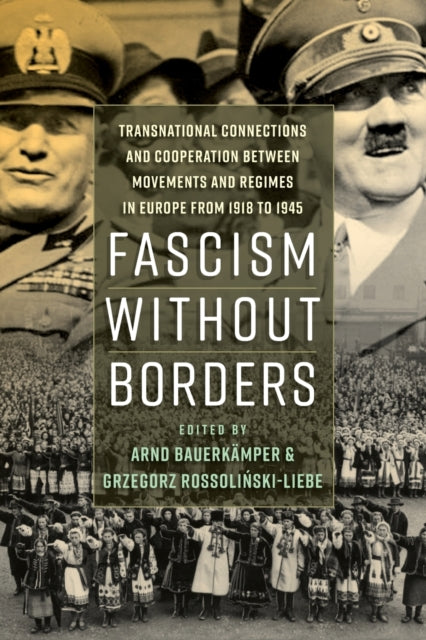
Fascism without Borders: Transnational Connections and Cooperation between Movements and Regimes in Europe from 1918 to 1945
Fascism without Borders: Transnational Connections and Cooperation between Movements and Regimes in Europe from 1918 to 1945
💎 Earn 119 Points (£1.19) on this item.
We can order this item for you. Delivery usually takes about 4 to 6 weeks.
This item is not held in our immediate stock. We will order it for you after checkout.
Estimated delivery: About 4 to 6 weeks
YOU SAVE £4.04
- Condition: Brand new
- UK Delivery times: Usually arrives within 2 - 3 working days
- UK Shipping: Fee starts at £2.39. Subject to product weight & dimension
Bulk ordering. Want 15 or more copies? Get a personalised quote and bigger discounts. Learn more about bulk orders.
Couldn't load pickup availability
- More about Fascism without Borders: Transnational Connections and Cooperation between Movements and Regimes in Europe from 1918 to 1945
Despite their fascination with ultra-nationalism, fascist adherents understood themselves as part of a transnational political movement. This collection explores fascisms transnational dimension, from the movements inspired by Fascist Italy to the international antifascist organizations that emerged.
\n Format: Paperback / softback
\n Length: 384 pages
\n Publication date: 17 December 2018
\n Publisher: Berghahn Books
\n
Despite their fascination with ultra-nationalism, fascism's adherents recognized themselves as part of a transnational political movement. While a genuine "Fascist International" has never been formed, European fascists shared similar goals, attitudes, and worldviews. They also relied on one another for support and inspiration, despite occasional misunderstandings and conflicts. This comprehensive collection explores fascism's transnational aspect, from the movements inspired by Fascist Italy to the international antifascist organizations that emerged in the years that followed.
Introduction:
Fascism, a political ideology that emerged in the early 20th century, was characterized by its strong emphasis on national unity, authoritarianism, and ultranationalism. While fascism originated in Italy, it quickly spread to other parts of Europe and beyond, exerting a significant influence on world politics. One of the most intriguing aspects of fascism is its transnational dimension, which refers to its ability to transcend national boundaries and connect with people across different countries.
Common Goals and Sentiments:
Despite their diverse backgrounds and national origins, European fascists shared common goals and sentiments. They were united by their belief in the superiority of the white race, their disdain for democracy and liberalism, and their desire to establish a totalitarian regime that would control every aspect of society. Fascists also believed in the importance of national pride and the need to protect the nation from external threats.
Similar Worldviews:
European fascists held similar worldviews regarding the role of the state and the individual. They believed that the state should be the ultimate authority and that individuals should be subservient to the state's goals. Fascists also believed in the importance of social hierarchy, with the elite ruling over the masses and the masses serving as the foundation of the state.
Support and Motivation:
Despite their differences, European fascists drew on each other for support and motivation. They exchanged ideas, shared experiences, and collaborated on various projects, such as propaganda campaigns and military operations. Fascists also relied on each other for emotional support, as they faced opposition and persecution from their opponents.
Transnational Organizations:
As fascism spread to different parts of the world, it led to the formation of transnational organizations. These organizations were designed to promote fascism and coordinate its activities across different countries. Some of the most notable transnational organizations were the International Fascist League, the Comintern, and the Axis alliance.
Conclusion:
The transnational dimension of fascism is a significant aspect of its history. Despite their differences, European fascists shared common goals and sentiments, and they relied on each other for support and motivation. The formation of transnational organizations further facilitated the spread of fascism and its influence on world politics. Understanding the transnational dimension of fascism is crucial for comprehending the complex history of this political ideology.
\n Weight: 556g\n
Dimension: 155 x 229 x 20 (mm)\n
ISBN-13: 9781789200584\n \n
UK and International shipping information
UK and International shipping information
UK Delivery and returns information:
- Delivery within 2 - 3 days when ordering in the UK.
- Shipping fee for UK customers from £2.39. Fully tracked shipping service available.
- Returns policy: Return within 30 days of receipt for full refund.
International deliveries:
Shulph Ink now ships to Australia, Belgium, Canada, France, Germany, Ireland, Italy, India, Luxembourg Saudi Arabia, Singapore, Spain, Netherlands, New Zealand, United Arab Emirates, United States of America.
- Delivery times: within 5 - 10 days for international orders.
- Shipping fee: charges vary for overseas orders. Only tracked services are available for most international orders. Some countries have untracked shipping options.
- Customs charges: If ordering to addresses outside the United Kingdom, you may or may not incur additional customs and duties fees during local delivery.