Shulph Ink
Fashion in European Art: Dress and Identity, Politics and the Body, 1775-1925
Fashion in European Art: Dress and Identity, Politics and the Body, 1775-1925
💎 Earn 115 Points (£1.15) on this item.
YOU SAVE £2.99
- Condition: Brand new
- UK Delivery times: Usually arrives within 2 - 3 working days
- UK Shipping: Fee starts at £2.39. Subject to product weight & dimension
Bulk ordering. Want 15 or more copies? Get a personalised quote and bigger discounts. Learn more about bulk orders.
Couldn't load pickup availability
- More about Fashion in European Art: Dress and Identity, Politics and the Body, 1775-1925
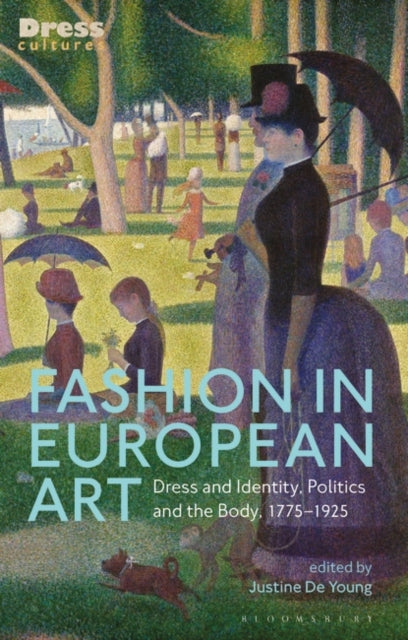
Fashion in European Art explores the significance of historical dress over this period of upheaval, as well as the lived experience of dress and its representation. It reveals a world of complex calculations and subtle signals, and how artists and their sitters engaged with the fashion and culture of their times.
\n Format: Paperback / softback
\n Length: 288 pages
\n Publication date: 04 April 2019
\n Publisher: Bloomsbury Publishing PLC
\n
Fashion is not just about what we wear, but also about who we want to be. From 1775 to 1925, artists in Europe were particularly interested in the gap between appearance and reality, participating in and often critiquing the creation of the self and the image. By examining their portrayals of modern life through the lens of fashion and dress, we can uncover a world of complex calculations and subtle signals.
Fashion in European Art delves into the significance of historical dress during this period of upheaval, as well as the lived experience of dress and its representation. The expert contributors explore how artists and their sitters engaged with the fashion and culture of their times, using visual sources that range from paintings and photographs to fashion plates, caricatures, and advertisements. They examine the politics of dress, its inspirations, and the reactions it provoked, as well as the many meanings of fashion in European art, revealing its importance in understanding modernity itself.
During the 18th and 19th centuries, artists in Europe were captivated by the interplay between appearance and reality. They explored the ways in which clothing and fashion could be used to convey social status, cultural values, and personal identity. In this period, fashion became a powerful tool for self-expression and communication, allowing individuals to express their individuality and creativity in a way that had never been possible before.
One of the most notable examples of this trend is the work of French artist Jean-Honoré Fragonard, who was known for his intricate and romantic paintings of women in elaborate dresses and costumes. Fragonard's paintings were often used to convey the sensuality and allure of the female body, but they also hinted at the underlying complexities of gender roles and social expectations.
Another artist who was heavily influenced by fashion was Italian painter Caravaggio, who was known for his dramatic and realistic portrayals of everyday life. Caravaggio's paintings often featured characters dressed in contemporary clothing, reflecting the fashion of his time. However, he also used clothing to convey the emotional and psychological state of his characters, often using bold colors and dramatic lighting to create a sense of tension and drama.
In addition to paintings, artists in Europe also used fashion to create sculptures, prints, and other forms of visual art. For example, French sculptor Jean-Baptiste Lemoyne was known for his sculptures of women in elegant dresses and gowns, which were often inspired by the fashion of the time. Similarly, German printmaker Albrecht Dürer was known for his intricate woodcuts and engravings of fashion plates, which were used to document the latest trends in clothing and accessories.
Fashion in European Art also explores the ways in which fashion was used to create a sense of unity and belonging among different groups of people. During the 19th century, for example, fashion was used to promote national identity and pride. Artists and designers often used patriotic colors and symbols in their work, creating a sense of unity and belonging among people from different countries and cultures.
However, fashion was not always used in a positive or constructive way. During the 19th century, there was a growing concern about the impact of fashion on women's bodies and health. Many women were subjected to restrictive and uncomfortable clothing that was designed to conform to the idealized beauty standards of the time. This led to the development of the feminist movement, which sought to promote women's rights and freedom of expression.
In conclusion, fashion in European Art played a significant role in shaping the cultural and social landscape of the 18th and 19th centuries. Artists used fashion to convey social status, cultural values, and personal identity, and to create a sense of unity and belonging among different groups of people. However, fashion was not always used in a positive or constructive way, and it was often used to promote restrictive and uncomfortable clothing that was designed to conform to idealized beauty standards. By examining the role of fashion in European art, we can gain a deeper understanding of the complex relationships between appearance and reality, and the ways in which clothing and fashion can be used to express and communicate our identities.
\n Weight: 510g\n
Dimension: 213 x 175 x 12 (mm)\n
ISBN-13: 9781788314480\n \n
UK and International shipping information
UK and International shipping information
UK Delivery and returns information:
- Delivery within 2 - 3 days when ordering in the UK.
- Shipping fee for UK customers from £2.39. Fully tracked shipping service available.
- Returns policy: Return within 30 days of receipt for full refund.
International deliveries:
Shulph Ink now ships to Australia, Belgium, Canada, France, Germany, Ireland, Italy, India, Luxembourg Saudi Arabia, Singapore, Spain, Netherlands, New Zealand, United Arab Emirates, United States of America.
- Delivery times: within 5 - 10 days for international orders.
- Shipping fee: charges vary for overseas orders. Only tracked services are available for most international orders. Some countries have untracked shipping options.
- Customs charges: If ordering to addresses outside the United Kingdom, you may or may not incur additional customs and duties fees during local delivery.