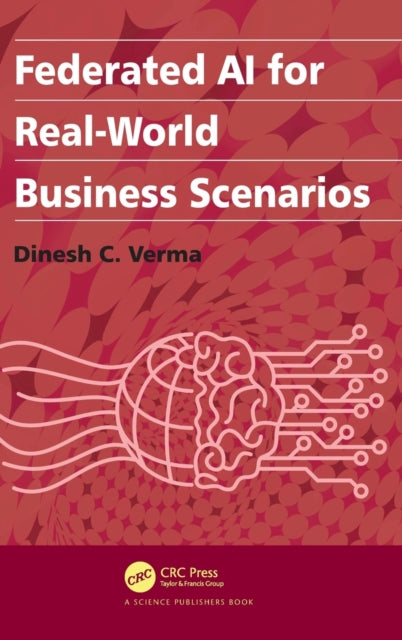
Dinesh C. Verma
Federated AI for Real-World Business Scenarios
Federated AI for Real-World Business Scenarios
💎 Earn 811 Points (£8.11) on this item.
We can order this item for you. Delivery usually takes about 4 to 6 weeks.
This item is not held in our immediate stock. We will order it for you after checkout.
Estimated delivery: About 4 to 6 weeks
YOU SAVE £9.63
- Condition: Brand new
- UK Delivery times: Usually arrives within 2 - 3 working days
- UK Shipping: Fee starts at £2.39. Subject to product weight & dimension
Bulk ordering. Want 15 or more copies? Get a personalised quote and bigger discounts. Learn more about bulk orders.
Couldn't load pickup availability
- More about Federated AI for Real-World Business Scenarios
This book provides a comprehensive and balanced perspective on the challenges and benefits of using AI, covering the entire AI process and offering practical insights for complex enterprises, coalitions, and consortia.
Format: Hardback
Length: 206 pages
Publication date: 01 October 2021
Publisher: Taylor & Francis Ltd
Artificial intelligence (AI) is a rapidly evolving technology that has the potential to revolutionize various industries and improve our daily lives. However, there are also significant challenges associated with the use of AI, including ethical concerns, privacy issues, and the potential for job displacement. In this article, we will explore the benefits and drawbacks of AI and discuss how it can be used to address real-world challenges.
One of the primary benefits of AI is its ability to automate repetitive tasks and improve efficiency. For example, AI-powered chatbots can provide customer support 24/7, reducing the need for human employees and saving companies significant amounts of money. AI can also be used to analyze large amounts of data and make informed decisions, such as in healthcare, where it can help doctors diagnose diseases and develop new treatments.
Another benefit of AI is its ability to enhance human capabilities. For example, AI-powered robots can perform tasks that are too dangerous or difficult for humans, such as mining, construction, and transportation. AI can also be used to teach and learn, allowing students to learn at their own pace and customize their learning experiences.
However, there are also significant drawbacks associated with the use of AI. One of the most significant is the potential for job displacement. As AI becomes more advanced, it is capable of performing tasks that were previously performed by humans, leading to the loss of jobs. This is particularly concerning for low-skilled workers who may not have the necessary skills to work with AI.
Another concern is the ethical implications of AI. As AI systems become more complex, they are capable of making decisions that have significant consequences for society. For example, AI-powered weapons could be used to target and kill individuals without human intervention, raising ethical questions about the use of force and the responsibility of developers.
In addition, there are concerns about privacy and security. AI systems collect vast amounts of data about individuals and their behavior, which can be used to target advertising and track individuals. This raises concerns about the potential for data breaches and the misuse of personal information.
To address these challenges, it is important to approach the use of AI with a balanced perspective. On the one hand, AI has the potential to revolutionize various industries and improve our daily lives. On the other hand, it is important to address the ethical concerns, privacy issues, and job displacement associated with AI.
One approach to addressing these challenges is through regulation. Governments and organizations can establish regulations and guidelines to ensure that the use of AI is ethical and responsible. This can include requirements for developers to disclose the algorithms they use and to ensure that AI systems are transparent and accountable.
Another approach is through education and training. Individuals and organizations need to be educated about the benefits and drawbacks of AI and the skills they need to work with AI. This can include training programs for workers who may be displaced by AI and programs for developers to learn about ethical considerations and best practices.
Finally, it is important to invest in research and development to improve the capabilities of AI and to address the challenges associated with it. This can include funding for research into ethical considerations, privacy issues, and job displacement and investing in new technologies that can enhance the capabilities of AI while reducing the potential for job displacement.
In conclusion, artificial intelligence (AI) is a rapidly evolving technology that has the potential to revolutionize various industries and improve our daily lives. However, there are also significant challenges associated with the use of AI, including ethical concerns, privacy issues, and the potential for job displacement. By approaching the use of AI with a balanced perspective and through regulation, education, and research and development, we can ensure that AI is used in a responsible and ethical manner.
Artificial Intelligence (AI) is a rapidly evolving technology that has the potential to revolutionize various industries and improve our daily lives. However, there are also significant challenges associated with the use of AI, including ethical concerns, privacy issues, and the potential for job displacement. In this article, we will explore the benefits and drawbacks of AI and discuss how it can be used to address real-world challenges.
One of the primary benefits of AI is its ability to automate repetitive tasks and improve efficiency. For example, AI-powered chatbots can provide customer support 24/7, reducing the need for human employees and saving companies significant amounts of money. AI can also be used to analyze large amounts of data and make informed decisions, such as in healthcare, where it can help doctors diagnose diseases and develop new treatments.
Another benefit of AI is its ability to enhance human capabilities. For example, AI-powered robots can perform tasks that are too dangerous or difficult for humans, such as mining, construction, and transportation. AI can also be used to teach and learn, allowing students to learn at their own pace and customize their learning experiences.
However, there are also significant drawbacks associated with the use of AI. One of the most significant is the potential for job displacement. As AI becomes more advanced, it is capable of performing tasks that were previously performed by humans, leading to the loss of jobs. This is particularly concerning for low-skilled workers who may not have the necessary skills to work with AI.
Another concern is the ethical implications of AI. As AI systems become more complex, they are capable of making decisions that have significant consequences for society. For example, AI-powered weapons could be used to target and kill individuals without human intervention, raising ethical questions about the use of force and the responsibility of developers.
In addition, there are concerns about privacy and security. AI systems collect vast amounts of data about individuals and their behavior, which can be used to target advertising and track individuals. This raises concerns about the potential for data breaches and the misuse of personal information.
To address these challenges, it is important to approach the use of AI with a balanced perspective. On the one hand, AI has the potential to revolutionize various industries and improve our daily lives. On the other hand, it is important to address the ethical concerns, privacy issues, and job displacement associated with AI.
One approach to addressing these challenges is through regulation. Governments and organizations can establish regulations and guidelines to ensure that the use of AI is ethical and responsible. This can include requirements for developers to disclose the algorithms they use and to ensure that AI systems are transparent and accountable.
Another approach is through education and training. Individuals and organizations need to be educated about the benefits and drawbacks of AI and the skills they need to work with AI. This can include training programs for workers who may be displaced by AI and programs for developers to learn about ethical considerations and best practices.
Finally, it is important to invest in research and development to improve the capabilities of AI and to address the challenges associated with it. This can include funding for research into ethical considerations, privacy issues, and job displacement and investing in new technologies that can enhance the capabilities of AI while reducing the potential for job displacement.
In conclusion, artificial intelligence (AI) is a rapidly evolving technology that has the potential to revolutionize various industries and improve our daily lives. However, there are also significant challenges associated with the use of AI, including ethical concerns, privacy issues, and the potential for job displacement. By approaching the use of AI with a balanced perspective and through regulation, education, and research and development, we can ensure that AI is used in a responsible and ethical manner.
Weight: 468g
Dimension: 162 x 242 x 18 (mm)
ISBN-13: 9780367861575
This item can be found in:
UK and International shipping information
UK and International shipping information
UK Delivery and returns information:
- Delivery within 2 - 3 days when ordering in the UK.
- Shipping fee for UK customers from £2.39. Fully tracked shipping service available.
- Returns policy: Return within 30 days of receipt for full refund.
International deliveries:
Shulph Ink now ships to Australia, Belgium, Canada, France, Germany, Ireland, Italy, India, Luxembourg Saudi Arabia, Singapore, Spain, Netherlands, New Zealand, United Arab Emirates, United States of America.
- Delivery times: within 5 - 10 days for international orders.
- Shipping fee: charges vary for overseas orders. Only tracked services are available for most international orders. Some countries have untracked shipping options.
- Customs charges: If ordering to addresses outside the United Kingdom, you may or may not incur additional customs and duties fees during local delivery.