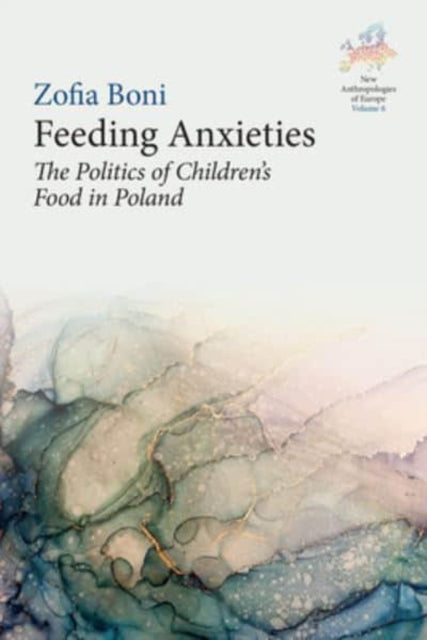
Zofia Boni
Feeding Anxieties: The Politics of Children's Food in Poland
Feeding Anxieties: The Politics of Children's Food in Poland
💎 Earn 408 Points (£4.08) on this item.
YOU SAVE £17.23
- Condition: Brand new
- UK Delivery times: Usually arrives within 2 - 3 working days
- UK Shipping: Fee starts at £2.39. Subject to product weight & dimension
Bulk ordering. Want 15 or more copies? Get a personalised quote and bigger discounts. Learn more about bulk orders.
Couldn't load pickup availability
- More about Feeding Anxieties: The Politics of Children's Food in Poland
This book explores the politics behind childrens food in Poland, highlighting the social relationships, expectations, and emotions involved in feeding children and how they shape and experience feeding anxieties. It challenges our understanding of health and modern subjectivity and unpacks what and how we feed children today.
Format: Hardback
Length: 246 pages
Publication date: 10 March 2023
Publisher: Berghahn Books
Childhood nutrition in Poland is a complex and multifaceted issue that is shaped by a range of social relationships, expectations, and emotions. This book explores the underlying politics behind child nutrition, highlighting the various factors that influence feeding practices and the anxieties associated with them. Through rich ethnographic accounts, including research with children, the book demonstrates how families, schools, the food industry, and state agencies shape and experience feeding anxieties, and how these anxieties are at the heart of a new form of sociality.
One of the key themes of the book is the role of families in shaping child nutrition. Families play a crucial role in providing food for their children, and their feeding practices are influenced by a range of factors, including cultural traditions, economic status, and personal beliefs. The book highlights the ways in which families negotiate these factors and create their own unique feeding practices, which can vary widely across different regions and social groups.
Schools also play a significant role in child nutrition. Schools provide meals to children during the school day, and these meals are often designed to meet nutritional guidelines and provide a balanced diet. However, the book also reveals the challenges that schools face in providing healthy meals, including budget constraints, limited access to fresh produce, and cultural preferences.
The food industry also plays a significant role in child nutrition. The industry produces a wide range of processed foods that are often high in sugar, fat, and salt, and these foods are often marketed to children. The book highlights the ways in which the food industry uses marketing and advertising to promote unhealthy foods to children, and the impact that this has on their health.
State agencies also play a role in child nutrition. State agencies are responsible for regulating food safety and nutrition, and they have implemented a range of policies and programs to address child nutrition issues. However, the book reveals the challenges that state agencies face in implementing these policies and programs, including limited resources and political pressure.
One of the key findings of the book is that feeding anxieties are at the heart of a new form of sociality. Feeding anxieties are the feelings of anxiety and stress that parents and caregivers experience when feeding their children. These anxieties can be triggered by a range of factors, including cultural expectations, economic pressures, and personal beliefs. The book demonstrates how feeding anxieties can impact children's health and well-being, and how they can contribute to the development of unhealthy eating habits.
The book also highlights the ways in which feeding anxieties can be addressed. The book suggests that parents and caregivers should be provided with education and support to help them manage their feeding anxieties. This can include providing information about healthy eating practices, providing access to healthy foods, and providing support for parents and caregivers who are experiencing financial difficulties.
In addition, the book suggests that state agencies should be more proactive in addressing child nutrition issues. State agencies should be provided with more resources and political support to implement policies and programs that promote healthy eating practices. This can include implementing nutrition education programs in schools, providing subsidies for healthy foods, and regulating the food industry to ensure that it is producing healthy foods.
However, the book also acknowledges that addressing child nutrition issues is a complex and challenging task. There are many different factors that influence child nutrition, and it is difficult to develop policies and programs that are effective for all children. The book suggests that it is important to work towards a more holistic approach to child nutrition, which takes into account the social, economic, and cultural factors that influence feeding practices.
In conclusion, childhood nutrition in Poland is a complex and multifaceted issue that is shaped by a range of social relationships, expectations, and emotions. This book explores the underlying politics behind child nutrition, highlighting the various factors that influence feeding practices and the anxieties associated with them. Through rich ethnographic accounts, including research with children, the book demonstrates how families, schools, the food industry, and state agencies shape and experience feeding anxieties, and how these anxieties are at the heart of a new form of sociality. The book suggests that parents and caregivers should be provided with education and support to help them manage their feeding anxieties, and that state agencies should be more proactive in addressing child nutrition issues. By working towards a more holistic approach to child nutrition, we can help to ensure that all children have access to healthy foods and that their health and well-being are protected.
Dimension: 229 x 152 (mm)
ISBN-13: 9781800738713
This item can be found in:
UK and International shipping information
UK and International shipping information
UK Delivery and returns information:
- Delivery within 2 - 3 days when ordering in the UK.
- Shipping fee for UK customers from £2.39. Fully tracked shipping service available.
- Returns policy: Return within 30 days of receipt for full refund.
International deliveries:
Shulph Ink now ships to Australia, Belgium, Canada, France, Germany, Ireland, Italy, India, Luxembourg Saudi Arabia, Singapore, Spain, Netherlands, New Zealand, United Arab Emirates, United States of America.
- Delivery times: within 5 - 10 days for international orders.
- Shipping fee: charges vary for overseas orders. Only tracked services are available for most international orders. Some countries have untracked shipping options.
- Customs charges: If ordering to addresses outside the United Kingdom, you may or may not incur additional customs and duties fees during local delivery.