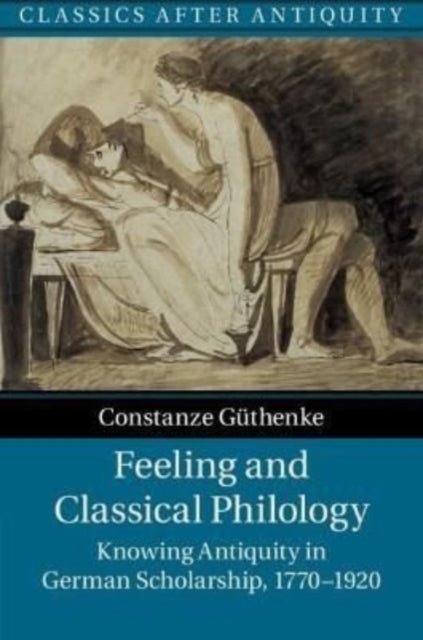
ConstanzeGuthenke
Feeling and Classical Philology: Knowing Antiquity in German Scholarship, 1770-1920
Feeling and Classical Philology: Knowing Antiquity in German Scholarship, 1770-1920
💎 Earn 118 Points (£1.18) on this item.
We can order this item for you. Delivery usually takes about 4 to 6 weeks.
This item is not held in our immediate stock. We will order it for you after checkout.
Estimated delivery: About 4 to 6 weeks
YOU SAVE £1.40
- Condition: Brand new
- UK Delivery times: Usually arrives within 2 - 3 working days
- UK Shipping: Fee starts at £3.89. Subject to product weight & dimension
Bulk ordering. Want 15 or more copies? Get a personalised quote and bigger discounts. Learn more about bulk orders.
Couldn't load pickup availability
- More about Feeling and Classical Philology: Knowing Antiquity in German Scholarship, 1770-1920
In this book, Constanze Güthenke explores how nineteenth-century German classical philology shaped modern professional reading habits, notions of biography, and the self-image of scholars and teachers. She argues that a discourse of love was instrumental in expressing the challenges of specialization and individual formation and the importance of a Platonic scene of learning and instruction for imagining the modern scholar. The book revises established narratives while also finding new value in imagining distance and an absence of nostalgic longing for antiquity.
Format: Paperback / softback
Length: 241 pages
Publication date: 19 May 2022
Publisher: Cambridge University Press
The foundation of numerous frameworks within the modern humanities is rooted in nineteenth-century German classical philology. In her book, Constanze Güthenke explores the profound impact that a language of love and a yearning for intimacy with a personified antiquity have had on modern professional reading habits, notions of biography, and the self-image of scholars and teachers. She contends that a discourse of love played a crucial role in conveying the complexities of specialization and individual formation (Bildung), particularly in highlighting the significance of a Platonic setting of learning and instruction in shaping the modern scholar's imagination.
The book is built upon extensive readings of programmatic texts from various influential figures, including Wolf, Schleiermacher, Boeckh, Thiersch, Dilthey, Wilamowitz, and Nietzsche. It presents a compelling argument for reevaluating established narratives while also advocating for the discovery of new meaning in envisioning distance and a lack of nostalgic longing for antiquity.
Through her meticulous analysis, Güthenke reveals how the language of love has permeated various aspects of modern scholarly discourse, shaping not only how individuals approach the study of history and literature but also their understanding of themselves as scholars and educators. She demonstrates how the romantic ideal of antiquity has influenced the construction of personal and professional identities, shaping the way scholars perceive their roles and responsibilities within the academic community.
Moreover, Güthenke explores the ways in which the discourse of love has shaped the development of modern biographical practices. She argues that the desire to connect with a personified antiquity has led to a fascination with the lives and achievements of historical figures, particularly those who are seen as embodying the ideals of the past. This fascination has resulted in a proliferation of biographical literature that seeks to capture the essence of these individuals and their contributions to society.
However, Güthenke also challenges the notion that the discourse of love is solely beneficial. She argues that it can perpetuate harmful stereotypes and biases, particularly when it comes to the representation of women and minorities in historical and literary contexts. She highlights the need for a more nuanced and critical approach to biographical writing that takes into account the complexities of individual lives and the social and cultural contexts in which they lived.
In conclusion, Constanze Güthenke's book offers a thought-provoking exploration of the enduring influence of nineteenth-century German classical philology on modern humanities. Through her detailed analysis and compelling arguments, she demonstrates how a language of love and a longing for intimacy with a personified antiquity have shaped professional reading habits, notions of biography, and the self-image of scholars and teachers. By challenging established narratives and advocating for a more nuanced and critical approach to biographical writing, Güthenke contributes to our understanding of the complex relationship between the past and the present and the role of the scholar in shaping our collective memory and understanding.
Weight: 366g
Dimension: 152 x 227 x 18 (mm)
ISBN-13: 9781107504295
UK and International shipping information
UK and International shipping information
We deliver throughout the United Kingdom and to 128 countries and territories worldwide, including the United States, Australia, Canada, Germany, Spain and France.