Shulph Ink
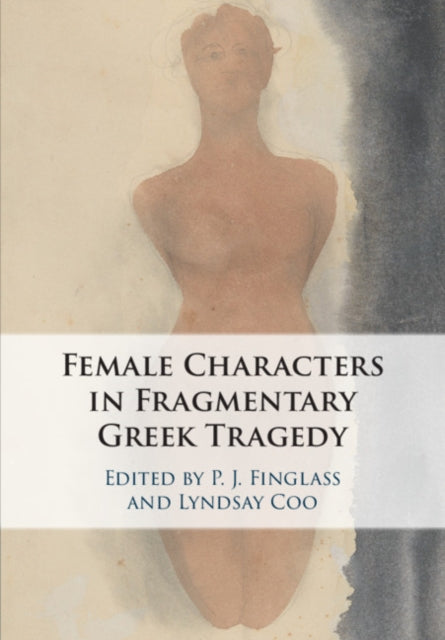
Female Characters in Fragmentary Greek Tragedy
Female Characters in Fragmentary Greek Tragedy
💎 Earn 160 Points (£1.60) on this item.
We can order this item for you. Delivery usually takes about 4 to 6 weeks.
This item is not held in our immediate stock. We will order it for you after checkout.
Estimated delivery: About 4 to 6 weeks
YOU SAVE £1.90
- Condition: Brand new
- UK Delivery times: Usually arrives within 2 - 3 working days
- UK Shipping: Fee starts at £2.39. Subject to product weight & dimension
Bulk ordering. Want 15 or more copies? Get a personalised quote and bigger discounts. Learn more about bulk orders.
Couldn't load pickup availability
- More about Female Characters in Fragmentary Greek Tragedy
Women were underrepresented and misrepresented in Greek tragedy, which has overlooked tragic fragments. This volume examines the question from a fresh perspective, shedding light on mythological characters, themes, and methodology.
\n Format: Paperback / softback
\n Length: 296 pages
\n Publication date: 08 July 2021
\n Publisher: Cambridge University Press
\n
This question, which is at the core of much modern scholarship on ancient drama, has typically been approached using evidence drawn only from the thirty-two tragedies that survive complete, neglecting tragic fragments, especially those recently discovered and often very substantial fragmentary papyri from plays that had been thought lost. Drawing on the latest research on both gender in tragedy and on tragic fragments, the essays in this volume examine this question from a fresh perspective, shedding light on important mythological characters such as Pasiphae, Hypsipyle, and Europa, on themes such as violence, sisterhood, vengeance, and sex, and on the methodology of a discipline that needs to take fragmentary evidence to heart in order to gain a fuller understanding of ancient tragedy. All Greek is translated to ensure wide accessibility.
The representation of women in Greek tragedy has been a subject of much debate and study in recent years. While the thirty-two surviving tragedies provide a valuable source of evidence, it is important to recognize that tragic fragments, particularly those recently discovered and often substantial, fragmentary papyri from plays that were previously thought lost, offer a unique perspective on the issue.
In this volume, a collection of essays by leading scholars in the field, the representation of women in Greek tragedy is examined from a fresh perspective. The essays explore a range of themes, including violence, sisterhood, vengeance, and sex, and shed light on important mythological characters such as Pasiphae, Hypsipyle, and Europa. By drawing on the latest research on both gender in tragedy and on tragic fragments, the authors aim to provide a fuller understanding of ancient tragedy and its impact on the ancient world.
One of the key themes explored in the essays is the representation of women as victims of violence. The authors argue that women in Greek tragedy were often subjected to brutal and dehumanizing treatment, both within the plays and in the broader cultural context. Women were often portrayed as objects of male desire, and their bodies were used as symbols of power and control. In some cases, women were subjected to sexual violence, which was used to further marginalize and dehumanize them.
Another theme explored in the essays is the representation of women as sisters and mothers. The authors argue that women in Greek tragedy were often portrayed as strong and supportive figures, who played crucial roles in their communities and families. Women were often depicted as nurturing and caring, and their relationships with their brothers, husbands, and children were portrayed as important and meaningful. However, women were also vulnerable to the male-dominated social and political structures of ancient Greece, and their roles and responsibilities were often limited by societal expectations.
Vengeance is another theme that is explored in the essays. The authors argue that women in Greek tragedy were often portrayed as seeking revenge against those who had wronged them or their families. Women were often depicted as powerful and determined, and their quests for vengeance were often portrayed as heroic and justified. However, the authors also note that the portrayal of women as vengeful can be problematic, as it can perpetuate harmful stereotypes and reinforce gender inequality.
Sex is another theme that is explored in the essays. The authors argue that women in Greek tragedy were often portrayed as complex and multifaceted characters, who were capable of both love and violence. Women were often depicted as sexual beings, and their relationships with men were often portrayed as fraught with tension and conflict. However, the authors also note that the portrayal of women as sexual objects can be problematic, as it can perpetuate harmful stereotypes and reinforce gender inequality.
The essays in this volume also examine the methodology of studying tragic fragments. The authors argue that fragmentary evidence can be valuable in gaining a fuller understanding of ancient tragedy, and that it is important to approach fragmentary evidence with an open mind and a willingness to consider different interpretations. The authors also note that fragmentary evidence can be challenging to interpret, as it may be incomplete or ambiguous.
In conclusion, the representation of women in Greek tragedy has been a subject of much debate and study in recent years. While the thirty-two surviving tragedies provide a valuable source of evidence, it is important to recognize that tragic fragments, particularly those recently discovered and often substantial, fragmentary papyri from plays that were previously thought lost, offer a unique perspective on the issue. The essays in this volume explore a range of themes, including violence, sisterhood, vengeance, and sex, and shed light on important mythological characters such as Pasiphae, Hypsipyle, and Europa. By drawing on the latest research on both gender in tragedy and on tragic fragments, the authors aim to provide a fuller understanding of ancient tragedy and its impact on the ancient world.
\n Weight: 479g\n \n
ISBN-13: 9781108817059\n \n
UK and International shipping information
UK and International shipping information
UK Delivery and returns information:
- Delivery within 2 - 3 days when ordering in the UK.
- Shipping fee for UK customers from £2.39. Fully tracked shipping service available.
- Returns policy: Return within 30 days of receipt for full refund.
International deliveries:
Shulph Ink now ships to Australia, Belgium, Canada, France, Germany, Ireland, Italy, India, Luxembourg Saudi Arabia, Singapore, Spain, Netherlands, New Zealand, United Arab Emirates, United States of America.
- Delivery times: within 5 - 10 days for international orders.
- Shipping fee: charges vary for overseas orders. Only tracked services are available for most international orders. Some countries have untracked shipping options.
- Customs charges: If ordering to addresses outside the United Kingdom, you may or may not incur additional customs and duties fees during local delivery.