Shulph Ink
Feminist Institutionalism in South Africa: Designing for Gender Equality
Feminist Institutionalism in South Africa: Designing for Gender Equality
💎 Earn 549 Points (£5.49) on this item.
We can order this item for you. Delivery usually takes about 4 to 6 weeks.
This item is not held in our immediate stock. We will order it for you after checkout.
Estimated delivery: About 4 to 6 weeks
- Condition: Brand new
- UK Delivery times: Usually arrives within 2 - 3 working days
- UK Shipping: Fee starts at £2.39. Subject to product weight & dimension
Bulk ordering. Want 15 or more copies? Get a personalised quote and bigger discounts. Learn more about bulk orders.
Couldn't load pickup availability
- More about Feminist Institutionalism in South Africa: Designing for Gender Equality
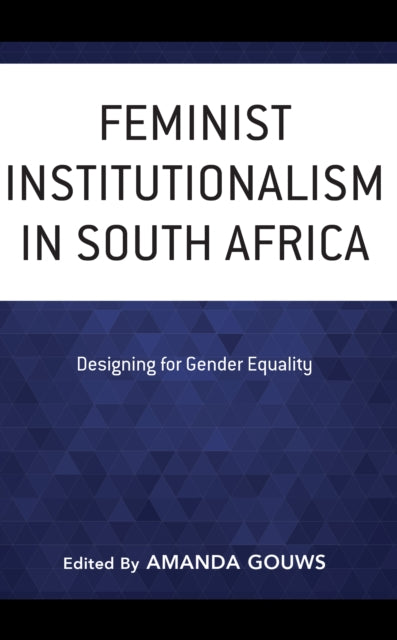
The book explores feminist institutionalism by examining the South African Commission for Gender Equality's successes and failures over 20 years and providing insights into the design of national gender machineries. It sheds light on choices for institutional design during democratic transitions, co-optation, silences, and resourcing, with broad appeal for scholars of feminist institutionalism.
Format: Hardback
Length: 346 pages
Publication date: 01 November 2022
Publisher: Rowman & Littlefield
Feminist Institutionalism: Can Gender Equality Be Designed? is a book that explores the question of whether gender equality can be designed through the lens of feminist institutionalism. It provides a critical analysis of the South African Commission for Gender Equality (SACGE) over a period of more than 20 years, assessing its successes and failures. The book also sheds light on the design of national gender machineries during democratic transitions, the co-optation of institutions, the silences and collusions of those selected to work in the institutions, and the resourcing of institutions and their impact on policy making for women's substantive equality.
The book is divided into three main sections. The first section provides an overview of feminist institutionalism and its key concepts, including the importance of gender equality, the role of institutions in shaping gender relations, and the need for institutional design to address gender inequality. The second section examines the SACGE's history, structure, and achievements, as well as its challenges and limitations. The third section focuses on the design of national gender machineries during democratic transitions, the co-optation of institutions, the silences and collusions of those selected to work in the institutions, and the resourcing of institutions and their impact on policy making for women's substantive equality.
One of the key findings of the book is that the design of national gender machineries during democratic transitions is critical to the success of gender equality. The SACGE, for example, was established in 1994 as a statutory body to promote gender equality in South Africa. However, its initial design was flawed, with a lack of resources, political will, and expertise. This led to a slow and ineffective implementation of gender equality policies and programs.
The book also highlights the co-optation of institutions as a major challenge to gender equality. Institutions, such as the judiciary, the police, and the media, are often dominated by men and can be used to perpetuate gender inequality. The SACGE has faced challenges in addressing this issue, including the lack of representation of women in the judiciary and the police.
The silences and collusions of those selected to work in the institutions are also a significant challenge to gender equality. Many women who are selected to work in the institutions are not given the necessary training, support, and resources to carry out their work effectively. This can lead to a lack of accountability and a failure to address gender inequality.
The resourcing of institutions is also a critical issue for gender equality. Institutions need to have sufficient resources to carry out their work effectively, including funding, staff, and equipment. However, many institutions are underfunded and understaffed, which can lead to a lack of capacity and a failure to address gender inequality.
The book also provides insights into the impact of institutional design on policy making for women's substantive equality. Institutional design can influence the way that policies are developed, implemented, and evaluated, and can have a significant impact on the outcomes for women. For example, the SACGE has been successful in developing policies that promote gender equality in the workplace, but has faced challenges in implementing these policies.
In conclusion, Feminist Institutionalism: Can Gender Equality Be Designed? is a book that provides a critical analysis of the South African Commission for Gender Equality and its design of national gender machineries during democratic transitions. The book highlights the importance of institutional design in addressing gender inequality and provides insights into the challenges and limitations of institutional design. The book will have a broad appeal for scholars of feminist institutionalism and will be of interest to policymakers, practitioners, and activists working to promote gender equality.
Dimension: 229 x 152 (mm)
ISBN-13: 9781538160084
UK and International shipping information
UK and International shipping information
UK Delivery and returns information:
- Delivery within 2 - 3 days when ordering in the UK.
- Shipping fee for UK customers from £2.39. Fully tracked shipping service available.
- Returns policy: Return within 30 days of receipt for full refund.
International deliveries:
Shulph Ink now ships to Australia, Belgium, Canada, France, Germany, Ireland, Italy, India, Luxembourg Saudi Arabia, Singapore, Spain, Netherlands, New Zealand, United Arab Emirates, United States of America.
- Delivery times: within 5 - 10 days for international orders.
- Shipping fee: charges vary for overseas orders. Only tracked services are available for most international orders. Some countries have untracked shipping options.
- Customs charges: If ordering to addresses outside the United Kingdom, you may or may not incur additional customs and duties fees during local delivery.