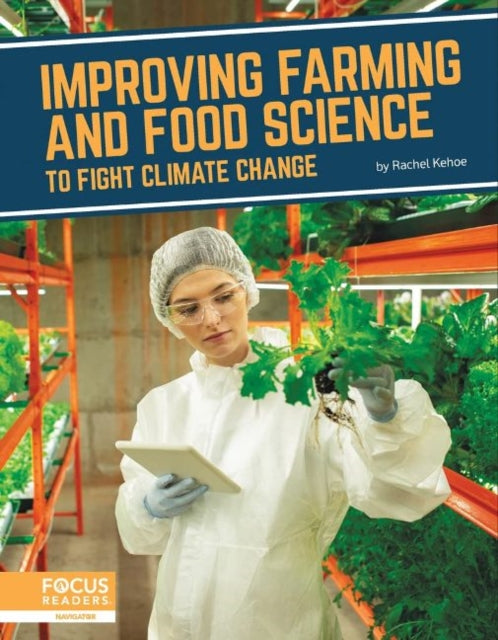
Rachel Kehoe
Fighting Climate Change With Science: Improving Farming and Food Science to Fight Climate Change
Fighting Climate Change With Science: Improving Farming and Food Science to Fight Climate Change
💎 Earn 113 Points (£1.13) on this item.
YOU SAVE £9.35
- Condition: Brand new
- UK Delivery times: Usually arrives within 2 - 3 working days
- UK Shipping: Fee starts at £3.89. Subject to product weight & dimension
Bulk ordering. Want 15 or more copies? Get a personalised quote and bigger discounts. Learn more about bulk orders.
Couldn't load pickup availability
- More about Fighting Climate Change With Science: Improving Farming and Food Science to Fight Climate Change
The title explores how farming and food production contribute to climate change, how improving agricultural science can help slow the crisis, and the challenges scientists face. It includes a table of contents, infographic, sidebars, "Thats Amazing" feature, quiz questions, glossary, additional resources, and index.
Format: Hardback
Length: 32 pages
Publication date: 01 August 2022
Publisher: North Star Editions
The impact of farming and food production on climate change is a complex and multifaceted issue that requires careful consideration. In this comprehensive title, we delve into the various ways in which these activities contribute to greenhouse gas emissions, soil degradation, and water scarcity, and explore the potential solutions that can be implemented to mitigate their effects.
Improving agricultural science is a crucial step in addressing the climate crisis. By developing new technologies, practices, and crop varieties that are more resilient to climate change, farmers can reduce their environmental footprint and increase their productivity. For example, precision agriculture techniques such as crop monitoring, irrigation management, and genetic modification can help farmers optimize their yields while minimizing water and energy consumption.
However, there are several challenges that scientists face in their efforts to improve agricultural science. One of the biggest challenges is the need to balance the demands of food production with the conservation of natural resources. As the global population continues to grow, there is a growing demand for food, which puts pressure on farmers to increase their yields and reduce their costs. This can lead to the overuse of pesticides, fertilizers, and other chemicals, which can have negative impacts on the environment and human health.
Another challenge is the impact of climate change on agriculture. Rising temperatures, changing rainfall patterns, and extreme weather events can all have significant impacts on crop yields and food security. Scientists need to develop new crop varieties that are more resilient to these climate changes, as well as develop strategies for managing water resources and reducing soil erosion.
Despite these challenges, there are several promising solutions that can help mitigate the impact of farming and food production on climate change. One of the most promising solutions is sustainable agriculture, which involves practices that promote soil health, biodiversity, and ecosystem resilience. Sustainable agriculture can help reduce greenhouse gas emissions, improve water quality, and protect natural resources.
Another promising solution is vertical farming, which involves growing crops in vertically stacked layers in controlled environments. Vertical farming can reduce the land required for agriculture, minimize water and energy consumption, and increase crop yields.
In addition to these solutions, there are also several policy and regulatory measures that can be implemented to promote sustainable agriculture and reduce the impact of farming and food production on climate change. For example, governments can provide subsidies and incentives for farmers who adopt sustainable practices, and they can implement regulations to limit the use of pesticides and fertilizers.
In conclusion, farming and food production play a significant role in climate change, but there are several solutions that can be implemented to mitigate their effects. By improving agricultural science, promoting sustainable agriculture, and implementing policy and regulatory measures, we can help to create a more sustainable and resilient food system that meets the needs of our growing global population while minimizing our impact on the environment.
The Impact of Farming and Food Production on Climate Change
Farming and food production are two of the most significant contributors to climate change, with greenhouse gas emissions, soil degradation, and water scarcity being some of the most pressing issues. In this comprehensive title, we will examine the various ways in which these activities contribute to climate change, explore the potential solutions that can be implemented to mitigate their effects, and discuss the challenges that scientists face in their efforts to improve agricultural science.
Greenhouse Gas Emissions
Greenhouse gas emissions are a major contributor to climate change, with agriculture being one of the largest sources of emissions. The main greenhouse gases emitted by agriculture include carbon dioxide (CO2), methane (CH4), and nitrous oxide (N2O). Carbon dioxide is released when plants absorb carbon dioxide from the atmosphere during photosynthesis and release it back into the atmosphere when they die or are burned. Methane is released when livestock and other animals digest food and produce methane gas in their digestive systems. Nitrous oxide is released when soil bacteria break down nitrogen-based fertilizers and release nitrous oxide into the atmosphere.
Soil degradation is another significant issue that contributes to climate change. When soil is degraded, it loses its ability to hold onto carbon and other nutrients, which can lead to increased greenhouse gas emissions. Soil degradation can be caused by a variety of factors, including overgrazing, over-cultivation, and the use of pesticides and fertilizers.
Water scarcity is also a significant issue that contributes to climate change. When water is used for agriculture, it can lead to increased greenhouse gas emissions and soil degradation. Water scarcity can be caused by a variety of factors, including climate change, population growth, and urbanization.
Potential Solutions
Improving agricultural science is a crucial step in addressing the climate crisis. By developing new technologies, practices, and crop varieties that are more resilient to climate change, farmers can reduce their environmental footprint and increase their productivity. For example, precision agriculture techniques such as crop monitoring, irrigation management, and genetic modification can help farmers optimize their yields while minimizing water and energy consumption.
Another potential solution is sustainable agriculture, which involves practices that promote soil health, biodiversity, and ecosystem resilience. Sustainable agriculture can help reduce greenhouse gas emissions, improve water quality, and protect natural resources. Sustainable agriculture practices include crop rotation, cover cropping, and the use of organic fertilizers and pesticides.
Vertical farming is another potential solution that can help reduce the impact of farming and food production on climate change. Vertical farming involves growing crops in vertically stacked layers in controlled environments, which can reduce the land required for agriculture, minimize water and energy consumption, and increase crop yields. Vertical farming can be used to grow a variety of crops, including fruits, vegetables, and meat.
In addition to these solutions, there are also several policy and regulatory measures that can be implemented to promote sustainable agriculture and reduce the impact of farming and food production on climate change. For example, governments can provide subsidies and incentives for farmers who adopt sustainable practices, and they can implement regulations to limit the use of pesticides and fertilizers.
Challenges
Despite the potential solutions discussed above, there are several challenges that scientists face in their efforts to improve agricultural science. One of the biggest challenges is the need to balance the demands of food production with the conservation of natural resources. As the global population continues to grow, there is a growing demand for food, which puts pressure on farmers to increase their yields and reduce their costs. This can lead to the overuse of pesticides, fertilizers, and other chemicals, which can have negative impacts on the environment and human health.
Another challenge is the impact of climate change on agriculture. Rising temperatures, changing rainfall patterns, and extreme weather events can all have significant impacts on crop yields and food security. Scientists need to develop new crop varieties that are more resilient to these climate changes, as well as develop strategies for managing water resources and reducing soil erosion.
In conclusion, farming and food production play a significant role in climate change, with greenhouse gas emissions, soil degradation, and water scarcity being some of the most pressing issues. By improving agricultural science, promoting sustainable agriculture, and implementing policy and regulatory measures, we can help to create a more sustainable and resilient food system that meets the needs of our growing global population while minimizing our impact on the environment.
Weight: 240g
Dimension: 184 x 236 x 10 (mm)
ISBN-13: 9781637392720
UK and International shipping information
UK and International shipping information
We deliver throughout the United Kingdom and to 128 countries and territories worldwide, including the United States, Australia, Canada, Germany, Spain and France.