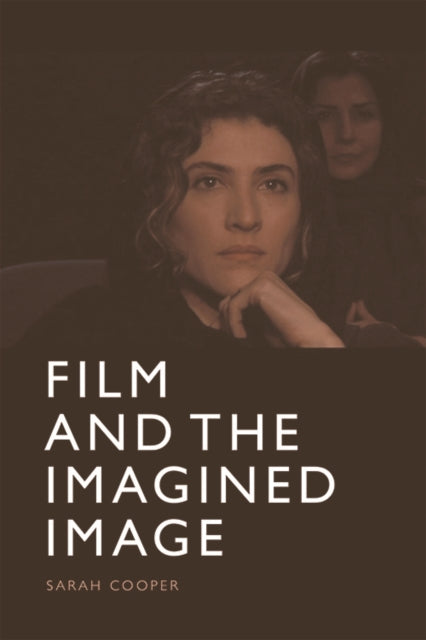
SarahCooper
Film and the Imagined Image
Film and the Imagined Image
💎 Earn 92 Points (£0.92) on this item.
YOU SAVE £5.59
- Condition: Brand new
- UK Delivery times: Usually arrives within 2 - 3 working days
- UK Shipping: Fee starts at £2.39. Subject to product weight & dimension
Bulk ordering. Want 15 or more copies? Get a personalised quote and bigger discounts. Learn more about bulk orders.
Couldn't load pickup availability
- More about Film and the Imagined Image
Film experiments with narration, voice-over, and soundscapes to stimulate and direct the imagination, engaging viewers' thoughts and senses and making an appeal to visualise more than is perceptible on screen. Sarah Cooper's book explores the key processes that serve the imagining of images in the light of the mind, making a profound contribution to the study of spectatorship.
Format: Paperback / softback
Length: 208 pages
Publication date: 31 May 2021
Publisher: Edinburgh University Press
Film is a powerful medium that can engage viewers' thoughts and senses, and it can also make an appeal to visualise more than is perceptible on screen. This book explores the extraordinary ways in which film can stimulate and direct the image-making capacity of the imagination. It brings together an international range of films with debates in philosophy, film theory, literary scholarship, and cognitive psychology, author Sarah Cooper charts the key processes that serve the imagining of images in the light of the mind. Through its navigation of a labile and vivid mental terrain, this innovative work makes a profound contribution to the study of spectatorship.
One of the key processes that film uses to stimulate and direct the image-making capacity of the imagination is narration. Narration can take many forms, including voice-over, dialogue, and narration. Voice-over can be used to provide additional information about the characters, the setting, or the plot, while dialogue can be used to reveal the characters' thoughts and emotions. Narration can also be used to create a sense of tension or suspense.
Another key process that film uses to stimulate and direct the image-making capacity of the imagination is voice-over. Voice-over can be used to provide additional information about the characters, the setting, or the plot, while dialogue can be used to reveal the characters' thoughts and emotions. Voice-over can also be used to create a sense of tension or suspense.
Soundscapes are another key process that film uses to stimulate and direct the image-making capacity of the imagination. Soundscapes can be used to create a sense of atmosphere, to evoke a particular mood, or to create a sense of tension or suspense. Soundscapes can be created using a variety of techniques, including music, sound effects, and dialogue.
Film can also be used to experiment with different types of narration, voice-over, and soundscapes. For example, some films may use a non-linear narrative structure, while others may use a more traditional narrative structure. Some films may also use a variety of soundscapes, while others may use a single soundscapes.
One of the challenges that film faces when experimenting with different types of narration, voice-over, and soundscapes is the need to maintain a sense of coherence. This can be difficult to achieve, as different types of narration, voice-over, and soundscapes can have different effects on the viewer. However, by carefully selecting and combining different types of narration, voice-over, and soundscapes, film can create a powerful and immersive experience for the viewer.
Another challenge that film faces when experimenting with different types of narration, voice-over, and soundscapes is the need to address the ethical implications of these techniques. For example, some films may use voice-over to provide information about a particular issue, while others may use voice-over to create a sense of tension or suspense. By carefully addressing the ethical implications of these techniques, film can create a more meaningful and ethical experience for the viewer.
In addition to its experimental aspects, film can also be used to explore a wide range of themes and issues. For example, some films may explore the nature of love, while others may explore the nature of war. By exploring a wide range of themes and issues, film can help to promote understanding and empathy between different cultures and individuals.
Film can also be used to promote social change. For example, some films may explore the impact of climate change on the environment, while others may explore the impact of social inequality on individuals. By promoting social change, film can help to create a more just and equitable society.
However, film can also be used to promote negative stereotypes and attitudes. For example, some films may portray certain groups of people in a negative light, while others may portray certain groups of people in a positive light. By promoting negative stereotypes and attitudes, film can contribute to the perpetuation of social inequality and discrimination.
To address these challenges, film can be used in a variety of ways. For example, film can be used to educate the public about a particular issue, to promote social change, or to promote understanding and empathy between different cultures and individuals. Film can also be used to challenge the status quo and to promote new ideas and perspectives.
In conclusion, film is a powerful medium that can engage viewers' thoughts and senses, and it can also make an appeal to visualise more than is perceptible on screen. This book explores the extraordinary ways in which film can stimulate and direct the image-making capacity of the imagination. By bringing together an international range of films with debates in philosophy, film theory, literary scholarship, and cognitive psychology, author Sarah Cooper charts the key processes that serve the imagining of images in the light of the mind. Through its navigation of a labile and vivid mental terrain, this innovative work makes a profound contribution to the study of spectatorship.
Weight: 299g
Dimension: 234 x 156 x 11 (mm)
ISBN-13: 9781474452793
This item can be found in:
UK and International shipping information
UK and International shipping information
UK Delivery and returns information:
- Delivery within 2 - 3 days when ordering in the UK.
- Shipping fee for UK customers from £2.39. Fully tracked shipping service available.
- Returns policy: Return within 30 days of receipt for full refund.
International deliveries:
Shulph Ink now ships to Australia, Belgium, Canada, France, Germany, Ireland, Italy, India, Luxembourg Saudi Arabia, Singapore, Spain, Netherlands, New Zealand, United Arab Emirates, United States of America.
- Delivery times: within 5 - 10 days for international orders.
- Shipping fee: charges vary for overseas orders. Only tracked services are available for most international orders. Some countries have untracked shipping options.
- Customs charges: If ordering to addresses outside the United Kingdom, you may or may not incur additional customs and duties fees during local delivery.