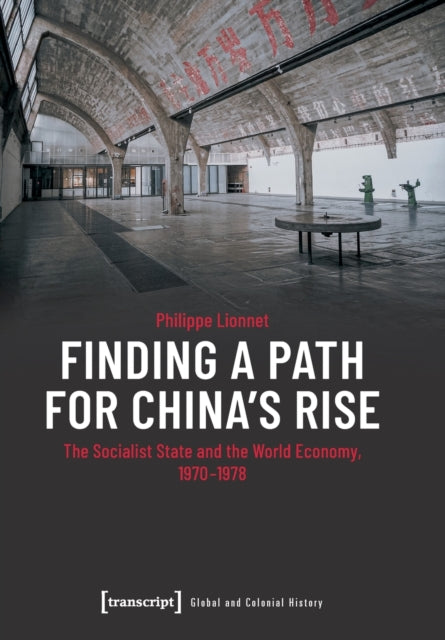
Philippe Lionnet
Finding a Path for China's Rise: The Socialist State and the World Economy, 1970-1978
Finding a Path for China's Rise: The Socialist State and the World Economy, 1970-1978
💎 Earn 256 Points (£2.56) on this item.
YOU SAVE £10.79
- Condition: Brand new
- UK Delivery times: Usually arrives within 2 - 3 working days
- UK Shipping: Fee starts at £2.39. Subject to product weight & dimension
Bulk ordering. Want 15 or more copies? Get a personalised quote and bigger discounts. Learn more about bulk orders.
Couldn't load pickup availability
- More about Finding a Path for China's Rise: The Socialist State and the World Economy, 1970-1978
The rise of China is a significant topic in scholarly and public debate, with Deng Xiaoping's economic reforms being of historical significance. Philippe Lionnet's book provides insight into China's agricultural, industrial, and foreign trade policies of the decade, contributing to understanding interdependencies between China's course and the emerging World Economy.
Format: Paperback / softback
Length: 468 pages
Publication date: 31 January 2023
Publisher: Transcript Verlag
The rise of China is a topic of ongoing scholarly and public discourse, particularly in relation to the global economy and the shifting power dynamics. While much attention has been focused on the Chinese economic reforms initiated by Deng Xiaoping in the late 1970s, which are widely acknowledged as having played a pivotal role in shaping the world economy and the emergence of a new global power, there has been relatively limited exploration of the prehistory of these reforms. In order to enhance our understanding of the interdependencies between China's trajectory and the evolving global economy, Philippe Lionnet takes us on a detailed journey through the significant steps taken in China's agricultural, industrial, and foreign trade policies during the decade.
China's economic reforms, initiated by Deng Xiaoping in the late 1970s, have had a profound impact on the world economy and the emergence of a new global power. These reforms, which focused on market-oriented economic policies, privatization, and opening up to the world, have led to rapid economic growth, increased trade, and the integration of China into the global economy.
One of the key aspects of China's economic reforms was the agricultural sector. Prior to the reforms, China's agriculture was largely state-owned and inefficient, with low productivity and limited access to modern technologies. However, Deng's policies aimed to modernize the agricultural sector, increase productivity, and improve farmers' livelihoods.
The reforms included the introduction of private farming, the promotion of agricultural cooperatives, and the implementation of land reform policies. These measures led to a significant increase in agricultural output, improved food security, and the emergence of a new class of rural entrepreneurs. The reforms also led to the expansion of rural infrastructure, such as roads, irrigation systems, and power grids, which facilitated the transportation of goods and the development of rural industries.
In addition to the agricultural sector, China's industrial sector also underwent significant changes during the 1980s. The reforms aimed to promote private enterprise, attract foreign investment, and modernize the manufacturing industry. The government implemented policies such as deregulation, privatization, and the establishment of special economic zones to encourage foreign investment and promote technological innovation.
The results of these reforms were impressive. China's industrial output grew rapidly, becoming one of the world's largest manufacturing economies. The country's manufacturing sector has become known for its high-quality products, low-cost production, and innovative technologies. China has also become a major exporter of goods, particularly machinery, electronics, and textiles, contributing to the growth of the global economy.
Another important aspect of China's economic reforms was the foreign trade policy. Prior to the reforms, China was heavily reliant on exports and imports, with a trade deficit that was a significant burden on the country's economy. However, Deng's policies aimed to promote exports and reduce imports, while also opening up to the world.
The reforms included the establishment of free trade zones, the reduction of tariffs and trade barriers, and the promotion of foreign investment. These measures led to a significant increase in China's exports, particularly to developed countries such as the United States, Europe, and Japan. China has also become a major importer of goods, particularly oil and natural gas, which have helped to fuel its economic growth.
Despite the significant achievements of China's economic reforms, there have been challenges and criticisms associated with them. Some critics argue that the reforms have led to increased inequality, environmental degradation, and social unrest. Others argue that the reforms have led to a loss of Chinese cultural identity and that the country has become too dependent on foreign markets.
Despite these criticisms, it is important to recognize the transformative impact of China's economic reforms on the global economy and the world. China's rise as a global power has led to increased economic opportunities for countries around the world, and has contributed to the growth of the global economy. China's success has also inspired other countries to pursue market-oriented economic policies and reforms, leading to a more interconnected and prosperous global economy.
In conclusion, the rise of China is a topic of ongoing scholarly and public discourse, particularly in relation to the global economy and the shifting power dynamics. While much attention has been focused on the Chinese economic reforms initiated by Deng Xiaoping in the late 1970s, there has been relatively limited exploration of the prehistory of these reforms. Philippe Lionnet's book, "China's Economic Policies in the 1980s: A Decade of Reform and Opening Up," provides a valuable contribution to our understanding of the interdependencies between China's course and the emerging World Economy. By examining the significant steps taken in China's agricultural, industrial, and foreign trade policies during the decade, Lionnet helps us to understand the factors that have shaped China's economic development and the impact of these policies on the global economy. As we continue to monitor China's economic growth and its role in the global economy, it is important to continue to explore the prehistory of these reforms and to consider the challenges and opportunities that they present.
Dimension: 24 x 16 (mm)
ISBN-13: 9783837664225
This item can be found in:
UK and International shipping information
UK and International shipping information
UK Delivery and returns information:
- Delivery within 2 - 3 days when ordering in the UK.
- Shipping fee for UK customers from £2.39. Fully tracked shipping service available.
- Returns policy: Return within 30 days of receipt for full refund.
International deliveries:
Shulph Ink now ships to Australia, Belgium, Canada, France, Germany, Ireland, Italy, India, Luxembourg Saudi Arabia, Singapore, Spain, Netherlands, New Zealand, United Arab Emirates, United States of America.
- Delivery times: within 5 - 10 days for international orders.
- Shipping fee: charges vary for overseas orders. Only tracked services are available for most international orders. Some countries have untracked shipping options.
- Customs charges: If ordering to addresses outside the United Kingdom, you may or may not incur additional customs and duties fees during local delivery.