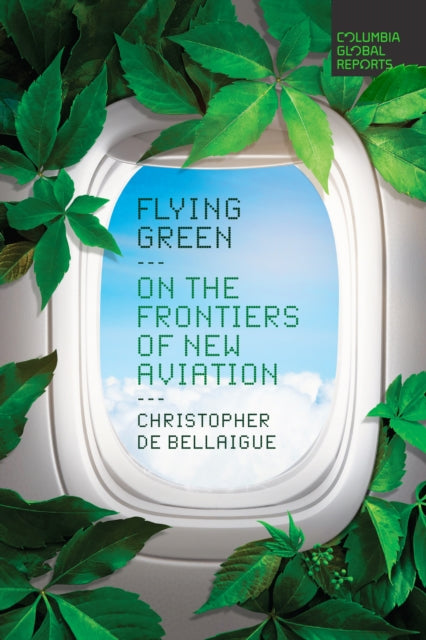
Christopher de Bellaigue
Flying Green: On the Frontiers of New Aviation
Flying Green: On the Frontiers of New Aviation
💎 Earn 45 Points (£0.45) on this item.
YOU SAVE £2.80
- Condition: Brand new
- UK Delivery times: Usually arrives within 2 - 3 working days
- UK Shipping: Fee starts at £2.39. Subject to product weight & dimension
Bulk ordering. Want 15 or more copies? Get a personalised quote and bigger discounts. Learn more about bulk orders.
Couldn't load pickup availability
- More about Flying Green: On the Frontiers of New Aviation
Flying will soon be responsible for 19 percent of global emissions, but aviation will witness more innovation than at any time since the invention of the jet engine in the 1940s. Flying Green explores the search for a way to fly green, featuring inventors, visionaries, and entrepreneurs who are developing new technologies to make planes more fuel-efficient and environmentally friendly.
Format: Paperback / softback
Length: 111 pages
Publication date: 18 May 2023
Publisher: Columbia Global Reports
The aviation industry is one of the fastest-growing sectors in the world, with projections suggesting that it will account for 19% of global emissions by 2030. This has led to a growing number of people who are choosing to avoid flying altogether, and a significant investment in new technologies that aim to make flying more sustainable.
One of the most promising technologies for reducing the environmental impact of flying is the use of hydrogen fuel cells. These cells convert hydrogen into electricity, which powers an electric motor, eliminating the need for fossil fuels. Several airlines, including Airbus and Boeing, are already testing hydrogen-powered planes, and it is expected that these will become more common in the coming years.
Another innovative technology is the use of biofuels, which are made from organic materials such as corn, sugarcane, and vegetable oil. These fuels can reduce the carbon footprint of flying by up to 80% compared to fossil fuels. However, the production of biofuels also requires a significant amount of land and water, which can have negative environmental impacts.
In addition to these technological solutions, there are also a number of behavioral changes that can be made to reduce the environmental impact of flying. For example, passengers can choose to fly with airlines that have a commitment to sustainability, such as those that use fuel-efficient planes or offset their carbon emissions. Passengers can also reduce their carbon footprint by choosing to fly direct rather than connecting through multiple cities, and by packing light to reduce the weight of the plane.
Despite these efforts, there are still challenges to be overcome in the quest to make flying green. One of the biggest challenges is the high cost of developing and implementing new technologies, which can make them difficult for airlines to adopt. Another challenge is the need for regulatory changes to support the use of sustainable fuels and technologies, which can vary widely between countries.
Despite these challenges, there is a growing sense of optimism that flying can be made green in the coming decades. With continued investment in new technologies and a commitment to sustainable practices, it is possible to reduce the environmental impact of flying and make it a more sustainable mode of transportation.
In conclusion, flying can be green, but it requires a combination of technological solutions, behavioral changes, and regulatory support. By working together to reduce the environmental impact of flying, we can ensure that this important mode of transportation continues to grow and thrive while also protecting the planet for future generations.
In Flying Green, author Christopher de Bellaigue takes readers on a journey to explore the possibilities of making flying more sustainable. The book meets inventors, visionaries, and entrepreneurs who are at the forefront of new technologies that aim to reduce the environmental impact of air travel.
One of the most promising technologies for reducing emissions is the use of hydrogen fuel cells. These cells convert hydrogen into electricity, which powers an electric motor, eliminating the need for fossil fuels. Several airlines, including Airbus and Boeing, are already testing hydrogen-powered planes, and it is expected that these will become more common in the coming years.
Another innovative technology is the use of biofuels, which are made from organic materials such as corn, sugarcane, and vegetable oil. These fuels can reduce the carbon footprint of flying by up to 80% compared to fossil fuels. However, the production of biofuels also requires a significant amount of land and water, which can have negative environmental impacts.
In addition to these technological solutions, there are also a number of behavioral changes that can be made to reduce the environmental impact of flying. For example, passengers can choose to fly with airlines that have a commitment to sustainability, such as those that use fuel-efficient planes or offset their carbon emissions. Passengers can also reduce their carbon footprint by choosing to fly direct rather than connecting through multiple cities, and by packing light to reduce the weight of the plane.
Despite these efforts, there are still challenges to be overcome in the quest to make flying green. One of the biggest challenges is the high cost of developing and implementing new technologies, which can make them difficult for airlines to adopt. Another challenge is the need for regulatory changes to support the use of sustainable fuels and technologies, which can vary widely between countries.
Despite these challenges, there is a growing sense of optimism that flying can be made green in the coming decades. With continued investment in new technologies and a commitment to sustainable practices, it is possible to reduce the environmental impact of flying and make it a more sustainable mode of transportation.
In conclusion, flying can be green, but it requires a combination of technological solutions, behavioral changes, and regulatory support. By working together
Together, we can ensure that this important mode of transportation continues to grow and thrive while also protecting the planet for future generations.
Dimension: 191 x 127 (mm)
ISBN-13: 9781735913780
This item can be found in:
UK and International shipping information
UK and International shipping information
UK Delivery and returns information:
- Delivery within 2 - 3 days when ordering in the UK.
- Shipping fee for UK customers from £2.39. Fully tracked shipping service available.
- Returns policy: Return within 30 days of receipt for full refund.
International deliveries:
Shulph Ink now ships to Australia, Belgium, Canada, France, Germany, Ireland, Italy, India, Luxembourg Saudi Arabia, Singapore, Spain, Netherlands, New Zealand, United Arab Emirates, United States of America.
- Delivery times: within 5 - 10 days for international orders.
- Shipping fee: charges vary for overseas orders. Only tracked services are available for most international orders. Some countries have untracked shipping options.
- Customs charges: If ordering to addresses outside the United Kingdom, you may or may not incur additional customs and duties fees during local delivery.