Christopher Witulski
Focus: Music and Religion of Morocco
Focus: Music and Religion of Morocco
💎 Earn 226 Points (£2.26) on this item.
We can order this item for you. Delivery usually takes about 4 to 6 weeks.
This item is not held in our immediate stock. We will order it for you after checkout.
Estimated delivery: About 4 to 6 weeks
YOU SAVE £2.69
- Condition: Brand new
- UK Delivery times: Usually arrives within 2 - 3 working days
- UK Shipping: Fee starts at £2.39. Subject to product weight & dimension
Bulk ordering. Want 15 or more copies? Get a personalised quote and bigger discounts. Learn more about bulk orders.
Couldn't load pickup availability
- More about Focus: Music and Religion of Morocco
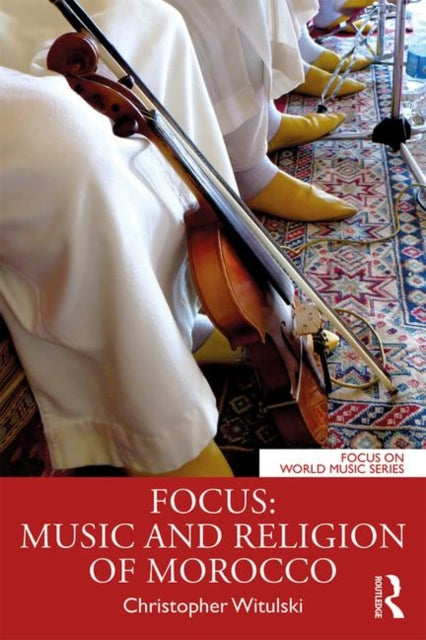
Focus: Music and Religion of Morocco explores the region's history, musical practices, and how they relate to religious life, post-colonial economic struggle, and global media. It highlights how music creates a sense of personal and national identity, contests mainstreams, and navigates musical and religious expectations to appeal to audiences.
Format: Paperback / softback
Length: 162 pages
Publication date: 24 May 2019
Publisher: Taylor & Francis Ltd
Morocco is a country with a rich and diverse musical heritage that is deeply intertwined with its religious and cultural traditions. This essay will explore the relationship between music and religion in Morocco, examining how music is used to express religious beliefs, celebrate religious festivals, and promote social and cultural unity.
One of the most significant ways in which music is used in Morocco to express religious beliefs is through the genre of Sufi music. Sufi music is a form of Islamic music that emphasizes the mystical and spiritual aspects of Islam and is often performed by musicians who are members of the Sufi brotherhood. Sufi music is characterized by its repetitive rhythms, call-and-response vocals, and the use of instruments such as the oud, qanun, and duduk.
Sufi music is used in Morocco to express a range of religious beliefs, including the belief in the oneness of God, the importance of meditation and self-discipline, and the pursuit of spiritual enlightenment. Sufi musicians use their music to convey these beliefs to their audiences and to help them connect with their spiritual selves.
Another significant way in which music is used in Morocco to express religious beliefs is through the celebration of religious festivals. Morocco is home to a number of religious festivals, including the Hajj, which is the annual pilgrimage to Mecca that is performed by millions of Muslims from around the world. During the Hajj, Muslims perform a series of rituals and prayers, and music is used to enhance the spiritual atmosphere of the pilgrimage.
Music is also used to celebrate other religious festivals in Morocco, such as Eid al-Fitr, which marks the end of Ramadan, and Eid al-Adha, which marks the sacrifice of Abraham's son. During these festivals, musicians perform traditional music that is associated with the celebration of the holiday, such as the qanun, a traditional Moroccan instrument that is played during Eid al-Adha.
In addition to expressing religious beliefs, music is also used in Morocco to promote social and cultural unity. Music is a powerful tool for bringing people together and promoting a sense of community, and it is often used to celebrate cultural events and traditions.
One example of this is the Festival of the Arts in Essaouira, which is held annually
every year in the city of Essaouira on the coast of Morocco. The Festival of the Arts is a three-day festival that celebrates the cultural heritage of Morocco, including its music, dance, and art. During the festival, musicians perform traditional music that is associated with different regions of Morocco, such as the music of the Rif Mountains, the music of the Sahara, and the music of the Maghreb.
Another example of this is the Festival of the World Sacred Music, which is held every year in the city of Fez. The Festival of the World Sacred Music is a four-day festival that celebrates the music of different religious traditions, including Islam, Judaism, Christianity, and Hinduism. During the festival, musicians from around the world perform traditional music that is associated with their respective religious traditions, and the festival also includes lectures, workshops, and exhibitions that explore the relationship between music and religion.
In conclusion, music is a powerful tool for expressing religious beliefs, celebrating religious festivals, and promoting social and cultural unity in Morocco. Sufi music is used to express religious beliefs, while traditional music is used to celebrate religious festivals and promote social and cultural unity. The Festival of the Arts in Essaouira and the Festival of the World Sacred Music in Fez are two examples of how music is used to celebrate the cultural heritage of Morocco and promote social and cultural unity.
Weight: 324g
Dimension: 237 x 161 x 11 (mm)
ISBN-13: 9781138094581
UK and International shipping information
UK and International shipping information
UK Delivery and returns information:
- Delivery within 2 - 3 days when ordering in the UK.
- Shipping fee for UK customers from £2.39. Fully tracked shipping service available.
- Returns policy: Return within 30 days of receipt for full refund.
International deliveries:
Shulph Ink now ships to Australia, Belgium, Canada, France, Germany, Ireland, Italy, India, Luxembourg Saudi Arabia, Singapore, Spain, Netherlands, New Zealand, United Arab Emirates, United States of America.
- Delivery times: within 5 - 10 days for international orders.
- Shipping fee: charges vary for overseas orders. Only tracked services are available for most international orders. Some countries have untracked shipping options.
- Customs charges: If ordering to addresses outside the United Kingdom, you may or may not incur additional customs and duties fees during local delivery.