Sadhana Naithani
Folklore in Baltic History: Resistance and Resurgence
Folklore in Baltic History: Resistance and Resurgence
💎 Earn 183 Points (£1.83) on this item.
YOU SAVE £2.18
- Condition: Brand new
- UK Delivery times: Usually arrives within 2 - 3 working days
- UK Shipping: Fee starts at £3.89. Subject to product weight & dimension
Bulk ordering. Want 15 or more copies? Get a personalised quote and bigger discounts. Learn more about bulk orders.
Couldn't load pickup availability
- More about Folklore in Baltic History: Resistance and Resurgence
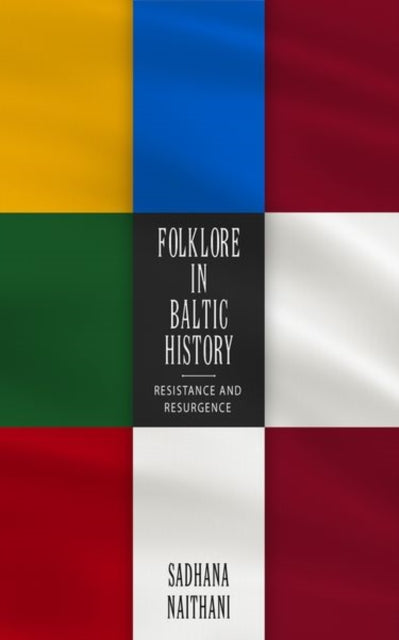
Folklore in the Baltic History: Resistance and Resurgence explores the role of folklore, folklore archives, and folklore studies in the contemporary history of Estonia, Latvia, and Lithuania, occupied by Russia, Germany, and the USSR at the end of the Second World War. Despite pressure and surveillance, folklore continued to be a matter of identity, and folksongs became the marching songs of crowds resisting Soviet control. Since independence in 1991, folklore scholars and institutions have revamped and reconstituted folkloristics, and today all three countries have many active scholars and institutions. Sadhana Naithani's intermedial and interdisciplinary methodology combines the study of written works, archival documents, life-stories, and conversations with folklorists, ethnologists, archivists, and historians to create a dramatic, first-ever history of Baltic folkloristics.
\n Format: Paperback / softback
\n Length: 80 pages
\n Publication date: 30 March 2019
\n Publisher: University Press of Mississippi
\n
Folklore in the Baltic History: Resistance and Resurgence delves into the profound role of folklore, folklore archives, and folklore studies in the contemporary history of Estonia, Latvia, and Lithuania, collectively known as the Baltic countries. These nations experienced a tumultuous journey, having been occupied by Russia, Germany, and finally the USSR at the close of World War II. However, their path to freedom began in 1991, marking a significant turning point in their collective history.
The period under Soviet rule brought about significant changes to the societies and cultures of the Baltic countries. Individuals and institutions involved in folklore, such as archives, university departments, and folklorists, faced unique challenges and restrictions. Some pioneering folklorists sought refuge in other countries, while many others witnessed the transformation of their institutions and the meaning of folklore studies. Despite the suppression, the USSR did not entirely halt folklore studies but instead led the field to new methods and approaches.
Amidst the pressure, folklore remained an integral part of identity, and folk songs became the rallying cries of crowds resisting Soviet control in the late 1980s. Since gaining independence in 1991, folklore scholars and institutions in the Baltic countries have worked tirelessly to revamp and reconstitute folkloristics. Today, these nations boast numerous active scholars and institutions dedicated to the study and preservation of their rich cultural heritage.
Sadhana Naithani, in her remarkable work, employs an intermedial and interdisciplinary methodology to recount this resilient arc. Through extensive research in Tartu, Riga, and Vilnius, she combines the study of written works, archival documents, life-stories, and conversations with folklorists, ethnologists, archivists, and historians. Naithani's approach includes the recording of conversations on video, which serves as a contemporary reflection on issues of the recent past. By examining life-stories and oral history projects, Naithani juxtaposes the history of folkloristics with the lived experiences of the folk during the Soviet period in the Baltic countries. The result is a dramatic and groundbreaking history that sheds light on a previously overlooked chapter of European history.
This comprehensive account provides a deep understanding of the role of folklore in shaping the identity and resistance of the Baltic countries during the Soviet era. It highlights the resilience of the folk and their unwavering commitment to their cultural heritage, even in the face of adversity. Folklore in the Baltic History: Resistance and Resurgence is a valuable contribution to the field of folklore studies and offers a rich tapestry of historical insights. It serves as a reminder of the power of folklore to preserve and celebrate cultural identity, and to inspire resistance and resilience in the face of challenges.
\n Weight: 182g\n
Dimension: 214 x 134 x 8 (mm)\n
ISBN-13: 9781496823571\n \n
UK and International shipping information
UK and International shipping information
We deliver throughout the United Kingdom and to 128 countries and territories worldwide, including the United States, Australia, Canada, Germany, Spain and France.