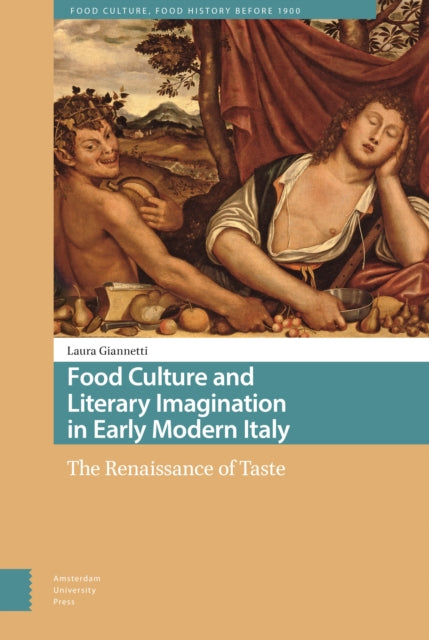
Laura Giannetti
Food Culture and Literary Imagination in Early Modern Italy: The Renaissance of Taste
Food Culture and Literary Imagination in Early Modern Italy: The Renaissance of Taste
💎 Earn 712 Points (£7.12) on this item.
We can order this item for you. Delivery usually takes about 4 to 6 weeks.
This item is not held in our immediate stock. We will order it for you after checkout.
Estimated delivery: About 4 to 6 weeks
YOU SAVE £3.51
- Condition: Brand new
- UK Delivery times: Usually arrives within 2 - 3 working days
- UK Shipping: Fee starts at £2.39. Subject to product weight & dimension
Bulk ordering. Want 15 or more copies? Get a personalised quote and bigger discounts. Learn more about bulk orders.
Couldn't load pickup availability
- More about Food Culture and Literary Imagination in Early Modern Italy: The Renaissance of Taste
During the late 16th century, a shift occurred in the perception of food and taste in Italy, challenging traditional social values, morality, and medical discourse. This transformation was explored through the literature of the time, revealing a complex and evocative vision of food culture. While moral and disciplinary visions attempted to control the discourse on food and eating, literary works contributed to a revolution in eating and taste, questioning and overturning long-held beliefs about food, pleasure, and the senses.
Format: Hardback
Length: 260 pages
Publication date: 21 February 2022
Publisher: Amsterdam University Press
As the long sixteenth century drew to a close, a new and vibrant perspective on food and taste emerged, challenging the established norms and values of the time. This transformative shift in perspective saw material practice, sensory perceptions, and imagination intertwine with traditional social structures, morality, and dietary/medical discourse. By delving into the rich tapestry of the literature of early modern Italy, Food Culture and the Literary Imagination in Early Modern Italy unveils the intricate and evocative ways in which the culture of food was imagined during this period. While moral and disciplinary visions sought to control the discourse on food and eating in medical and dietetic treatises and prescriptive literature, a diverse range of literary works played a crucial role in sparking a revolution in eating and taste.
Within this literary landscape, long-held visions of food and eating were scrutinized, tested, and ultimately overturned. The boundaries between social order, medicine, sexuality, gender, religion, and morality were blurred, paving the way for new understandings and interpretations of these complex aspects of human experience. The pleasures associated with eating were redefined, expanding beyond mere sustenance to encompass a broader spectrum of emotions and sensations.
This shift in perspective had a lasting impact on the way individuals perceived and engaged with food. It challenged the notion of food as merely a means of survival and instead emphasized its role as a source of enjoyment, creativity, and cultural expression. The literature of the time explored the sensory dimensions of food, describing the flavors, textures, and aromas that shaped our eating experiences. It also delved into the social and cultural significance of food, examining how it was used to establish and maintain relationships, celebrate rituals, and convey messages.
Furthermore, the literature of the time played a vital role in shaping public opinion and policy regarding food and eating. It raised awareness about the importance of a healthy diet, promoted the use of natural and fresh ingredients, and criticized the excesses and abuses associated with indulgence and gluttony. By challenging the dominant narratives and promoting alternative perspectives, the literature of the early modern period contributed to a more informed and responsible approach to food and eating.
In conclusion, the study of Food Culture and the Literary Imagination in Early Modern Italy offers a profound exploration of the complex and multifaceted relationship between food, taste, and culture. It reveals how the early modern Italian culture of food was imagined, challenged, and transformed through the literary lens, ultimately shaping the way we perceive and experience food today. Through its rich and evocative narratives, this literature provides valuable insights into the social, cultural, and moral dimensions of food and eating, shedding light on the ways in which our understanding of these essential aspects of human life has evolved over time.
Weight: 542g
Dimension: 161 x 241 x 22 (mm)
ISBN-13: 9789463728034
UK and International shipping information
UK and International shipping information
UK Delivery and returns information:
- Delivery within 2 - 3 days when ordering in the UK.
- Shipping fee for UK customers from £2.39. Fully tracked shipping service available.
- Returns policy: Return within 30 days of receipt for full refund.
International deliveries:
Shulph Ink now ships to Australia, Belgium, Canada, France, Germany, Ireland, Italy, India, Luxembourg Saudi Arabia, Singapore, Spain, Netherlands, New Zealand, United Arab Emirates, United States of America.
- Delivery times: within 5 - 10 days for international orders.
- Shipping fee: charges vary for overseas orders. Only tracked services are available for most international orders. Some countries have untracked shipping options.
- Customs charges: If ordering to addresses outside the United Kingdom, you may or may not incur additional customs and duties fees during local delivery.