Dianna Smith,Claire Thompson
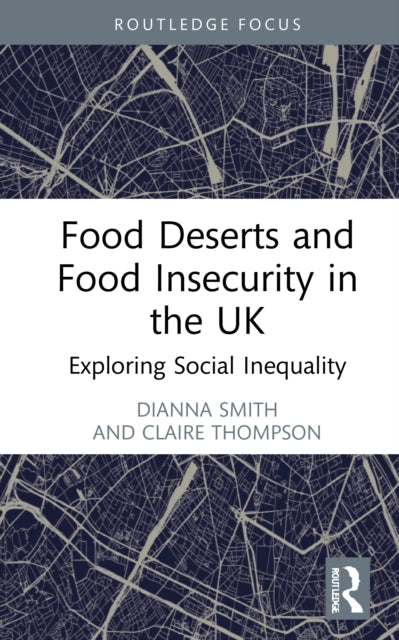
Food Deserts and Food Insecurity in the UK: Exploring Social Inequality
Food Deserts and Food Insecurity in the UK: Exploring Social Inequality
💎 Earn 259 Points (£2.59) on this item.
We can order this item for you. Delivery usually takes about 4 to 6 weeks.
This item is not held in our immediate stock. We will order it for you after checkout.
Estimated delivery: About 4 to 6 weeks
YOU SAVE £3.08
- Condition: Brand new
- UK Delivery times: Usually arrives within 2 - 3 working days
- UK Shipping: Fee starts at £2.39. Subject to product weight & dimension
Bulk ordering. Want 15 or more copies? Get a personalised quote and bigger discounts. Learn more about bulk orders.
Couldn't load pickup availability
- More about Food Deserts and Food Insecurity in the UK: Exploring Social Inequality
In the UK, food insecurity has become a reality for many households due to the COVID-19 pandemic and the rising cost of living. This book offers a new framework to examine the many influences on local-level food inequalities, from individual circumstances to where a person lives. It documents the transition from area-based framing of food resources to approaches that focus on household food poverty and the rise of food banks. By proposing a new framework for food insecurity research and drawing on real-world examples, the book aims to support academic and applied researchers in understanding and mitigating the impacts of food insecurity in local communities.
Format: Hardback
Length: 84 pages
Publication date: 09 August 2022
Publisher: Taylor & Francis Ltd
In the United Kingdom (UK), food insecurity remains a pressing social issue, with disparities in access to healthy and nutritious food exacerbating existing inequalities. The COVID-19 pandemic has further highlighted the vulnerability of low-income households, who face increased financial strain and reduced employment opportunities. This book explores the complex social dynamics that contribute to food insecurity in the UK, drawing parallels with the United States (US).
Access to food in the UK, particularly healthy food, is a constant concern for many individuals, despite the country's relative wealth. Crises, such as the COVID-19 pandemic, have coincided with a steep rise in the cost of living, leading to a significant increase in household food insecurity. According to estimates, around one in five households in the UK experienced food insecurity in 2020-2021, with children and older adults being particularly vulnerable.
The book introduces a novel framework to examine the various factors that contribute to local-level food inequalities, whether they result from individual circumstances or geographical location. By considering the interplay between individual, household, and community-level factors, the framework aims to provide a comprehensive understanding of food security. It will be valuable for researchers new to the field, as well as those with more experience, allowing them to explore the multifaceted influences on food access and security.
The book provides a thorough background to two key concepts: food deserts and food insecurity. It documents the transition from an area-based framing of food resources to approaches that focus on household food poverty and the rise of food banks. The book emphasizes the importance of recognizing the diverse range of place-based factors that shape experiences of food insecurity, including transport, employment, rural isolation, and local politics. By proposing a new framework for food insecurity research, the book encourages researchers to acknowledge and explore the ever-changing landscape of factors that contribute to food insecurity in local communities.
This book will appeal to a wide range of students and scholars interested in food and nutrition security, public health, sociology, and food policy. It will provide valuable insights into the social inequalities surrounding food insecurity and offer practical solutions to address these challenges. Food policy professionals and policymakers will also find this book useful, as it provides a comprehensive understanding of the factors that contribute to food insecurity and offers recommendations for improving access to healthy and nutritious food.
In conclusion, food insecurity remains a significant social issue in the UK and the US, with disparities in access to healthy and nutritious food exacerbating existing inequalities. This book offers a novel framework for examining these issues and provides valuable insights into the complex social dynamics that contribute to food insecurity. By recognizing the diverse range of place-based factors that shape experiences of food insecurity, researchers and policymakers can work towards creating more equitable and sustainable food systems.
Weight: 331g
Dimension: 216 x 138 (mm)
ISBN-13: 9781032026756
This item can be found in:
UK and International shipping information
UK and International shipping information
UK Delivery and returns information:
- Delivery within 2 - 3 days when ordering in the UK.
- Shipping fee for UK customers from £2.39. Fully tracked shipping service available.
- Returns policy: Return within 30 days of receipt for full refund.
International deliveries:
Shulph Ink now ships to Australia, Belgium, Canada, France, Germany, Ireland, Italy, India, Luxembourg Saudi Arabia, Singapore, Spain, Netherlands, New Zealand, United Arab Emirates, United States of America.
- Delivery times: within 5 - 10 days for international orders.
- Shipping fee: charges vary for overseas orders. Only tracked services are available for most international orders. Some countries have untracked shipping options.
- Customs charges: If ordering to addresses outside the United Kingdom, you may or may not incur additional customs and duties fees during local delivery.