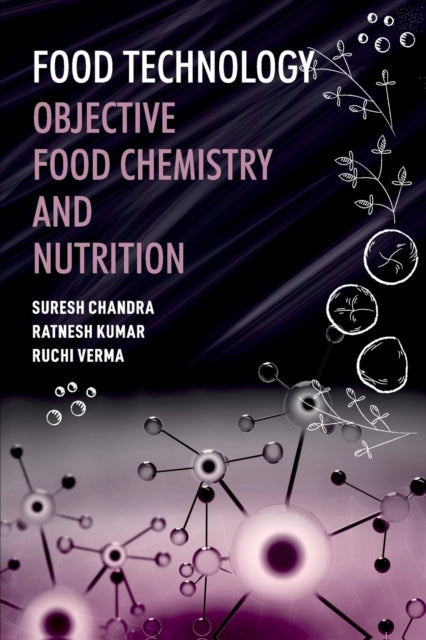
Suresh Chandra,Ratnesh Kumar,Ruchi Verma
Food Technology: Objective Food Chemistry And Nutrition
Food Technology: Objective Food Chemistry And Nutrition
💎 Earn 200 Points (£2.00) on this item.
YOU SAVE £2.73
- Condition: Brand new
- UK Delivery times: Usually arrives within 2 - 3 working days
- UK Shipping: Fee starts at £2.39. Subject to product weight & dimension
Bulk ordering. Want 15 or more copies? Get a personalised quote and bigger discounts. Learn more about bulk orders.
Couldn't load pickup availability
- More about Food Technology: Objective Food Chemistry And Nutrition
The book Food Technology: Objective Food Chemistry and Nutrition provides a comprehensive and simplified understanding of Food Chemistry & Nutrition for students studying Food Technology, covering various topics and chemical/biochemical changes in food during processing. It is beneficial for higher studies, competitive examinations, and various fields related to food science and technology.
Format: Paperback / softback
Length: 392 pages
Publication date: 27 May 2022
Publisher: New India Publishing Agency- Nipa
The primary objective of the book Food Technology: Objective Food Chemistry and Nutrition is to provide a comprehensive and simplified understanding of the fundamental principles of Food Chemistry and Nutrition to students studying Food Technology. The book comprises nine chapters, each containing concise notes and multiple-choice questions on various topics such as carbohydrates, dietary fiber, starch, proteins, lipids, pigments, food flavors, enzymes, nutrition, balanced diets, essential amino acids and essential fatty acids, protein efficiency ratio, water-soluble and fat-soluble vitamins, minerals' role in nutrition, co-factors, anti-nutrients, nutraceuticals, and nutrient deficiency diseases. Additionally, it covers chemical and biochemical changes that occur in food during various processing methods.
This book is particularly beneficial for students preparing for higher studies or appearing in competitive examinations, such as GATE/NET/ARS/FSSAI, among others. It is also useful for students pursuing Food Processing, Dairy and Food Engineering, Food Science and Technology, Process and Food Engineering, Food Technology, Dairy Science and Technology, Post-Harvest Engineering and Technology, Agricultural Structure and Process Engineering, Horticulture (specialized in Post-Harvest Technology), and Home Science (Food and Nutrition), among other fields. Furthermore, it is helpful for those preparing for competitive examinations, such as ICAR/CSIR/UGC fellowships, NET, ARS, SRF, JRF, and for written exams and interviews for RA/SRF/SMS/Assistant Professor, Food Safety officers, Food inspectors, Public analysts, and national and multinational food process industries, among others.
The book begins with an introduction to Food Chemistry and Nutrition, which provides a brief overview of the field and its importance. It then covers the basic concepts of carbohydrates, dietary fiber, starch, proteins, lipids, pigments, food flavors, enzymes, nutrition, balanced diets, essential amino acids and essential fatty acids, protein efficiency ratio, water-soluble and fat-soluble vitamins, minerals' role in nutrition, co-factors, anti-nutrients, nutraceuticals, and nutrient deficiency diseases.
In the second chapter, the book discusses the chemical and biochemical changes that occur in food during various processing methods. It covers topics such as cooking, freezing, drying, and fermentation, and explains how these processes affect the nutritional value of food. It also discusses the role of enzymes in food processing and the importance of food safety and quality.
The third chapter covers carbohydrates, which are the main source of energy in the human body. It discusses the different types of carbohydrates, including sugars, starches, and fibers, and their effects on health. It also covers the role of carbohydrates in the regulation of blood sugar levels and the prevention of diabetes.
The fourth chapter covers dietary fiber, which is important for maintaining a healthy digestive system. It discusses the different types of dietary fiber, including soluble and insoluble fiber, and their effects on health. It also covers the role of dietary fiber in the prevention of constipation and the regulation of blood cholesterol levels.
The fifth chapter covers starch, which is a major component of many foods. It discusses the different types of starch, including amylose and amylopectin, and their effects on health. It also covers the role of starch in the regulation of blood sugar levels and the prevention of diabetes.
The sixth chapter covers proteins, which are essential for the growth and repair of the body. It discusses the different types of proteins, including amino acids, and their effects on health. It also covers the role of proteins in the regulation of blood pressure and the prevention of heart disease.
The seventh chapter covers lipids, which are a major component of many foods. It discusses the different types of lipids, including saturated and unsaturated fats, and their effects on health. It also covers the role of lipids in the regulation of blood cholesterol levels and the prevention of heart disease.
The eighth chapter covers pigments, which are responsible for the color of many foods. It discusses the different types of pigments, including carotenoids and flavonoids, and their effects on health. It also covers the role of pigments in the prevention of cancer and the regulation of blood pressure.
The ninth chapter covers food flavors, which are important for the enjoyment of food. It discusses the different types of food flavors, including sweet, sour, salty, and bitter, and their effects on health. It also covers the role of food flavors in the prevention of food poisoning and the regulation of blood pressure.
In addition to the chapters on the fundamental principles of Food Chemistry and Nutrition, the book also includes a section on food safety and quality. It covers topics such as foodborne illnesses, food contamination, and food labeling. It also provides guidelines for safe food handling and storage.
The book also includes a section on food processing and technology. It covers topics such as food processing equipment, food processing techniques, and food packaging. It also provides guidelines for food processing and packaging that are safe and efficient.
Overall, the book Food Technology: Objective Food Chemistry and Nutrition is a comprehensive and simplified understanding of the fundamental principles of Food Chemistry and Nutrition to students studying Food Technology. It is particularly beneficial for students preparing for higher studies or appearing in competitive examinations, and it is also useful for students pursuing Food Processing, Dairy and Food Engineering, Food Science and Technology, Process and Food Engineering, Food Technology, Dairy Science and Technology, Post-Harvest Engineering and Technology, Agricultural Structure and Process Engineering, Horticulture (specialized in Post-Harvest Technology), and Home Science (Food and Nutrition). Furthermore, it is helpful for those preparing for competitive examinations, such as ICAR/CSIR/UGC fellowships, NET, ARS, SRF, JRF, and for written exams and interviews for RA/SRF/SMS/Assistant Professor, Food Safety officers, Food inspectors, Public analysts, and national and multinational food process industries, among others.
Weight: 522g
Dimension: 229 x 152 x 21 (mm)
ISBN-13: 9789394490178
This item can be found in:
UK and International shipping information
UK and International shipping information
UK Delivery and returns information:
- Delivery within 2 - 3 days when ordering in the UK.
- Shipping fee for UK customers from £2.39. Fully tracked shipping service available.
- Returns policy: Return within 30 days of receipt for full refund.
International deliveries:
Shulph Ink now ships to Australia, Belgium, Canada, France, Germany, Ireland, Italy, India, Luxembourg Saudi Arabia, Singapore, Spain, Netherlands, New Zealand, United Arab Emirates, United States of America.
- Delivery times: within 5 - 10 days for international orders.
- Shipping fee: charges vary for overseas orders. Only tracked services are available for most international orders. Some countries have untracked shipping options.
- Customs charges: If ordering to addresses outside the United Kingdom, you may or may not incur additional customs and duties fees during local delivery.