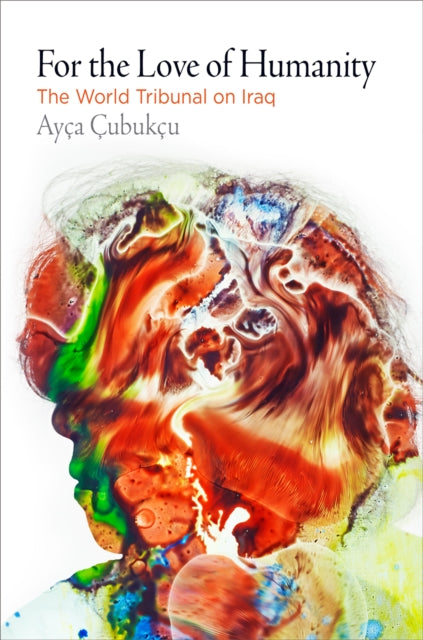
Ayca Cubukcu
For the Love of Humanity: The World Tribunal on Iraq
For the Love of Humanity: The World Tribunal on Iraq
💎 Earn 99 Points (£0.99) on this item.
YOU SAVE £4.18
- Condition: Brand new
- UK Delivery times: Usually arrives within 2 - 3 working days
- UK Shipping: Fee starts at £2.39. Subject to product weight & dimension
Bulk ordering. Want 15 or more copies? Get a personalised quote and bigger discounts. Learn more about bulk orders.
Couldn't load pickup availability
- More about For the Love of Humanity: The World Tribunal on Iraq
The World Tribunal on Iraq (WTI) emerged from the global antiwar movement in 2003 and sought to document and adjudicate war crimes committed by the United States, the United Kingdom, and their allied forces during the Iraq war. AyÇa ÇubukÇu's book, For the Love of Humanity, illuminates the tribunal and situates debates among WTI activists alongside key jurists, theorists, and critics of global democracy. It addresses the challenges of forging global solidarity against imperialism and makes a case for reevaluating the relationships between law and violence, empire and human rights, and cosmopolitan authority and political autonomy.
Format: Paperback / softback
Length: 240 pages
Publication date: 15 February 2022
Publisher: University of Pennsylvania Press
On February 15, 2003, millions of people around the world demonstrated against the war that the United States, the United Kingdom, and their allies were planning to wage in Iraq. Despite this being the largest protest in the history of humankind, the war on Iraq began the next month. That year, the World Tribunal on Iraq (WTI) emerged from the global antiwar movement that had mobilized against the invasion and subsequent occupation. Like the earlier tribunal on Vietnam convened by Bertrand Russell and Jean-Paul Sartre, the WTI sought to document and provide grounds for adjudicating war crimes committed by the United States, the United Kingdom, and their allied forces during the Iraq war. For the Love of Humanity builds on two years of transnational fieldwork within the decentralized network of antiwar activists who constituted the WTI in some twenty cities around the world. AyÇa ÇubukÇu illuminates the tribunal up close, both as an ethnographer and a sympathetic participant. In the process, she situates debates among WTI activists—a group encompassing scholars, lawyers, students, translators, writers, teachers, and more—alongside key jurists, theorists, and critics of global democracy. WTI activists confronted many dilemmas as they conducted their political arguments and actions, often facing interpretations of human rights and international law that, unlike their own, were not grounded in anti-imperialism. ÇubukÇu approaches this conflict by broadening her lens, incorporating insights into how Amnesty International, Human Rights Watch, and the Iraqi High Tribunal grappled with the realities of Iraq's occupation. Through critical analysis of the global debate surrounding one of the early twenty-first century's most significant world events, For the Love of Humanity addresses the complexities of the WTI's work and its impact on the global antiwar movement. The book explores the tribunal's efforts to document war crimes, the challenges it faced in gaining recognition and legitimacy, and its role in shaping public opinion and policy. ÇubukÇu also examines the tribunal's impact on the individuals involved in the proceedings, including the victims of war crimes and the activists who worked tirelessly to bring them to justice. Through a series of interviews and case studies, ÇubukÇu provides a vivid and compelling account of the WTI's work and its lasting legacy. The book is a must-read for anyone interested in the history of the Iraq war, the global antiwar movement, and the struggle for human rights and justice.
On February 15, 2003, millions of people around the world demonstrated against the war that the United States, the United Kingdom, and their allies were planning to wage in Iraq. Despite this being the largest protest in the history of humankind, the war on Iraq began the next month. That year, the World Tribunal on Iraq (WTI) emerged from the global antiwar movement that had mobilized against the invasion and subsequent occupation. Like the earlier tribunal on Vietnam convened by Bertrand Russell and Jean-Paul Sartre, the WTI sought to document and provide grounds for adjudicating war crimes committed by the United States, the United Kingdom, and their allied forces during the Iraq war. For the Love of Humanity builds on two years of transnational fieldwork within the decentralized network of antiwar activists who constituted the WTI in some twenty cities around the world. AyÇa ÇubukÇu illuminates the tribunal up close, both as an ethnographer and a sympathetic participant. In the process, she situates debates among WTI activists—a group encompassing scholars, lawyers, students, translators, writers, teachers, and more—alongside key jurists, theorists, and critics of global democracy. WTI activists confronted many dilemmas as they conducted their political arguments and actions, often facing interpretations of human rights and international law that, unlike their own, were not grounded in anti-imperialism. ÇubukÇu approaches this conflict by broadening her lens, incorporating insights into how Amnesty International, Human Rights Watch, and the Iraqi High Tribunal grappled with the realities of Iraq's occupation. Through critical analysis of the global debate surrounding one of the early twenty-first century's most significant world events, For the Love of Humanity addresses the complexities of the WTI's work and its impact on the global antiwar movement. The book explores the tribunal's efforts to document war crimes, the challenges it faced in gaining recognition and legitimacy, and its role in shaping public opinion and policy. ÇubukÇu also examines the tribunal's impact on the individuals involved in the proceedings, including the victims of war crimes and the activists who worked tirelessly to bring them to justice. Through a series of interviews and case studies, ÇubukÇu provides a vivid and compelling account of the WTI's work and its lasting legacy. The book is a must-read for anyone interested in the history of the Iraq war, the global antiwar movement, and the struggle for human rights and justice.
Weight: 376g
Dimension: 152 x 346 x 19 (mm)
ISBN-13: 9780812225235
This item can be found in:
UK and International shipping information
UK and International shipping information
UK Delivery and returns information:
- Delivery within 2 - 3 days when ordering in the UK.
- Shipping fee for UK customers from £2.39. Fully tracked shipping service available.
- Returns policy: Return within 30 days of receipt for full refund.
International deliveries:
Shulph Ink now ships to Australia, Belgium, Canada, France, Germany, Ireland, Italy, India, Luxembourg Saudi Arabia, Singapore, Spain, Netherlands, New Zealand, United Arab Emirates, United States of America.
- Delivery times: within 5 - 10 days for international orders.
- Shipping fee: charges vary for overseas orders. Only tracked services are available for most international orders. Some countries have untracked shipping options.
- Customs charges: If ordering to addresses outside the United Kingdom, you may or may not incur additional customs and duties fees during local delivery.