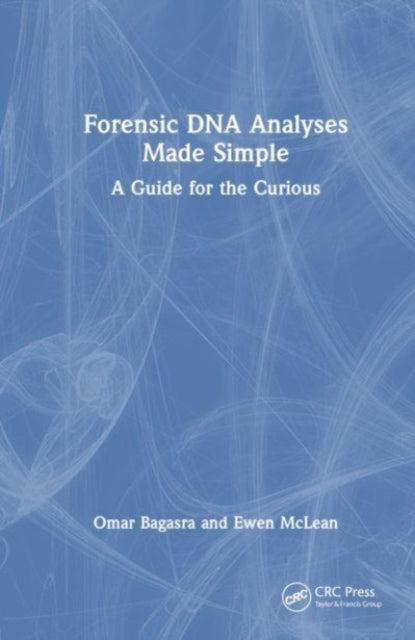
OmarBagasra,Ewen McLean
Forensic DNA Analyses Made Simple: A Guide for the Curious
Forensic DNA Analyses Made Simple: A Guide for the Curious
💎 Earn 589 Points (£5.89) on this item.
We can order this item for you. Delivery usually takes about 4 to 6 weeks.
This item is not held in our immediate stock. We will order it for you after checkout.
Estimated delivery: About 4 to 6 weeks
YOU SAVE £7.00
- Condition: Brand new
- UK Delivery times: Usually arrives within 2 - 3 working days
- UK Shipping: Fee starts at £2.39. Subject to product weight & dimension
Bulk ordering. Want 15 or more copies? Get a personalised quote and bigger discounts. Learn more about bulk orders.
Couldn't load pickup availability
- More about Forensic DNA Analyses Made Simple: A Guide for the Curious
This book provides a comprehensive guide to DNA fingerprinting, covering its principles, techniques, and applications in various fields. It includes sections on how to analyze and interpret DNA fingerprinting, as well as legal and medicolegal issues and case analyses. It is designed to teach the novice legal community about DNA fingerprints and summarize for a general audience the role of ancestry, DNA, and what that means.
Format: Hardback
Length: 204 pages
Publication date: 13 July 2023
Publisher: Taylor & Francis Ltd
Here is the rephrased text:
DNA fingerprinting is a powerful tool that allows individuals to learn about their genetic makeup and identify unique characteristics. It involves analyzing the DNA sequence of an individual to create a distinctive pattern, known as a DNA fingerprint. This fingerprint can be used to identify individuals, track genetic relationships, and investigate crimes.
The process of DNA fingerprinting involves several steps, including DNA extraction, amplification, and sequencing. DNA extraction is the process of removing DNA from a sample, such as a blood sample or tissue sample. Amplification is the process of making millions of copies of a specific DNA segment to increase the amount of DNA available for analysis. Sequencing is the process of determining the order of nucleotides in a DNA segment.
Once the DNA fingerprint has been created, it can be analyzed and interpreted using various methods. These methods include DNA profiling, which involves comparing the DNA fingerprint of a suspect with the DNA fingerprint of a crime scene sample. DNA profiling can be used to identify individuals, determine relationships between individuals, and even predict the likelihood of a person committing a crime.
In addition to its forensic applications, DNA fingerprinting has important medical applications. It can be used to diagnose genetic disorders, identify genetic mutations, and track the inheritance of genetic diseases. DNA fingerprinting can also be used to personalize medical treatments, such as cancer treatments, by identifying the specific genetic mutations that are responsible for a patient's disease.
However, DNA fingerprinting also raises several legal and ethical issues. One of the most significant concerns is the potential for privacy violations. DNA fingerprinting can be used to identify individuals, track their movements, and even gather personal information. There are also concerns about the use of DNA fingerprinting in law enforcement and the potential for discrimination based on genetic information.
To address these concerns, there are several legal and ethical guidelines that have been developed for the use of DNA fingerprinting. These guidelines include the need for informed consent, the protection of privacy, and the fair and equal treatment of individuals. There are also regulations in place to ensure that DNA fingerprinting is used in a responsible and ethical manner.
In conclusion, DNA fingerprinting is a powerful tool that has the potential to revolutionize the fields of genetics and forensics. It provides self-learning about DNA fingerprinting, includes sections on how to analyze and interpret DNA fingerprinting, covers legal and medicolegal issues and case analyses, teaches novice legal community about DNA fingerprints, and summarizes for a general audience the role of ancestry, DNA, and what that means. However, it is important to address the legal and ethical issues associated with DNA fingerprinting to ensure that it is used in a responsible and ethical manner.
Weight: 570g
Dimension: 229 x 152 (mm)
ISBN-13: 9781032022345
This item can be found in:
UK and International shipping information
UK and International shipping information
UK Delivery and returns information:
- Delivery within 2 - 3 days when ordering in the UK.
- Shipping fee for UK customers from £2.39. Fully tracked shipping service available.
- Returns policy: Return within 30 days of receipt for full refund.
International deliveries:
Shulph Ink now ships to Australia, Belgium, Canada, France, Germany, Ireland, Italy, India, Luxembourg Saudi Arabia, Singapore, Spain, Netherlands, New Zealand, United Arab Emirates, United States of America.
- Delivery times: within 5 - 10 days for international orders.
- Shipping fee: charges vary for overseas orders. Only tracked services are available for most international orders. Some countries have untracked shipping options.
- Customs charges: If ordering to addresses outside the United Kingdom, you may or may not incur additional customs and duties fees during local delivery.