Shulph Ink
Forensic Genetic Approaches for Identification of Human Skeletal Remains: Challenges, Best Practices, and Emerging Technologies
Forensic Genetic Approaches for Identification of Human Skeletal Remains: Challenges, Best Practices, and Emerging Technologies
💎 Earn 535 Points (£5.35) on this item.
YOU SAVE £10.91
- Condition: Brand new
- UK Delivery times: Usually arrives within 2 - 3 working days
- UK Shipping: Fee starts at £2.39. Subject to product weight & dimension
Bulk ordering. Want 15 or more copies? Get a personalised quote and bigger discounts. Learn more about bulk orders.
Couldn't load pickup availability
- More about Forensic Genetic Approaches for Identification of Human Skeletal Remains: Challenges, Best Practices, and Emerging Technologies
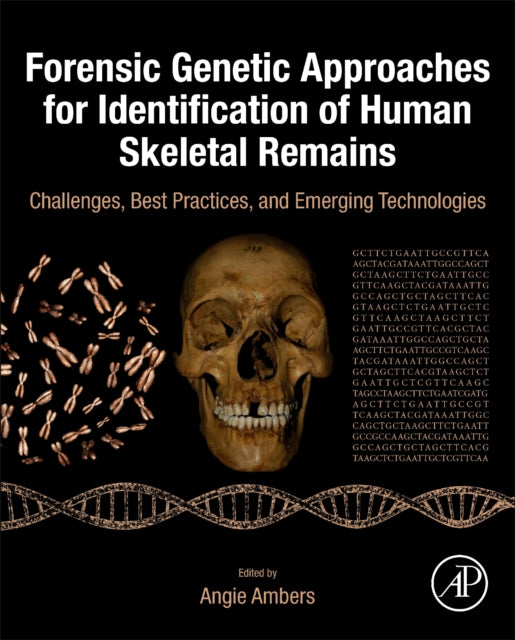
Forensic Genetic Approaches for Identification of Human Skeletal Remains: Challenges, Best Practices, and Emerging Technologies is a book that provides best practices for processing bone samples for DNA testing, outlining forensic genetics tools available for identification of skeletal remains in contemporary casework and historical/archaeological investigations. It focuses on the use of DNA for direct identification or kinship analyses, but also highlights complementary disciplines such as forensic anthropology, forensic odontology, and forensic art/sculpting. Bone material is the most resilient and viable sample type for DNA testing, but it is often degraded and in low quantities due to human decomposition, environmental exposure, and the passage of time, making skeletal remains one of the most challenging sample types for DNA testing.
Format: Hardback
Length: 626 pages
Publication date: 16 November 2022
Publisher: Elsevier Science Publishing Co Inc
Forensic Genetic Approaches for Identification of Human Skeletal Remains: Challenges, Best Practices, and Emerging Technologies is a comprehensive guide that provides invaluable insights into the processing of bone samples for DNA testing. The book offers best practices and cutting-edge technologies for identifying skeletal remains in contemporary casework and historical/archaeological investigations. While the primary focus of the book is on the utilization of DNA for direct identification or kinship analyses, it also highlights the complementary disciplines often employed in conjunction with genetic data to achieve positive identifications. These disciplines include forensic anthropology, forensic odontology, and forensic art/sculpting. Unidentified human remains are frequently associated with tragic events such as fires, terrorist attacks, natural disasters, war conflicts, genocide, airline crashes, homicides, and human rights violations under oppressive totalitarian regimes. In such situations, extensive damage to soft tissues often precludes the use of biological samples for identification purposes. However, bone material stands out as the most resilient and viable sample type for DNA testing. DNA recovered from bone often undergoes degradation and is present in low quantities due to the effects of human decomposition, environmental exposure, and the passage of time. The complexities of bone microstructure and its rigid nature make skeletal remains one of the most challenging sample types for DNA testing.
Despite these challenges, forensic genetic approaches have made significant advancements in identifying human skeletal remains. Various techniques and methodologies have been developed to overcome these obstacles and enhance the accuracy and reliability of DNA analysis. These include advanced DNA extraction methods, such as microarray-based techniques, which can efficiently recover DNA from even the smallest and most degraded samples. Additionally, the use of genetic markers, such as single nucleotide polymorphisms (SNPs), has revolutionized the field of forensic genetics. SNPs are genetic variations that occur naturally within individuals and can provide highly accurate identification information.
In conclusion, Forensic Genetic Approaches for Identification of Human Skeletal Remains: Challenges, Best Practices, and Emerging Technologies is a vital resource for forensic scientists, law enforcement agencies, and researchers interested in identifying human remains. The book provides comprehensive coverage of forensic genetics tools and techniques, highlighting their applications in contemporary casework and historical/archaeological investigations. By leveraging advanced DNA extraction methods, genetic markers, and complementary disciplines, forensic genetic approaches have the potential to revolutionize the field of human identification and provide closure to families and communities affected by tragic events.
Weight: 1066g
Dimension: 198 x 241 x 31 (mm)
ISBN-13: 9780128157664
This item can be found in:
UK and International shipping information
UK and International shipping information
UK Delivery and returns information:
- Delivery within 2 - 3 days when ordering in the UK.
- Shipping fee for UK customers from £2.39. Fully tracked shipping service available.
- Returns policy: Return within 30 days of receipt for full refund.
International deliveries:
Shulph Ink now ships to Australia, Belgium, Canada, France, Germany, Ireland, Italy, India, Luxembourg Saudi Arabia, Singapore, Spain, Netherlands, New Zealand, United Arab Emirates, United States of America.
- Delivery times: within 5 - 10 days for international orders.
- Shipping fee: charges vary for overseas orders. Only tracked services are available for most international orders. Some countries have untracked shipping options.
- Customs charges: If ordering to addresses outside the United Kingdom, you may or may not incur additional customs and duties fees during local delivery.