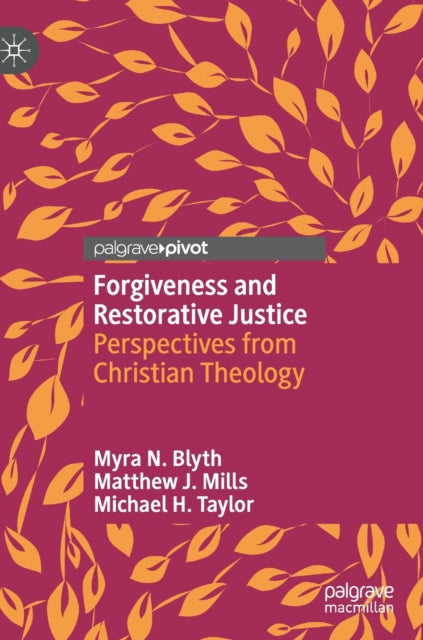
Myra N. Blyth,Matthew J. Mills,Michael H. Taylor
Forgiveness and Restorative Justice: Perspectives from Christian Theology
Forgiveness and Restorative Justice: Perspectives from Christian Theology
We can order this item for you. Delivery usually takes about 4 to 6 weeks.
This item is not held in our immediate stock. We will order it for you after checkout.
Estimated delivery: About 4 to 6 weeks
YOU SAVE £12.12
- Condition: Brand new
- UK Delivery times: Usually arrives within 2 - 3 working days
- UK Shipping: Fee starts at £3.89. Subject to product weight & dimension
Bulk ordering. Want 15 or more copies? Get a personalised quote and bigger discounts. Learn more about bulk orders.
Couldn't load pickup availability
- More about Forgiveness and Restorative Justice: Perspectives from Christian Theology
This book explores the meaning of forgiveness and its role in restorative justice from practical and academic perspectives within Christian theology, arguing that it is necessary for achieving a fully restorative resolution to acts of harm. It suggests that Christianity, with its meaning-giving metanarrative of restoration and preference for communitarian approaches to justice, may have epistemic value for evaluating and deepening the theory and practice of restorative justice.
Format: Hardback
Length: 147 pages
Publication date: 18 June 2021
Publisher: Springer Nature Switzerland AG
The concept of forgiveness holds immense significance within the realm of restorative justice, sparking ongoing debates and discussions. This book delves into comprehensive analysis from both practical and academic perspectives, situated within the framework of Christian theology. It explores a diverse range of related concepts, such as victimhood, sin, love, and vulnerability, against a rich tapestry of ideas. In their critical engagement with restorative justice, the authors argue that forgiveness, whether perceived as a journey or an act, unilateral or mutual, conditional or unconditional, plays a vital role in achieving a truly restorative resolution to acts of harm. Furthermore, they suggest that Christianity, with its profound metanarrative of restoration and a preference for communitarian approaches to justice, possesses epistemic value in evaluating and potentially enriching the theory and practice of restorative justice.
Introduction:
Restorative justice is a transformative approach to addressing crime and harm, focusing on repairing the relationships between offenders, victims, and communities. While forgiveness is often considered a central element of restorative justice, its meaning and role within this framework remain highly contested. This book aims to shed light on the multifaceted aspects of forgiveness and its significance within restorative justice.
Practical Perspectives:
The authors of this book draw from their extensive experience in the field of restorative justice to offer practical insights into the role of forgiveness. They explore various dimensions of forgiveness, including its nature, process, and outcomes. They argue that forgiveness is not merely a moral obligation but a necessary component of achieving a fully restorative resolution to acts of harm. They highlight the importance of empathy, compassion, and understanding in the forgiveness process and emphasize the need for offenders to take responsibility for their actions and seek reconciliation with their victims.
Academic Perspectives:
In addition to practical considerations, the book also provides academic analysis of forgiveness within the context of restorative justice. The authors draw upon Christian theology to explore the theological foundations of forgiveness and its relationship to other key concepts such as victimhood, sin, love, and vulnerability. They argue that forgiveness is not merely a moral or ethical principle but is deeply rooted in the Christian worldview and can offer valuable insights into the nature of justice and reconciliation.
Victimhood and Forgiveness:
One of the central themes of the book is the relationship between victimhood and forgiveness. The authors argue that victimhood can be a powerful force that can hinder the healing process and perpetuate cycles of harm. However, they also recognize that forgiveness is not a cure-all solution for victimization. Instead, they suggest that forgiveness can be a transformative tool that can help victims move towards healing and closure. The book explores the complexities of victimhood, including the impact of trauma, power dynamics, and societal norms on the victim's experience. It also examines the role of forgiveness in empowering victims to take control of their lives and rebuild their relationships with others.
Sin and Forgiveness:
Another important aspect of the book is the exploration of the relationship between sin and forgiveness. The authors argue that sin is a universal human condition that affects all individuals and communities. However, they also emphasize that forgiveness is not a means of excusing or ignoring sin but rather a way of acknowledging and addressing it. They suggest that forgiveness can be a catalyst for personal growth and transformation, as it allows individuals to release their guilt and shame and move towards a more compassionate and empathetic perspective.
Love and Forgiveness:
Love is another key concept explored in the book, particularly in relation to forgiveness. The authors argue that love is a fundamental aspect of human nature and is essential for repairing relationships and promoting healing. They suggest that forgiveness is a manifestation of love and that it requires a willingness to extend grace and compassion to others, even in the face of harm. The book explores the different forms of love, including sacrificial love, compassionate love, and unconditional love, and their role in promoting forgiveness and reconciliation.
Vulnerability and Forgiveness:
Finally, the book examines the role of vulnerability in the forgiveness process. The authors argue that vulnerability is a necessary prerequisite for forgiveness, as it requires individuals to be open and honest about their feelings and experiences. They suggest that vulnerability can be a source of strength and resilience, as it allows individuals to connect with others on a deeper level and build stronger, more meaningful relationships. The book also explores the challenges of vulnerability, including the fear of rejection, shame, and vulnerability.
Conclusion:
In conclusion, this book offers a comprehensive analysis of forgiveness within the realm of restorative justice. It provides practical insights from both practical and academic perspectives, situated within the framework of Christian theology. The authors argue that forgiveness is a necessary component of achieving a fully restorative resolution to acts of harm and that Christianity, with its meaning-giving metanarrative of restoration and preference for communitarian approaches to justice, possesses epistemic value in evaluating and even deepening the theory and practice of restorative justice. By exploring the complexities of victimhood, sin, love, and vulnerability, this book contributes to a deeper understanding of the role of forgiveness in promoting healing, justice, and reconciliation.
Weight: 454g
Dimension: 210 x 148 (mm)
ISBN-13: 9783030752811
Edition number: 1st ed. 2021
UK and International shipping information
UK and International shipping information
We deliver throughout the United Kingdom and to 128 countries and territories worldwide, including the United States, Australia, Canada, Germany, Spain and France.