Shulph Ink
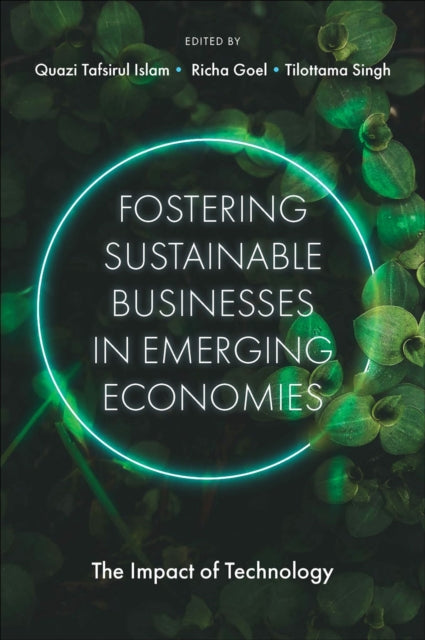
Fostering Sustainable Businesses in Emerging Economies: The Impact of Technology
Fostering Sustainable Businesses in Emerging Economies: The Impact of Technology
💎 Earn 401 Points (£4.01) on this item.
YOU SAVE £4.76
- Condition: Brand new
- UK Delivery times: Usually arrives within 2 - 3 working days
- UK Shipping: Fee starts at £2.39. Subject to product weight & dimension
Bulk ordering. Want 15 or more copies? Get a personalised quote and bigger discounts. Learn more about bulk orders.
Couldn't load pickup availability
- More about Fostering Sustainable Businesses in Emerging Economies: The Impact of Technology
Fostering Sustainable Businesses in Emerging Economies explores how innovation and technology enable emerging economies to achieve business sustainability and the Sustainable Development Goals (SDGs). It provides insights for policymakers on promoting sustainable business development.
Format: Unspecified
Length: 372 pages
Publication date: 21 November 2023
Publisher: Emerald Publishing Limited
Fostering Sustainable Businesses in Emerging Economies is a comprehensive and insightful exploration of the role of innovation and technology in driving business sustainability and achieving the Sustainable Development Goals (SDGs) in emerging economies. This book offers a rich collection of case studies and exploratory studies, employing quantitative analysis, scientific research, and qualitative analysis to shed light on the strategies and approaches employed by these economies in their pursuit of sustainable business development.
In the opening chapter, the authors provide a comprehensive overview of the challenges and opportunities facing emerging economies in their journey towards sustainable development. They highlight the need for innovative solutions to address pressing environmental, social, and economic issues, while also promoting inclusive growth and social well-being.
The subsequent chapters delve into specific case studies and exploratory studies, showcasing the diverse experiences and strategies employed by emerging economies in their pursuit of sustainable business development. These case studies cover a wide range of industries, including agriculture, renewable energy, waste management, and transportation, and provide valuable insights into the successes, challenges, and lessons learned from these initiatives.
One of the key themes that emerge throughout the book is the importance of collaboration and partnerships in achieving sustainable business development. The authors emphasize the need for governments, businesses, and other stakeholders to work together to create a supportive environment for sustainable innovation and entrepreneurship. They also highlight the role of public-private partnerships, knowledge sharing, and technology transfer in fostering sustainable business practices and promoting sustainable development.
Another important aspect of the book is the use of quantitative analysis and scientific research to measure and evaluate the impact of sustainable business practices on economic growth, environmental sustainability, and social well-being. The authors employ a range of methodologies, such as economic modeling, life cycle assessments, and social impact assessments, to assess the sustainability performance of businesses and identify areas for improvement.
In conclusion, Fostering Sustainable Businesses in Emerging Economies is a valuable resource for policymakers, business leaders, researchers, and anyone interested in understanding the role of innovation and technology in driving sustainable business development. The book provides a wealth of insights and practical examples that can help emerging economies achieve business sustainability and contribute to the global effort towards achieving the SDGs. By promoting collaboration, fostering innovation, and adopting sustainable practices, emerging economies can create a more prosperous and sustainable future for themselves and generations to come.
Fostering Sustainable Businesses in Emerging Economies
Fostering Sustainable Businesses in Emerging Economies is a comprehensive and insightful exploration of the role of innovation and technology in driving business sustainability and achieving the Sustainable Development Goals (SDGs) in emerging economies. This book offers a rich collection of case studies and exploratory studies, employing quantitative analysis, scientific research, and qualitative analysis to shed light on the strategies and approaches employed by these economies in their pursuit of sustainable business development.
In the opening chapter, the authors provide a comprehensive overview of the challenges and opportunities facing emerging economies in their journey towards sustainable development. They highlight the need for innovative solutions to address pressing environmental, social, and economic issues, while also promoting inclusive growth and social well-being.
The subsequent chapters delve into specific case studies and exploratory studies, showcasing the diverse experiences and strategies employed by emerging economies in their pursuit of sustainable business development. These case studies cover a wide range of industries, including agriculture, renewable energy, waste management, and transportation, and provide valuable insights into the successes, challenges, and lessons learned from these initiatives.
One of the key themes that emerge throughout the book is the importance of collaboration and partnerships in achieving sustainable business development. The authors emphasize the need for governments, businesses, and other stakeholders to work together to create a supportive environment for sustainable innovation and entrepreneurship. They also highlight the role of public-private partnerships, knowledge sharing, and technology transfer in fostering sustainable business practices and promoting sustainable development.
Another important aspect of the book is the use of quantitative analysis and scientific research to measure and evaluate the impact of sustainable business practices on economic growth, environmental sustainability, and social well-being. The authors employ a range of methodologies, such as economic modeling, life cycle well-being assessments, and social impact assessments, to assess the sustainability performance of businesses and identify areas for improvement.
In conclusion, Fostering Sustainable Businesses in Emerging Economies is a valuable resource for policymakers, business leaders, researchers, and anyone interested in understanding the role of innovation and technology in driving sustainable business development. The book provides a wealth of insights and practical examples that can help emerging economies achieve business sustainability and contribute to the global effort towards achieving the SDGs. By promoting collaboration, fostering innovation, and adopting sustainable practices, emerging economies can create a more prosperous and sustainable future for themselves and generations to come.
Dimension: 229 x 152 x 19 (mm)
ISBN-13: 9781804556412
UK and International shipping information
UK and International shipping information
UK Delivery and returns information:
- Delivery within 2 - 3 days when ordering in the UK.
- Shipping fee for UK customers from £2.39. Fully tracked shipping service available.
- Returns policy: Return within 30 days of receipt for full refund.
International deliveries:
Shulph Ink now ships to Australia, Belgium, Canada, France, Germany, Ireland, Italy, India, Luxembourg Saudi Arabia, Singapore, Spain, Netherlands, New Zealand, United Arab Emirates, United States of America.
- Delivery times: within 5 - 10 days for international orders.
- Shipping fee: charges vary for overseas orders. Only tracked services are available for most international orders. Some countries have untracked shipping options.
- Customs charges: If ordering to addresses outside the United Kingdom, you may or may not incur additional customs and duties fees during local delivery.