Shulph Ink
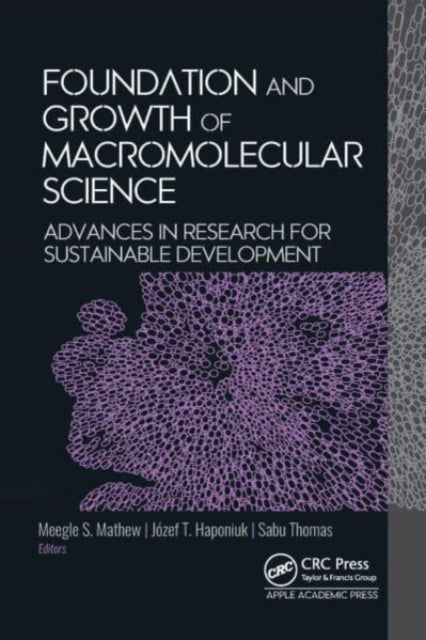
Foundation and Growth of Macromolecular Science: Advances in Research for Sustainable Development
Foundation and Growth of Macromolecular Science: Advances in Research for Sustainable Development
💎 Earn 714 Points (£7.14) on this item.
We can order this item for you. Delivery usually takes about 4 to 6 weeks.
This item is not held in our immediate stock. We will order it for you after checkout.
Estimated delivery: About 4 to 6 weeks
YOU SAVE £8.48
- Condition: Brand new
- UK Delivery times: Usually arrives within 2 - 3 working days
- UK Shipping: Fee starts at £2.39. Subject to product weight & dimension
Bulk ordering. Want 15 or more copies? Get a personalised quote and bigger discounts. Learn more about bulk orders.
Couldn't load pickup availability
- More about Foundation and Growth of Macromolecular Science: Advances in Research for Sustainable Development
This book explores the foundation of macromolecular science, current challenges, and solutions, including new applications in electromagnetic interference shielding, sensing, and wound healing. It also discusses innovations in polymer synthesis, characterization, and applications, such as zein-based composites, nanocellulose, polymer-strengthened concrete, magnetic materials, 3D-printing, and wound healing dressings. The volume emphasizes sustainable development and green eco-friendly approaches.
Format: Hardback
Length: 378 pages
Publication date: 20 February 2024
Publisher: Apple Academic Press Inc.
Macromolecular science is a fundamental field that explores the structure, behavior, and applications of large molecules, such as proteins, nucleic acids, and carbohydrates. It plays a crucial role in various scientific disciplines, including chemistry, physics, engineering, biology, and pharmaceutical science. In recent years, macromolecular science has witnessed significant advancements, leading to the development of new materials, technologies, and applications that have profound impacts on society.
One of the key areas of research in macromolecular science is the synthesis and characterization of polymers. Polymers are large molecules composed of repeating units called monomers, and they have a wide range of applications, including plastics, textiles, adhesives, and biomedical materials. Researchers are constantly exploring new ways to synthesize polymers with specific properties, such as high strength, durability, and biocompatibility.
Another important area of research in macromolecular science is polymer composites and nanomaterials. These materials are composed of two or more components, such as polymers and nanoparticles, and they have unique properties that make them useful in various applications, such as energy storage, drug delivery, and environmental remediation. Researchers are exploring the synthesis, characterization, and properties of these materials to improve their performance and reduce their environmental impact.
Macromolecular science also plays a significant role in the development of new materials for energy storage and conversion. For example, researchers are exploring the use of polymers and nanomaterials to improve the efficiency of solar cells, batteries, and fuel cells. These materials can help to reduce the cost of energy production and promote sustainable energy sources.
In addition to its applications in science and technology, macromolecular science has significant implications for healthcare and medicine. For example, researchers are using polymers and nanomaterials to develop new drug delivery systems, imaging agents, and medical devices. These materials can help to improve the diagnosis, treatment, and management of various diseases.
Macromolecular science also plays a role in sustainable development and green eco-friendly approaches. For example, researchers are exploring the use of biodegradable polymers and nanomaterials to reduce waste and promote environmental sustainability. These materials can help to reduce the impact of human activities on the environment and promote a more sustainable future.
Overall, macromolecular science is a dynamic and rapidly evolving field that has significant implications for society and the world. It plays a crucial role in various scientific disciplines and has the potential to address some of the most pressing challenges facing our planet today. As researchers continue to explore new areas of research and develop new technologies, macromolecular science will continue to play a vital role in shaping our future.
This new volume explores the foundation of macromolecular science along with the fields current challenges and solutions to challenges. The book discusses many new applications that have emerged recently based on different polymers and their composites,inlcuding some on the application of polymer composite in electromagnetic interference (EMI) shielding,sensing,and wound healing. This book discusses innovations in the synthesis and characterization of many different classes of polymers and provides in-depth explanations of the behavior of polymers in solutions and in bulk. It considers the synthesis, characterization properties,and applications of many polymer composites and nanomaterials.
The diverse topics cover zein-based composites,nanocellulose extracted as a potential filler for polymers,polymers to strengthen concrete,polymer/metal nanocomposite magnetic materials,synthetic polymers in aquatic environments,pharmaceutical 3D-printing,alginate-based wound healing dressings,and more.
Many chapters in the volume place emphasis on sustainable development and green eco-friendly approaches.
This volume will help researchers to understand the significance of macromolecular science and research advances for sustainable development for the benefit of humanity. It emphasizes the many roles of macromolecular science in the important fields of science,such as chemistry,physics,engineering,biology,pharmaceutical science,and more.
Macromolecular science is a fundamental field that explores the structure, behavior, and applications of large molecules, such as proteins, nucleic acids, and carbohydrates. It plays a crucial role in various scientific disciplines, including chemistry, physics, engineering, biology, and pharmaceutical science. In recent years, macromolecular science has witnessed significant advancements, leading to the development of new materials, technologies, and applications that have profound impacts on society.
One of the key areas of research in macromolecular science is the synthesis and characterization of polymers. Polymers are large molecules composed of repeating units called monomers, and they have a wide range of applications, including plastics, textiles, adhesives, and biomedical materials. Researchers are constantly exploring new ways to synthesize polymers with specific properties, such as high strength, durability, and biocompatibility.
Another important area of research in macromolecular science is polymer composites and nanomaterials. These materials are composed of two or more components, such as polymers and nanoparticles, and they have unique properties that make them useful in various applications, such as energy storage, drug delivery, and environmental remediation. Researchers are exploring the synthesis, characterization, and properties of these materials to improve their performance and reduce their environmental impact.
Macromolecular science also plays a significant role in the development of new materials for energy storage and conversion. For example, researchers are exploring the use of polymers and nanomaterials to improve the efficiency of solar cells, batteries, and fuel cells. These materials can help to reduce the cost of energy production and promote sustainable energy sources.
In addition to its applications in science and technology, macromolecular science has significant implications for healthcare and medicine. For example, researchers are using polymers and nanomaterials to develop new drug delivery systems, imaging agents, and medical devices. These materials can help to improve the diagnosis, treatment, and management of various diseases.
Macromolecular science also plays a role in sustainable development and green eco-friendly approaches. For example, researchers are exploring the use of biodegradable polymers and nanomaterials to reduce waste and promote environmental sustainability. These materials can help to reduce the impact of human activities on the environment and promote a more sustainable future.
Overall, macromolecular science is a dynamic and rapidly evolving field that has significant implications for society and the world. It plays a crucial role in various scientific disciplines and has the potential to address some of the most pressing challenges facing our planet today. As researchers continue to explore new areas of research and develop new technologies, macromolecular science will continue to play a vital role in shaping our future.
Weight: 900g
Dimension: 234 x 156 (mm)
ISBN-13: 9781774913673
This item can be found in:
UK and International shipping information
UK and International shipping information
UK Delivery and returns information:
- Delivery within 2 - 3 days when ordering in the UK.
- Shipping fee for UK customers from £2.39. Fully tracked shipping service available.
- Returns policy: Return within 30 days of receipt for full refund.
International deliveries:
Shulph Ink now ships to Australia, Belgium, Canada, France, Germany, Ireland, Italy, India, Luxembourg Saudi Arabia, Singapore, Spain, Netherlands, New Zealand, United Arab Emirates, United States of America.
- Delivery times: within 5 - 10 days for international orders.
- Shipping fee: charges vary for overseas orders. Only tracked services are available for most international orders. Some countries have untracked shipping options.
- Customs charges: If ordering to addresses outside the United Kingdom, you may or may not incur additional customs and duties fees during local delivery.