SidneyDekker
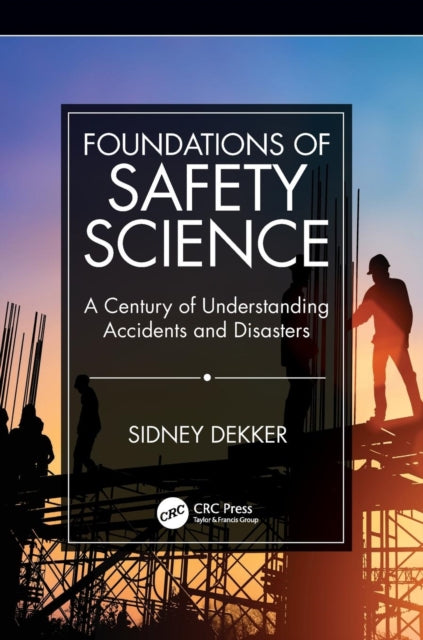
Foundations of Safety Science: A Century of Understanding Accidents and Disasters
Foundations of Safety Science: A Century of Understanding Accidents and Disasters
💎 Earn 273 Points (£2.73) on this item.
YOU SAVE £3.25
- Condition: Brand new
- UK Delivery times: Usually arrives within 2 - 3 working days
- UK Shipping: Fee starts at £2.39. Subject to product weight & dimension
Bulk ordering. Want 15 or more copies? Get a personalised quote and bigger discounts. Learn more about bulk orders.
Couldn't load pickup availability
- More about Foundations of Safety Science: A Century of Understanding Accidents and Disasters
The book "Foundations of Safety Science" explores the historical roots of safety science, tracing the evolution of safety thinking from the late 19th century to the present. It discusses how early human factors definitions and unsafe acts influenced the development of safety programs and interventions. The book also highlights the importance of the reinvention of human factors in the 1940s and the challenges of applying Tayloristic safety interventions in complex systems.
Format: Paperback / softback
Length: 446 pages
Publication date: 18 April 2019
Publisher: Taylor & Francis Ltd
The origins of modern 'hearts and minds' programs can be traced back to a late-19th century definition of human factors as individuals' moral and mental deficiencies. This perspective, popularized by German psychologist Hermann Heinrich, viewed human error as a result of these deficits rather than as a result of systemic factors or technological flaws. However, it is important to note that Heinrich's ideas were not universally accepted at the time and were later criticized for their oversimplification and lack of consideration for individual differences.
In the 1930s, Heinrich's ideas were further developed by safety researchers such as Sidney Dekker and Ralph L. Shaw, who introduced the concept of "unsafe acts" to describe the actions or behaviors that lead to accidents. The Swiss cheese model, developed in the early 1990s, is another important contribution to safety thinking. This model suggests that accidents result from the interaction of multiple factors, rather than from a single cause or defect.
The reinvention of human factors in the 1940s was a significant event in the development of safety thinking. During World War II, the need for effective safety management in military and industrial settings led to a renewed interest in human factors. This period saw the development of new theories and methods, such as human error analysis and human reliability theory, which aimed to improve safety by understanding and reducing human error.
One of the key challenges facing safety professionals today is the complexity and imperviousness of many of our current systems. These systems are often designed with efficiency and productivity in mind, rather than safety. As a result, they may be prone to human error and may not be well-suited to Tayloristic safety interventions, which rely on standardized processes and procedures to reduce risk.
To address these challenges, safety professionals need to adopt a more holistic and interdisciplinary approach to safety management. This approach recognizes that safety is not just the result of individual actions or behaviors, but also of the interactions between people, systems, and the environment. It involves a range of disciplines, including psychology, engineering, and management, and aims to improve safety by identifying and addressing the root causes of accidents and errors.
One of the key concepts in safety science is the idea of "human error." Human error is defined as any action or behavior that deviates from a standard or expected course of action, and can result in accidents or errors. Human error analysis involves the study of human behavior and decision-making to identify the factors that contribute to human error and to develop strategies to reduce the risk of error.
Human reliability theory is another important concept in safety science. This theory suggests that human performance is influenced by a range of factors, including physical and mental state, training and experience, and environmental conditions. By understanding these factors, safety professionals can develop strategies to improve human performance and reduce the risk of error.
In addition to these theoretical concepts, safety science also involves the application of various tools and techniques, such as safety audits, risk assessments, and safety management systems. These tools and techniques help safety professionals identify and manage risks in a systematic and proactive manner, and can be used to improve safety in a wide range of settings, including healthcare, transportation, and manufacturing.
In conclusion, the origins of modern 'hearts and minds' programs can be traced back to a late-19th century definition of human factors as individuals' moral and mental deficiencies. However, the development of safety thinking has evolved over time, and today's approaches to safety management are more holistic and interdisciplinary. By understanding the root
The origins of modern 'hearts and minds' programs can be traced back to a late-19th century definition of human factors as individuals' moral and mental deficiencies. However, the development of safety thinking has evolved over time, and today's approaches to safety management are more holistic and interdisciplinary. By understanding the theoretical foundations of safety science, including human error analysis and human reliability theory, safety professionals can develop strategies to improve safety by identifying and addressing the root
The theoretical foundations of safety science, including human error analysis and human reliability theory, are crucial in understanding the origins of modern 'hearts and minds' programs. Human error analysis involves the study of human behavior and decision-making to identify the factors that contribute to human error and to develop strategies to reduce the risk of error. Human reliability theory, on the other hand, suggests that human performance is influenced by a range of factors, including physical and mental state, training and experience, and environmental conditions. By understanding these factors, safety professionals can develop strategies to improve human performance and reduce the risk of error.
In addition to these theoretical concepts, safety science also involves the application of various tools and techniques, such as safety audits, risk assessments, and safety management systems. These tools and techniques help safety professionals identify and manage risks in a systematic and proactive manner, and can be used to improve safety in a wide range of settings, including healthcare, transportation, and manufacturing.
One of the key challenges facing safety professionals today is the complexity and imperviousness of many of our current systems. These systems are often designed with efficiency and productivity in mind, rather than safety. As a result, they may be prone to human error and may not be well-suited to Tayloristic safety interventions, which rely on standardized processes and procedures to reduce risk.
To address these challenges, safety professionals need to adopt a more holistic and interdisciplinary approach to safety management. This approach recognizes that safety is not just the result of individual actions or behaviors, but also of the interactions between people, systems, and the environment. It involves a range of disciplines, including psychology, engineering, and management, and aims to improve safety by identifying and addressing the root
The theoretical foundations of safety science, including human error analysis and human reliability theory, are crucial in understanding the origins. Human error analysis involves the study of human behavior and decision-making to identify the factors that contribute to human error and to develop strategies to reduce the risk of error. Human reliability theory, on the other hand, suggests that human performance is influenced by a range of factors, including physical and mental state, training and experience, and environmental conditions. By understanding these factors, safety professionals can develop strategies to improve human performance and reduce the risk of error.
In addition to these theoretical concepts, safety science also involves the application of various tools and techniques, such as safety audits, risk assessments, and safety management systems. These tools and techniques help safety professionals identify and manage risks in a systematic and proactive manner, and can be used to improve safety in a wide range of settings, including healthcare, transportation, and manufacturing.
One of the key challenges facing safety professionals today is the complexity and imperviousness of many of our current systems. These systems are often designed with efficiency and productivity in mind, rather than safety. As a result, they may be prone to human error and may not be well-suited to Tayloristic safety interventions, which rely on standardized processes and procedures to reduce risk.
To address these challenges, safety professionals need to adopt a more holistic and interdisciplinary approach to safety management. This approach recognizes that safety is not just the result of individual actions or behaviors, but also of the interactions between people, systems, and the environment. It involves a range of disciplines, including psychology, engineering, and management, and aims to improve safety by identifying and addressing the root root causes of accidents and errors.
In addition to these theoretical concepts, safety science also involves the application of various tools and techniques, such as safety audits, risk assessments, and safety management systems. These tools and techniques help safety professionals identify and manage risks in a systematic and proactive manner, and can be used to improve safety in a wide range of settings, including healthcare, transportation, and manufacturing.
One of the key challenges facing safety professionals today is the complexity and imperviousness of many of our current systems. These systems are often designed with efficiency and productivity in mind, rather than safety. As a result, they may be prone to human error and may not be well-suited to Tayloristic safety interventions, which rely on standardized processes and procedures to reduce risk.
To address these challenges, safety professionals need to adopt a more holistic and interdisciplinary approach to safety management. This approach recognizes that safety is not just the result of individual actions or behaviors, but also of the interactions between people, systems, and the environment. It involves a range of disciplines, including psychology, engineering, and management, and aims to improve safety by identifying and addressing the root root causes of accidents and errors.
In addition to these theoretical concepts, safety science also involves the application of various tools and techniques, such as safety audits, risk assessments, and safety management systems. These tools and techniques help safety professionals identify and manage risks in a systematic and proactive manner, and can be used to improve safety in a wide range of settings, including healthcare, transportation, and manufacturing.
One of the key challenges facing safety professionals today is the complexity and imperviousness of many of our current systems. These systems are often designed with efficiency and productivity in mind, rather than safety. As a result, they may be prone to human error and may not be well-suited to Tayloristic safety interventions, which rely on standardized processes and procedures to reduce risk.
To address these challenges, safety professionals need to adopt a more holistic and interdisciplinary approach to safety management. This approach recognizes that safety is not just the result of individual actions or behaviors, but also of the interactions between people, systems, and the environment. It involves a range of disciplines, including psychology, engineering, and management, and aims to improve safety by identifying and addressing the root root causes of accidents and errors.
In addition to these theoretical concepts, safety science also involves the application of various tools and techniques, such as safety audits, risk assessments, and safety management systems. These tools and techniques help safety professionals identify and manage risks in a systematic and proactive manner, and can be used to improve safety in a wide range of settings, including healthcare, transportation, and manufacturing.
Weight: 682g
Dimension: 235 x 174 x 26 (mm)
ISBN-13: 9781138481787
UK and International shipping information
UK and International shipping information
UK Delivery and returns information:
- Delivery within 2 - 3 days when ordering in the UK.
- Shipping fee for UK customers from £2.39. Fully tracked shipping service available.
- Returns policy: Return within 30 days of receipt for full refund.
International deliveries:
Shulph Ink now ships to Australia, Belgium, Canada, France, Germany, Ireland, Italy, India, Luxembourg Saudi Arabia, Singapore, Spain, Netherlands, New Zealand, United Arab Emirates, United States of America.
- Delivery times: within 5 - 10 days for international orders.
- Shipping fee: charges vary for overseas orders. Only tracked services are available for most international orders. Some countries have untracked shipping options.
- Customs charges: If ordering to addresses outside the United Kingdom, you may or may not incur additional customs and duties fees during local delivery.