Oscar Ivan Useche
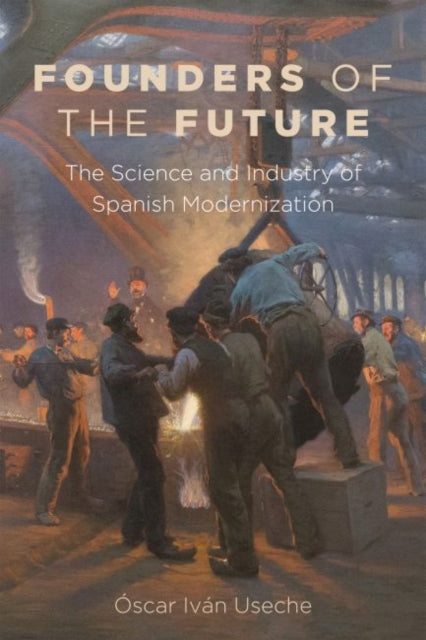
Founders of the Future: The Science and Industry of Spanish Modernization
Founders of the Future: The Science and Industry of Spanish Modernization
💎 Earn 123 Points (£1.23) on this item.
We can order this item for you. Delivery usually takes about 4 to 6 weeks.
This item is not held in our immediate stock. We will order it for you after checkout.
Estimated delivery: About 4 to 6 weeks
YOU SAVE £5.22
- Condition: Brand new
- UK Delivery times: Usually arrives within 2 - 3 working days
- UK Shipping: Fee starts at £2.39. Subject to product weight & dimension
Bulk ordering. Want 15 or more copies? Get a personalised quote and bigger discounts. Learn more about bulk orders.
Couldn't load pickup availability
- More about Founders of the Future: The Science and Industry of Spanish Modernization
In late nineteenth- and early twentieth-century Spain, the social foundry metaphor was used to analyze how industrialization influenced cultural and national discourses. Spanish writers, scientists, educators, and politicians used the new economies of industrial production to create new conceptual frameworks that changed their vision of the future, which appeared in plans to enhance productivity, justify systems of class stratification and labor exploitation, or suggest state organizational improvements. This study offers close readings of canonical writers such as Emilia Pardo Bazán, Concha Espina, Benito Pérez Galdós, Vicente Blasco Ibáñez, and José Echegaray, as well as lesser-known authors, to reflect the complexity of Spain's process of modernization.
Format: Paperback / softback
Length: 300 pages
Publication date: 30 April 2022
Publisher: Rutgers University Press
In this groundbreaking interdisciplinary study,Useche employs the metaphor of the social foundry to explore how industrialization influenced and shaped cultural and national discourses in late nineteenth- and early twentieth-century Spain. Through a diverse range of texts,Spanish writers, scientists, educators, and politicians embraced the new economies of industrial production, particularly its emphasis on the human capacity to transform reality through energy and work, to create innovative conceptual frameworks that reshaped their vision of the future. These influences quickly manifested in plans to boost national productivity, justify systems of class stratification and labor exploitation, or propose state organizational improvements. This fresh perspective on canonical writers such as Emilia Pardo Bazán, Concha Espina, Benito Pérez Galdós, Vicente Blasco Ibáñez, and José Echegaray, as well as lesser-known authors, provides close readings of their work as it reflected the intricacies of Spain's process of modernization.
Introduction:
The late nineteenth and early twentieth centuries witnessed a significant period of industrialization in Spain, which had profound effects on the country's cultural and national discourse. This study aims to explore how industrialization informed and shaped these discourses, using the metaphor of the social foundry to analyze the interplay between industrialization and cultural production.
The Social Foundry Metaphor:
The social foundry metaphor refers to the process of industrialization as a transformative force that reshapes society and culture. It emphasizes the role of industrial production in shaping the human capacity to transform reality through energy and work. In this context, Spanish writers, scientists, educators, and politicians appropriated the new economies of industrial production to produce new conceptual frameworks that changed their vision of the future.
Influences on Cultural and National Discourse:
The influence of industrialization on cultural and national discourse in Spain was multifaceted. Spanish writers, for example, used the new economies of industrial production to explore themes of modernity, progress, and the human condition. They depicted the industrialized landscape as a symbol of progress and modernity, while also critiquing the negative effects of industrialization on workers and the environment.
Scientists and educators also embraced the new economies of industrial production to develop new theories and methods of education. They emphasized the importance of scientific knowledge and technological innovation in shaping the future of Spain and the world.
Politicians, too, used the new economies of industrial production to justify systems of class stratification and labor exploitation. They argued that industrialization was necessary to promote economic growth and development, and that workers should be compensated for their labor through higher wages and better working conditions.
Conclusion:
In conclusion, this interdisciplinary study has demonstrated how industrialization influenced and shaped cultural and national discourses in late nineteenth- and early twentieth-century Spain. The social foundry metaphor provides a useful framework for analyzing the interplay between industrialization and cultural production, highlighting the ways in which Spanish writers, scientists, educators, and politicians appropriated the new economies of industrial production to produce new conceptual frameworks that changed their vision of the future. While industrialization brought about significant changes, it also had negative effects on workers and the environment, and these influences should be considered in any analysis of Spain's cultural and national development.
Dimension: 229 x 152 (mm)
ISBN-13: 9781684483853
This item can be found in:
UK and International shipping information
UK and International shipping information
UK Delivery and returns information:
- Delivery within 2 - 3 days when ordering in the UK.
- Shipping fee for UK customers from £2.39. Fully tracked shipping service available.
- Returns policy: Return within 30 days of receipt for full refund.
International deliveries:
Shulph Ink now ships to Australia, Belgium, Canada, France, Germany, Ireland, Italy, India, Luxembourg Saudi Arabia, Singapore, Spain, Netherlands, New Zealand, United Arab Emirates, United States of America.
- Delivery times: within 5 - 10 days for international orders.
- Shipping fee: charges vary for overseas orders. Only tracked services are available for most international orders. Some countries have untracked shipping options.
- Customs charges: If ordering to addresses outside the United Kingdom, you may or may not incur additional customs and duties fees during local delivery.