Tom Ramos
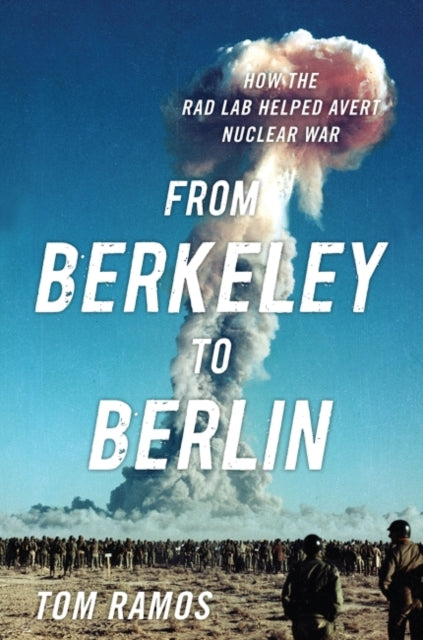
From Berkeley to Berlin: How the Rad Lab Helped Avert Nuclear War
From Berkeley to Berlin: How the Rad Lab Helped Avert Nuclear War
💎 Earn 112 Points (£1.12) on this item.
YOU SAVE £6.57
- Condition: Brand new
- UK Delivery times: Usually arrives within 2 - 3 working days
- UK Shipping: Fee starts at £2.39. Subject to product weight & dimension
Bulk ordering. Want 15 or more copies? Get a personalised quote and bigger discounts. Learn more about bulk orders.
Couldn't load pickup availability
- More about From Berkeley to Berlin: How the Rad Lab Helped Avert Nuclear War
In November 1960, John F. Kennedy was elected president of the US. Soviet Premier Nikita Khrushchev brandished nuclear diplomacy in an attempt to force the US to abandon Berlin, setting the stage for a major nuclear confrontation. This book explores how the US had the wherewithal to stand up to Khrushchev’s attempts to expand Soviet influence.
In November 1960, bolstered by anti-Communist ideologies, John F. Kennedy was elected president of the United States. Soviet Premier Nikita Khrushchev brandished nuclear diplomacy in an attempt to force the United States to abandon Berlin, setting the stage for a major nuclear confrontation over the fate of West Berlin. From Berkeley to Berlin explores how the United States had the wherewithal to stand up to Khrushchev's attempts to expand Soviet influence around the globe. The story begins when a South Dakotan, Ernest Lawrence, the grandson of Norwegian immigrants, created a laboratory on the Berkeley campus of the University of California. The "Rad Lab" attracted some of the finest talent in America to pursue careers in nuclear physics.
When it was discovered that Nazi Germany had the means to build an atomic bomb, Lawrence threw all his energy into waking up the American government to act. Ten years later, when Joseph Stalin's Soviet Union became a nuclear power, Lawrence drove his students to take on the challenge to deter a Communist despot's military ambitions. Their journey was not easy: they had to overcome ridicule over three successive failures, which led to calls to see them, and their laboratory, shut down. At the Nobska Conference in 1956, the Rad Lab physicists took up the daunting challenge to provide the Navy with a warhead for Polaris.
The success of the Polaris missile, which could be carried by submarines, was a critical step in establishing nuclear deterrent capability and helped Kennedy stare down Khrushchev during the Berlin Crisis of 1961. Six months after the height of the Berlin Crisis, Kennedy thought about how close the country had come to destruction, and he flew out to Berkeley to meet and thank a small group of Rad Lab physicists for helping the country avert a nuclear war.
Weight: 598g
Dimension: 162 x 235 x 27 (mm)
ISBN-13: 9781682477533
This item can be found in:
UK and International shipping information
UK and International shipping information
UK Delivery and returns information:
- Delivery within 2 - 3 days when ordering in the UK.
- Shipping fee for UK customers from £2.39. Fully tracked shipping service available.
- Returns policy: Return within 30 days of receipt for full refund.
International deliveries:
Shulph Ink now ships to Australia, Belgium, Canada, France, Germany, Ireland, Italy, India, Luxembourg Saudi Arabia, Singapore, Spain, Netherlands, New Zealand, United Arab Emirates, United States of America.
- Delivery times: within 5 - 10 days for international orders.
- Shipping fee: charges vary for overseas orders. Only tracked services are available for most international orders. Some countries have untracked shipping options.
- Customs charges: If ordering to addresses outside the United Kingdom, you may or may not incur additional customs and duties fees during local delivery.