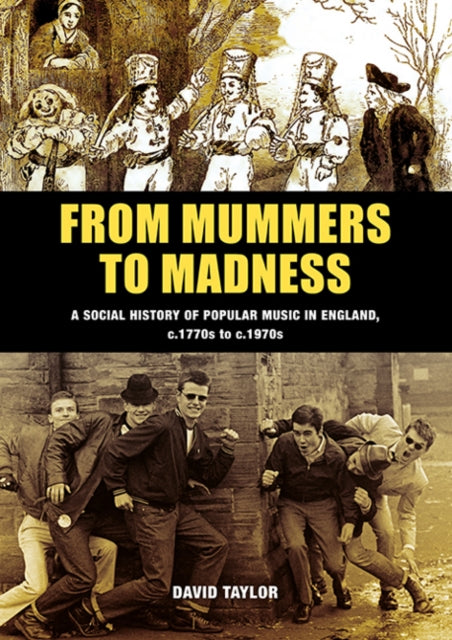
David Taylor
From Mummers to Madness: A Social History of Popular Music in England, c.1770s to c.1970s
From Mummers to Madness: A Social History of Popular Music in England, c.1770s to c.1970s
💎 Earn 123 Points (£1.23) on this item.
We can order this item for you. Delivery usually takes about 4 to 6 weeks.
This item is not held in our immediate stock. We will order it for you after checkout.
Estimated delivery: About 4 to 6 weeks
YOU SAVE £5.22
- Condition: Brand new
- UK Delivery times: Usually arrives within 2 - 3 working days
- UK Shipping: Fee starts at £2.39. Subject to product weight & dimension
Bulk ordering. Want 15 or more copies? Get a personalised quote and bigger discounts. Learn more about bulk orders.
Couldn't load pickup availability
- More about From Mummers to Madness: A Social History of Popular Music in England, c.1770s to c.1970s
From Mummers to Madness explores how popular music in England has evolved over the past two centuries, reflecting changes in society, economics, and culture.
Format: Paperback / softback
Length: 452 pages
Publication date: 30 August 2021
Publisher: University of Huddersfield
From Mummers to Madness delves into the captivating evolution of popular music in England over a span of two centuries, witnessing profound transformations in the country's socio-economic, demographic, and cultural landscape. It is contended that popular music went beyond being a mere reflection of broader societal shifts and actively played a role in shaping the ongoing process of adaptation and transformation.
The emergence of popular music in England can be traced back to the early 18th century, coinciding with the rise of the Industrial Revolution. This period marked a significant shift in the social structure, as the urbanization of society led to the emergence of a new working class. The working class, often excluded from traditional forms of entertainment, sought solace in the vibrant and energetic music of the time.
One of the defining characteristics of popular music during this era was its ability to reflect the experiences and struggles of the working class. Songs often addressed themes such as labor exploitation, social inequality, and the pursuit of a better life. The music was characterized by its raw energy, catchy melodies, and relatable lyrics, making it accessible to a wide audience.
Over the years, popular music in England continued to evolve and adapt to changing societal trends. The 19th century saw the rise of the music hall, which provided a platform for emerging artists to showcase their talents. The music hall genre encompassed a wide range of styles, from vaudeville to operettas, and included popular songs, ballads, and comic sketches.
In the 20th century, popular music in England experienced a significant transformation with the advent of new technologies and musical styles. The rise of rock and roll in the 1950s and 1960s brought a new wave of youth culture and rebellion. Rock and roll songs often addressed themes of love, freedom, and social change, resonating with a generation of young people who were seeking to break free from the constraints of traditional society.
The 1960s also saw the emergence of the counterculture movement, which challenged the dominant social norms and values of the time. The counterculture movement was heavily influenced by popular music, with artists such as The Beatles, Bob Dylan, and The Rolling Stones creating music that reflected the ideals and beliefs of the movement.
In the 1970s and 1980s, popular music in England continued to evolve and diversify. The emergence of punk rock and new wave brought a fresh wave of energy and experimentation to the music scene. Punk rock songs often addressed themes of social alienation, rebellion, and anti-establishment sentiments, resonating with a generation of young people who were disillusioned with the status quo.
The 1990s saw the emergence of electronic dance music (EDM), which revolutionized the way people consumed and enjoyed music. EDM songs often featured catchy melodies, pulsating rhythms.
In conclusion, popular music in England has undergone a remarkable transformation over the past two hundred years, reflecting the changing socio-economic, demographic, and cultural landscape of the country. From its origins in the working class communities of the early 18th century to its embrace of new technologies and musical styles in the 20th century, popular music has played a vital role in shaping the identity and experiences of the working class. It has served as a platform for expressing their struggles, aspirations, and dreams, and has contributed to the ongoing process of adaptation and change in English society.
Weight: 996g
Dimension: 170 x 241 x 35 (mm)
ISBN-13: 9781862181922
UK and International shipping information
UK and International shipping information
UK Delivery and returns information:
- Delivery within 2 - 3 days when ordering in the UK.
- Shipping fee for UK customers from £2.39. Fully tracked shipping service available.
- Returns policy: Return within 30 days of receipt for full refund.
International deliveries:
Shulph Ink now ships to Australia, Belgium, Canada, France, Germany, Ireland, Italy, India, Luxembourg Saudi Arabia, Singapore, Spain, Netherlands, New Zealand, United Arab Emirates, United States of America.
- Delivery times: within 5 - 10 days for international orders.
- Shipping fee: charges vary for overseas orders. Only tracked services are available for most international orders. Some countries have untracked shipping options.
- Customs charges: If ordering to addresses outside the United Kingdom, you may or may not incur additional customs and duties fees during local delivery.