Konden Smith Hansen
Frontier Religion: Mormons in America, 1857-1907
Frontier Religion: Mormons in America, 1857-1907
💎 Earn 78 Points (£0.78) on this item.
YOU SAVE £37.36
- Condition: Brand new
- UK Delivery times: Usually arrives within 2 - 3 working days
- UK Shipping: Fee starts at £2.39. Subject to product weight & dimension
Bulk ordering. Want 15 or more copies? Get a personalised quote and bigger discounts. Learn more about bulk orders.
Couldn't load pickup availability
- More about Frontier Religion: Mormons in America, 1857-1907
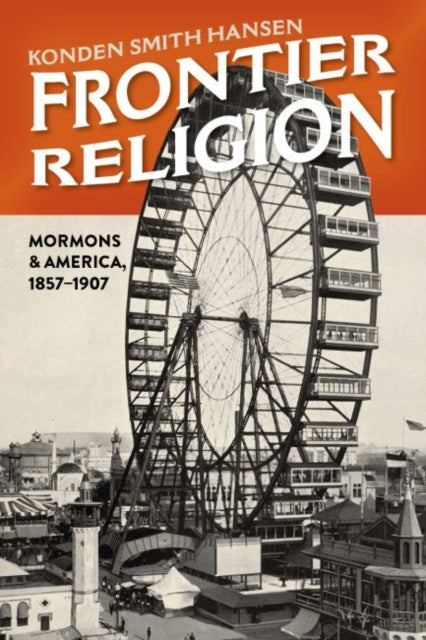
Mormons were excluded from the 1893 Columbian Exposition in Chicago, but Americans began to view Mormonism differently, seeing it as linked to core American values. Frontier Religion by Konden Smith Hansen examines how these perceptions of the frontier influenced Mormonism and other religions in America, challenging old assumptions and provoking further study of the relationship between society and faith.
Format: Hardback
Length: 392 pages
Publication date: 30 November 2019
Publisher: University of Utah Press,U.S.
At the 1893 Columbian Exposition in Chicago, Mormons faced deliberate exclusion from one of the main attractions, the Parliament of Religions. The organizers believed that Mormonism, with its connections to polygamy, did not merit a place alongside other world religions being showcased for the similar ways in which they inspired people to follow God. However, at the same time, Americans who had long shown hatred or distrust toward their Mormon neighbors had begun to look at Mormonism in a different light. This shift in perspective was driven by a rapidly developing belief in America's fading western frontier as a place linked to core American values such as self-reliance, personal freedom, and democratic rule. With a unique history intimately tied to the frontier, Mormonism began to be seen less as something outside America and more as a faith closely associated with the country's most important principles.
In his book "Frontier Religion," Konden Smith Hansen explores the profound impact of these perceptions of the frontier on Mormonism and other religions in America. The book follows several Mormon-American conflicts, ranging from the Utah War and the antipolygamy crusades to the Reed Smoot hearings, in an effort to understand the sway of the frontier on religion in the United States. The story of Mormonism's move toward American acceptability represents a larger narrative of the nation's transition toward modernity and religious pluralism. This book challenges old assumptions and prompts further study of the ever-evolving dialectic between society and faith.
The exclusion of Mormons from the Parliament of Religions at the 1893 Columbian Exposition in Chicago highlights the complex and multifaceted relationship between religion, society, and the American frontier. The organizers of the event believed that Mormonism's connections to polygamy did not align with their vision of showcasing world religions as equal and inspiring sources of spiritual guidance. However, this exclusion did not reflect the broader American sentiment, which was gradually shifting towards a more inclusive and tolerant view of Mormonism.
At the same time, the belief in the western frontier as a symbol of American values such as self-reliance, personal freedom, and democratic rule was gaining traction. The frontier had long been a source of fascination and longing for Americans, who saw it as a place of opportunity and adventure, where they could escape the constraints of society and pursue their dreams. Mormons, with their strong emphasis on family, community, and religious devotion, were seen as embodying these values and as fitting perfectly into the narrative of the American frontier.
As Americans continued to explore and settle the western territories, they began to develop a deeper appreciation for the Mormon culture and way of life. They saw the Mormons as hardworking, self-sufficient, and dedicated to their faith, qualities that were highly valued in the rugged and challenging environment of the frontier. This newfound respect and understanding led to a gradual acceptance of Mormonism as a legitimate religion in American society.
The shift in perspective towards Mormonism was not without its challenges, however. There were still many Americans who held negative stereotypes and prejudices against the religion, particularly in regions where Mormonism had a significant presence. These attitudes were often rooted in cultural and religious differences, as well as in historical tensions between Mormons and other groups in the western territories.
Despite these challenges, Mormonism continued to grow and evolve in American society. The church expanded its missionary efforts and established communities throughout the western United States, building schools, hospitals, and other institutions that served the needs of the local communities. The church also became more inclusive and diverse, welcoming members from different backgrounds and cultures and promoting greater understanding and respect between different faiths.
In conclusion, the exclusion of Mormons from the 1893 Columbian Exposition in Chicago was a reflection of the complex and evolving relationship between religion, society, and the American frontier. While the organizers of the event viewed Mormonism as outside the mainstream of American religion, the broader American sentiment was gradually shifting towards a more inclusive and tolerant view. The belief in the western frontier as a symbol of American values and the growing appreciation for Mormon culture and way of life played a significant role in this shift, leading to a gradual acceptance of Mormonism as a legitimate religion in American society.
Weight: 638g
Dimension: 161 x 234 x 32 (mm)
ISBN-13: 9781607816881
UK and International shipping information
UK and International shipping information
UK Delivery and returns information:
- Delivery within 2 - 3 days when ordering in the UK.
- Shipping fee for UK customers from £2.39. Fully tracked shipping service available.
- Returns policy: Return within 30 days of receipt for full refund.
International deliveries:
Shulph Ink now ships to Australia, Belgium, Canada, France, Germany, Ireland, Italy, India, Luxembourg Saudi Arabia, Singapore, Spain, Netherlands, New Zealand, United Arab Emirates, United States of America.
- Delivery times: within 5 - 10 days for international orders.
- Shipping fee: charges vary for overseas orders. Only tracked services are available for most international orders. Some countries have untracked shipping options.
- Customs charges: If ordering to addresses outside the United Kingdom, you may or may not incur additional customs and duties fees during local delivery.