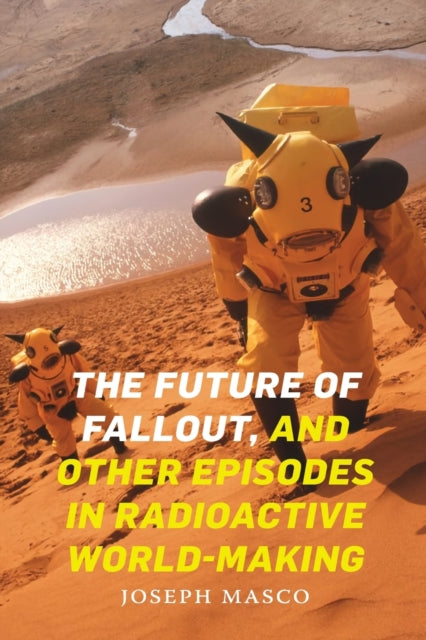
Joseph Masco
Future of Fallout, and Other Episodes in Radioactive World-Making
Future of Fallout, and Other Episodes in Radioactive World-Making
💎 Earn 131 Points (£1.31) on this item.
YOU SAVE £5.57
- Condition: Brand new
- UK Delivery times: Usually arrives within 2 - 3 working days
- UK Shipping: Fee starts at £2.39. Subject to product weight & dimension
Bulk ordering. Want 15 or more copies? Get a personalised quote and bigger discounts. Learn more about bulk orders.
Couldn't load pickup availability
- More about Future of Fallout, and Other Episodes in Radioactive World-Making
Joseph Masco's book explores the strange American intimacy with and commitment to existential danger, examining the psychosocial accommodations and technological revolutions that have produced linked planetary-scale disasters. He assesses the memory practices, visual culture, concepts of danger, and toxic practices that have generated a U.S. national security culture that promises safety and comfort but generates and deferrs violences into the collective future. He identifies key moments when other futures were still possible and seeks to activate an alternative, postnational security political imaginary in support of collective life today.
Format: Paperback / softback
Length: 440 pages
Publication date: 08 January 2021
Publisher: Duke University Press
The Future of Fallout, and Other Episodes in Radioactive World-Making by Joseph Masco explores the intriguing American fascination with and dedication to existential danger. By tracing the concurrent development of nuclear emergencies and climate disruptions since 1945, Masco examines the psychosocial adjustments and technological advancements that have led to these interconnected global-scale catastrophes. He evaluates the memory practices, visual culture, concepts of danger, and toxic practices that have created a U.S. national security culture that promises ever-increasing safety and comfort in daily life but only by producing and postponing a wide range of violences into the collective future. Masco investigates how this existential lag, represented by the twentieth century's nuclear weapons and petrochemical capitalism, shapes life in the twenty-first century. He identifies crucial junctures when other futures were still conceivable and strives to mobilize an alternative, postnational security political imaginary in favor of collective life today.
The Future of Fallout, and Other Episodes in Radioactive World-Making
Joseph Masco's book, "The Future of Fallout, and Other Episodes in Radioactive World-Making," examines the strange American intimacy with and commitment to existential danger. Tracking the simultaneous production of nuclear emergency and climate disruption since 1945, he focuses on the psychosocial accommodations as well as the technological revolutions that have produced these linked planetary-scale disasters. Masco assesses the memory practices, visual culture, concepts of danger, and toxic practices that, in combination, have generated a U.S. national security culture that promises ever more safety and comfort in everyday life but does so only by generating and deferring a vast range of violences into the collective future. Interrogating how this existential lag (i.e., the material and conceptual fallout of the twentieth century in the form of nuclear weapons and petrochemical capitalism) informs life in the twenty-first century, Masco identifies key moments when other futures were still possible and seeks to activate an alternative, postnational security political imaginary in support of collective life today.
The Strange American Intimacy with Existential Danger
Masco begins by tracing the history of nuclear emergency and climate disruption in the United States. He highlights the ways in which these disasters have been shaped by the Cold War, the arms race, and the pursuit of national security. He also notes the role of scientific and technological innovation in these disasters, particularly in the development of nuclear weapons and the petrochemical industry. Masco argues that these disasters have had a profound impact on American society, shaping its values, beliefs, and practices. He notes that the United States has become a society that is obsessed with safety and security, and that this obsession has led to a range of negative consequences, including the militarization of society, the erosion of civil liberties, and the degradation of the environment. Masco argues that this obsession with safety and security has also led to a sense of isolation and disconnection from the rest of the world, as the United States has become increasingly focused on its own interests and has neglected its responsibilities to the global community.
The Psychosocial Accommodations and Technological Revolutions
Masco then examines the psychosocial accommodations and technological revolutions that have produced these linked planetary-scale disasters. He notes that the Cold War and the arms race have created a culture of fear and anxiety, which has led to a desire for security and stability. This has led to the development of nuclear weapons and the petrochemical industry, which have provided a sense of security and stability to the United States. However, Masco argues that these technologies have also had negative consequences, including the risk of nuclear war and the environmental degradation caused by the petrochemical industry. Masco also notes that the technological revolutions of the twentieth century have had a profound impact on American society, shaping its values, beliefs, and practices. He notes that the rise of the internet and social media has led to a greater sense of connectivity and community, but has also led to a range of negative consequences, including the spread of misinformation and the erosion of privacy. Masco argues that these technological revolutions have also led to a sense of disconnection and isolation from the rest of the world, as the United States has become increasingly focused on its own interests and has neglected its responsibilities to the global community.
The Memory Practices, Visual Culture, and Concepts of Danger
Masco then examines the memory practices, visual culture, and concepts of danger that have generated a U.S. national security culture that promises ever more safety and comfort in everyday life but only by generating and deferring a vast range of violences into the collective future. He notes that the United States has a long history of using memory practices to shape its identity and to justify its actions. He notes that the Cold War and the arms race have created a culture of fear and anxiety, which has led to a desire for security and stability. This has led to the development of nuclear weapons and the petrochemical industry, which have provided a sense of security and stability to the United States. However, Masco argues that these technologies have also had negative consequences, including the risk of nuclear war and the environmental degradation caused by the petrochemical industry. Masco also notes that the technological revolutions of the twentieth century have had a profound impact on American society, shaping its values, beliefs, and practices. He notes that the rise of the internet and social media has led to a greater sense of connectivity and community, but has also led to a range of negative consequences, including the spread of misinformation and the erosion of privacy. Masco argues that these technological revolutions have also led to a sense of disconnection and isolation from the rest of the world, as the United States has become increasingly focused on its own interests and has neglected its responsibilities to the global community.
The Existential Lag and the Future of Life in the Twenty-First Century
Masco then interrogates how this existential lag, represented by the twentieth century's nuclear weapons and petrochemical capitalism, informs life in the twenty-first century. He notes that the United States has become a society that is obsessed with safety and security, and that this obsession has led to a range of negative consequences, including the militarization of society, the erosion of civil liberties, and the degradation of the environment. Masco argues that this obsession with safety and security has also led to a sense of isolation and disconnection from the rest of the world, as the United States has become increasingly focused on its own interests and has neglected its responsibilities to the global community. Masco argues that this existential lag has also led to a sense of disconnection and isolation from the rest of the world, as the United States has become increasingly focused on its own interests and has neglected its responsibilities to the global community. Masco argues that this existential lag has also led to a sense of disconnection and isolation from the rest of the world, as the United States has become increasingly focused on its own interests and has neglected its responsibilities to the global community.
Activating an Alternative, Postnational Security Political Imaginary
Masco then seeks to activate an alternative, postnational security political imaginary in support of collective life today. He notes that the United States has a long history of using memory practices to shape its identity and to justify its actions. He notes that the Cold War and the arms race have created a culture of fear and anxiety, which has led to a desire for security and stability. This has led to the development of nuclear weapons and the petrochemical industry, which have provided a sense of security and stability to the United States. However, Masco argues that these technologies have also had negative consequences, including the risk of nuclear war and the environmental degradation caused by the petrochemical industry. Masco also notes that the technological revolutions of the twentieth century have had a profound impact on American society, shaping its values, beliefs, and practices. He notes that the rise of the internet and social media has led to a greater sense of connectivity and community, but has also led to a range of negative consequences, including the spread of misinformation and the erosion of privacy. Masco argues that these technological revolutions have also led to a sense of disconnection and isolation from the rest of the world, as the United States has become increasingly focused on its own interests and has neglected its responsibilities to the global community.
Conclusion
In conclusion, Joseph Masco's book, "The Future of Fallout, and Other Episodes in Radioactive World-Making," examines the strange American intimacy with and commitment to existential danger. By tracing the simultaneous production of nuclear emergency and climate disruption since 1945, he focuses on the psychosocial accommodations and technological revolutions that have produced these linked planetary-scale disasters. Masco assesses the memory practices, visual culture, concepts of danger, and toxic practices that have generated a U.S. national security culture that promises ever more safety and comfort in everyday life but only by generating and deferring a vast range of violences into the collective future. Interrogating how this existential lag informs life in the twenty-first century, Masco identifies key moments when other futures were still possible and seeks to activate an alternative, postnational security political imaginary in support of collective life today.
Weight: 648g
Dimension: 151 x 229 x 29 (mm)
ISBN-13: 9781478011149
UK and International shipping information
UK and International shipping information
UK Delivery and returns information:
- Delivery within 2 - 3 days when ordering in the UK.
- Shipping fee for UK customers from £2.39. Fully tracked shipping service available.
- Returns policy: Return within 30 days of receipt for full refund.
International deliveries:
Shulph Ink now ships to Australia, Belgium, Canada, France, Germany, Ireland, Italy, India, Luxembourg Saudi Arabia, Singapore, Spain, Netherlands, New Zealand, United Arab Emirates, United States of America.
- Delivery times: within 5 - 10 days for international orders.
- Shipping fee: charges vary for overseas orders. Only tracked services are available for most international orders. Some countries have untracked shipping options.
- Customs charges: If ordering to addresses outside the United Kingdom, you may or may not incur additional customs and duties fees during local delivery.