Shulph Ink
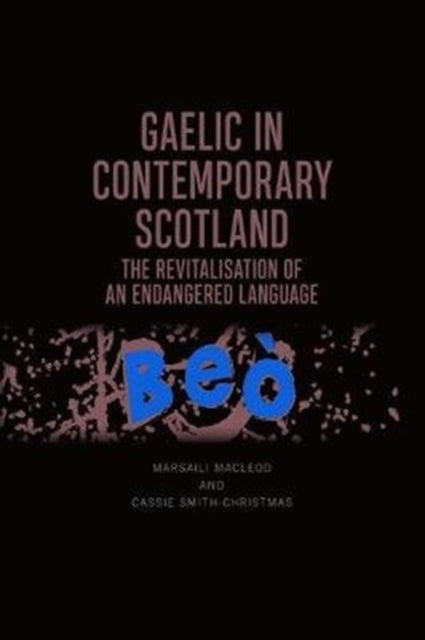
Gaelic in Contemporary Scotland: The Revitalisation of an Endangered Language
Gaelic in Contemporary Scotland: The Revitalisation of an Endangered Language
💎 Earn 92 Points (£0.92) on this item.
We can order this item for you. Delivery usually takes about 4 to 6 weeks.
This item is not held in our immediate stock. We will order it for you after checkout.
Estimated delivery: About 4 to 6 weeks
YOU SAVE £5.59
- Condition: Brand new
- UK Delivery times: Usually arrives within 2 - 3 working days
- UK Shipping: Fee starts at £2.39. Subject to product weight & dimension
Bulk ordering. Want 15 or more copies? Get a personalised quote and bigger discounts. Learn more about bulk orders.
Couldn't load pickup availability
- More about Gaelic in Contemporary Scotland: The Revitalisation of an Endangered Language
Gaelic in Contemporary Scotland explores language acquisition, use, and management in four key spaces, challenging old understandings of the Gaelic community and offering fresh ideas for language revitalisation theory.
Format: Paperback / softback
Length: 208 pages
Publication date: 31 August 2020
Publisher: Edinburgh University Press
Gaelic in Contemporary Scotland is a comprehensive exploration of the processes and patterns of Gaelic language acquisition, use, and management across four key spaces of interaction: the family, the community, educational settings, and organizations. The contributors adopt an experiential approach to give voice to speakers in diverse communities, both geographically and socially, as the volume illustrates the ways in which the use of Gaelic is changing in the context of increasingly fragmented, networked communities.
The book offers a range of critical perspectives on existing models for minority language revitalization and introduces fresh ideas for language revitalization theory. Through its analysis of the interconnections between and differences within Gaelic communities, this collection challenges old understandings of the Gaelic community as a single collective identity, making it an invaluable resource for students, lecturers, and researchers interested in questions of linguistic diversity, linguistic minorities, and language policy and planning.
Gaelic in Contemporary Scotland provides a comprehensive overview of the current state of Gaelic language use and management in Scotland, highlighting the challenges and opportunities facing the language in the modern world. It explores the various factors that influence language use and management, including social, cultural, economic, and political factors, and examines the strategies and policies that have been implemented to support Gaelic language use and revitalization.
One of the key themes of the book is the role of the family in Gaelic language acquisition and use. The authors argue that the family is a critical site for language learning and maintenance, and that parents play a vital role in promoting Gaelic language use in their children. They discuss the various strategies that parents can use to support their children's language learning, including speaking Gaelic at home, reading Gaelic books, and attending Gaelic language classes.
The community is also a significant site for Gaelic language use and management. The authors highlight the importance of community-based language programs and events, such as Gaelic language festivals, Gaelic language classes, and Gaelic language clubs, in promoting Gaelic language use and revitalization. They argue that these programs and events can help to create a sense of community and belonging among Gaelic speakers and can also help to attract new speakers to the language.
Educational settings are also important for Gaelic language acquisition and use. The authors discuss the various strategies that schools and universities can use to support Gaelic language learning, including the use of Gaelic language textbooks, the provision of Gaelic language classes, and the promotion of Gaelic language use in the classroom. They argue that these strategies can help to ensure that Gaelic language is not lost in the education system and that it continues to be a valuable asset for the future.
Organizations are also important for Gaelic language acquisition and use. The authors discuss the various strategies that organizations can use to support Gaelic language use and revitalization, including the use of Gaelic language in marketing and advertising, the provision of Gaelic language training for employees, and the promotion of Gaelic language use in the workplace. They argue that these strategies can help to create a more inclusive and diverse workplace and can also help to attract new customers and clients to the organization.
One of the challenges facing Gaelic language use and management in Scotland is the decline in the number of Gaelic speakers. The authors argue that this decline is due to a variety of factors, including the loss of Gaelic language speakers through migration, the lack of support for Gaelic language learning and use in schools and universities, and the lack of recognition of Gaelic language as a valuable asset for the future.
To address this challenge, the authors propose a range of strategies for Gaelic language revitalization. These strategies include the promotion of Gaelic language learning and use in schools and universities, the provision of Gaelic language training for employees, the promotion of Gaelic language use in the workplace, and the creation of Gaelic language communities.
The promotion of Gaelic language learning and use in schools and universities is a critical strategy for Gaelic language revitalization. The authors argue that schools and universities should provide Gaelic language classes and should encourage students to learn Gaelic language. They also argue that schools and universities should provide Gaelic language resources, such as Gaelic language textbooks and Gaelic language dictionaries, to support students' language learning.
The provision of Gaelic language training for employees is also a critical strategy for Gaelic language revitalization. The authors argue that organizations should provide Gaelic language training for their employees to ensure that they are able to communicate effectively with Gaelic speakers. They also argue that organizations should provide Gaelic language training for their employees to ensure that they are able to understand Gaelic language culture and history.
The promotion of Gaelic language use in the workplace is also a critical strategy for Gaelic language revitalization. The authors argue that organizations should use Gaelic language in their marketing and advertising, and should provide Gaelic language training for their employees to ensure that they are able to communicate effectively with Gaelic speakers. They also argue that organizations should provide Gaelic language training for their employees to ensure that they are able to understand Gaelic language culture and history.
The creation of Gaelic language communities is also a critical strategy for Gaelic language revitalization. The authors argue that Gaelic language communities can help to create a sense of community and belonging among Gaelic speakers and can also help to attract new speakers to the language. They argue that Gaelic language communities can be created through the provision of Gaelic language classes, the promotion of Gaelic language use in the community, and the creation of Gaelic language events and festivals.
In conclusion, Gaelic in Contemporary Scotland is a comprehensive exploration of the processes and patterns of Gaelic language acquisition, use, and management across four key spaces of interaction: the family, the community, educational settings, and organizations. The contributors adopt an experiential approach to give voice to speakers in diverse communities, both geographically and socially, as the volume illustrates the ways in which the use of Gaelic is changing in the context of increasingly fragmented, networked communities. The book offers a range of critical perspectives on existing models for minority language revitalization and introduces fresh ideas for language revitalization theory. Through its analysis of the interconnections between and differences within Gaelic communities, this collection challenges old understandings of the Gaelic community as a single collective identity, making it an invaluable resource for students, lecturers, and researchers interested in questions of linguistic diversity, linguistic minorities, and language policy and planning.
Weight: 324g
Dimension: 156 x 233 x 17 (mm)
ISBN-13: 9781474474672
UK and International shipping information
UK and International shipping information
UK Delivery and returns information:
- Delivery within 2 - 3 days when ordering in the UK.
- Shipping fee for UK customers from £2.39. Fully tracked shipping service available.
- Returns policy: Return within 30 days of receipt for full refund.
International deliveries:
Shulph Ink now ships to Australia, Belgium, Canada, France, Germany, Ireland, Italy, India, Luxembourg Saudi Arabia, Singapore, Spain, Netherlands, New Zealand, United Arab Emirates, United States of America.
- Delivery times: within 5 - 10 days for international orders.
- Shipping fee: charges vary for overseas orders. Only tracked services are available for most international orders. Some countries have untracked shipping options.
- Customs charges: If ordering to addresses outside the United Kingdom, you may or may not incur additional customs and duties fees during local delivery.