Shulph Ink
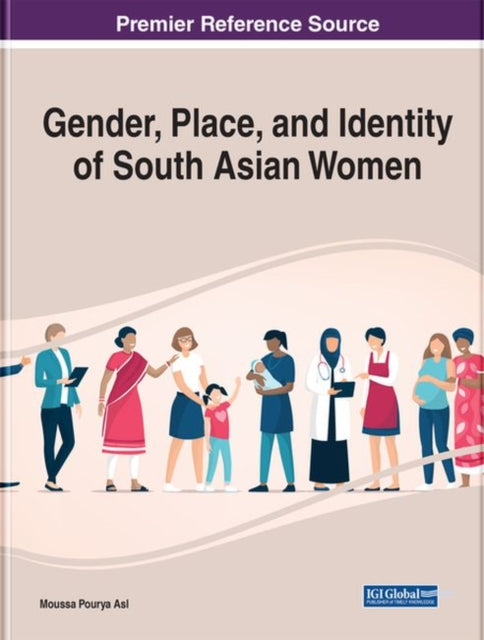
Gender, Place, and Identity of South Asian Women
Gender, Place, and Identity of South Asian Women
💎 Earn 1054 Points (£10.54) on this item.
YOU SAVE £2.13
- Condition: Brand new
- UK Delivery times: Usually arrives within 2 - 3 working days
- UK Shipping: Fee starts at £2.39. Subject to product weight & dimension
Bulk ordering. Want 15 or more copies? Get a personalised quote and bigger discounts. Learn more about bulk orders.
Couldn't load pickup availability
- More about Gender, Place, and Identity of South Asian Women
South Asia underwent significant cultural, social, and political changes in the past century, and Gender, Place, and Identity of South Asian Women studies the impact of these changes on gender, place, and identity. The book covers topics such as partition memory narrative, spatial mobility, and diasporic women's lives and is an essential resource for students, educators, researchers, activists, government officials, business leaders, academics, feminist organizations, sociologists, and researchers.
Format: Hardback
Length: 315 pages
Publication date: 08 April 2022
Publisher: IGI Global
In the past century, South Asia experienced profound cultural, social, and political transformations as numerous countries transitioned from colonial rule to independence. These shifts were intricately linked to the spatiality of social life within the region, highlighting the significance of social spaces in shaping transformative politics and identity formations.
Gender, Place, and Identity of South Asian Women delves into contemporary literature by examining gender, place, and identity among South Asian women. It contributes to ongoing discussions on gender identity and equality, spatial and social justice, women's empowerment, marginalization, and anti-discrimination measures. The book explores various topics, including partition memory narratives, spatial mobility, and the lives of diasporic women. It serves as a valuable resource for students, educators, researchers, activists, government officials, business leaders, academics, feminist organizations, sociologists, and anyone interested in understanding the complexities of gender, place, and identity in South Asia.
The cultural, social, and political transformations in South Asia during the past century have been shaped by the complex interplay between colonialism, nationalism, and the spatiality of social life. The region has witnessed a remarkable journey from colonial domination to independence, marked by nationalist movements that sought to assert national identities and reclaim sovereignty. These movements were deeply rooted in the local communities and were driven by a desire for social and economic change.
As countries in South Asia gained independence, they faced the challenge of building new nation-states and establishing a sense of national identity. This process was not without its complexities, as different regions within the region had distinct cultural, linguistic, and religious traditions. The nationalist movements aimed to unite these diverse communities under a common banner, often at the expense of regional and ethnic identities.
However, the nationalist movements also brought about significant social and economic changes in South Asia. Women played a crucial role in these transformations, as they were marginalized and excluded from political and social life in many societies. The nationalist movements sought to empower women and promote gender equality, but they faced resistance from traditional patriarchal structures and religious beliefs.
The spatiality of social life in South Asia has also played a significant role in shaping transformative politics and identity formations. The region is characterized by a diverse range of landscapes, including mountains, forests, deserts, and coastal areas. These physical environments have influenced the social structures, cultural practices, and economic activities of the communities living in them. For example, the mountainous regions of India have been home to indigenous communities that have maintained their traditional practices and beliefs for centuries.
Similarly, the coastal areas of South Asia have been hubs of trade and commerce, with ports and cities such as Mumbai, Chennai, and Kolkata playing a vital role in the region's economic development. The spatial distribution of resources and opportunities has shaped the social and economic inequalities within the region, with marginalized communities often facing discrimination and exclusion.
Gender, place, and identity are interconnected and have played a significant role in shaping the cultural, social, and political landscape of South Asia. Women have been marginalized and excluded from political and social life, but they have also been agents of change and empowerment. The nationalist movements have sought to promote gender equality, but they have faced resistance from traditional patriarchal structures and religious beliefs.
The spatiality of social life has influenced the social structures, cultural practices, and economic activities of the communities living in different regions of South Asia. The mountainous regions have been home to indigenous communities that have maintained their traditional practices and beliefs, while the coastal areas have been hubs of trade and commerce. The spatial distribution of resources and opportunities has shaped social and economic inequalities, with marginalized communities often facing discrimination and exclusion.
In conclusion, the past century has seen profound cultural, social, and political transformations in South Asia, driven by colonialism, nationalism, and the spatiality of social life. Gender, place, and identity have played a significant role in shaping these transformations, with women being marginalized and excluded from political and social life but also being agents of change and empowerment. The spatial distribution of resources and opportunities has shaped social and economic inequalities, with marginalized communities often facing discrimination and exclusion. Understanding the complexities of gender, place, and identity in South Asia is essential for promoting social justice, equality, and sustainable development.
Dimension: 279 x 216 (mm)
ISBN-13: 9781668436264
This item can be found in:
UK and International shipping information
UK and International shipping information
UK Delivery and returns information:
- Delivery within 2 - 3 days when ordering in the UK.
- Shipping fee for UK customers from £2.39. Fully tracked shipping service available.
- Returns policy: Return within 30 days of receipt for full refund.
International deliveries:
Shulph Ink now ships to Australia, Belgium, Canada, France, Germany, Ireland, Italy, India, Luxembourg Saudi Arabia, Singapore, Spain, Netherlands, New Zealand, United Arab Emirates, United States of America.
- Delivery times: within 5 - 10 days for international orders.
- Shipping fee: charges vary for overseas orders. Only tracked services are available for most international orders. Some countries have untracked shipping options.
- Customs charges: If ordering to addresses outside the United Kingdom, you may or may not incur additional customs and duties fees during local delivery.