PROF Maria Maurer
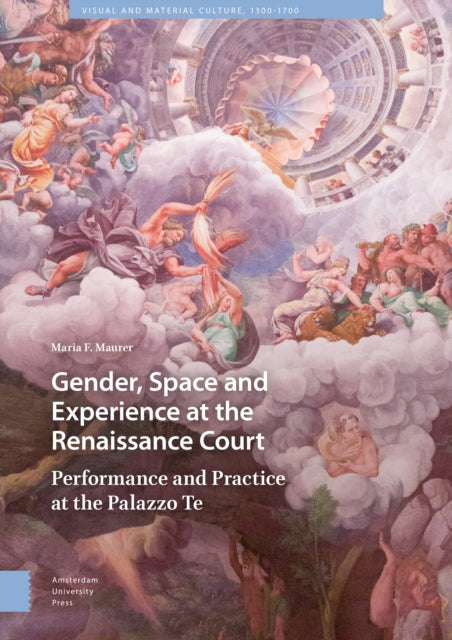
Gender, Space and Experience at the Renaissance Court: Performance and Practice at the Palazzo Te
Gender, Space and Experience at the Renaissance Court: Performance and Practice at the Palazzo Te
💎 Earn 689 Points (£6.89) on this item.
We can order this item for you. Delivery usually takes about 4 to 6 weeks.
This item is not held in our immediate stock. We will order it for you after checkout.
Estimated delivery: About 4 to 6 weeks
YOU SAVE £8.18
- Condition: Brand new
- UK Delivery times: Usually arrives within 2 - 3 working days
- UK Shipping: Fee starts at £2.39. Subject to product weight & dimension
Bulk ordering. Want 15 or more copies? Get a personalised quote and bigger discounts. Learn more about bulk orders.
Couldn't load pickup availability
- More about Gender, Space and Experience at the Renaissance Court: Performance and Practice at the Palazzo Te
Gender, Space, and Experience at the Renaissance Court explores the relationships between gender and architectural space in Renaissance Italy, arguing that the Palazzo Te was an active participant in the construction and perception of femininity and masculinity.
Format: Hardback
Length: 244 pages
Publication date: 06 March 2019
Publisher: Amsterdam University Press
Gender, Space, and Experience at the Renaissance Court delves into the intricate interplay between gender and architectural space in Renaissance Italy. It explores the ceremonial utilization and artistic reception of the Palazzo Te from the arrival of the Holy Roman Emperor Charles V in 1530 to the Sack of Mantua in 1630. Moreover, this book suggests that we should perceive the built environment as a performative space, shaped by the gendered relationships and actors of its time. While the Palazzo Te was constructed through the gendered behaviors of sixteenth-century courtiers, it was not merely a passive recipient of gender performance. Instead, Maria F. Maurer argues that the palace actively contributed to the construction and perception of femininity and masculinity in the early modern court through its multifaceted form and ceremonial function.
The Renaissance court was a vibrant and dynamic realm, where gender, space, and experience converged in complex ways. The Palazzo Te, a magnificent palace in Mantua, served as a focal point for these interactions, hosting a series of ceremonies and events that shaped the perception of femininity and masculinity in the early modern court.
The arrival of the Holy Roman Emperor Charles V in 1530 marked a significant moment in the history of the Palazzo Te. The emperor's visit was a grand spectacle, and the palace was meticulously prepared to accommodate his lavish tastes and demands. The palace's architecture, with its grand halls, ornate decorations, and intricate details, reflected the opulence and power of the Renaissance.
However, the Palazzo Te was not just a symbol of power and grandeur; it was also a space that was deeply intertwined with gender dynamics. The courtiers who inhabited the palace played a crucial role in shaping its gender identity. Their behaviors, attire, and interactions with each other created a complex tapestry of femininity and masculinity.
For example, the courtiers' use of space was a significant factor in constructing gender identity. The palace's grand halls were often used for ceremonial events, where courtiers would gather to celebrate marriages, births, and other important occasions. The layout of these spaces was carefully designed to emphasize the hierarchy of the court, with the emperor's chambers at the top and the courtiers' chambers at the bottom.
Courtiers also used their attire to construct their gender identity. Men wore elaborate costumes, often featuring bright colors and intricate embroidery, while women wore more modest dresses that were typically adorned with delicate lace and ribbons. These garments were not just a fashion statement; they were also a way for courtiers to express their gender roles and assert their power within the court.
In addition to the use of space and attire, courtiers also engaged in a range of activities that contributed to the construction of gender identity. They participated in courtly love games, where they competed for the affections of noble women, and they engaged in political intrigues and power struggles. These activities were not just a means of entertainment; they were also a way for courtiers to assert their masculinity and power and to demonstrate their worth to the emperor.
The Palazzo Te was not just a passive recipient of gender performance; it was an active participant in the construction and perception of femininity and masculinity in the early modern court. Through its multivalent form and ceremonial function, the palace played a crucial role in shaping the gender identities of its inhabitants and the broader society.
The Palazzo Te's architecture was not just a physical structure; it was also a symbolic representation of gender identity. The grand halls and ornate decorations were designed to evoke a sense of femininity and elegance, while the emperor's chambers were characterized by their opulence and power. These architectural elements were carefully crafted to reinforce the gender roles and expectations of the time.
Furthermore, the Palazzo Te's ceremonial function played a significant role in shaping gender identity. The palace was used for a range of events, including weddings, baptisms, and coronations, which were all important occasions that marked the transition from childhood to adulthood and the establishment of social and political connections. These events were carefully orchestrated to emphasize the importance of femininity and masculinity and to reinforce the gender roles and expectations of the time.
Courtiers also used the Palazzo Te to express their gender identity through artistic performances and exhibitions. The palace's galleries were used to display works of art, including paintings, sculptures, and tapestries, which were often used to illustrate the virtues of femininity and masculinity. These works of art were carefully selected to reinforce the gender roles and expectations of the time and to inspire awe and admiration in the courtiers and the broader society.
In conclusion, Gender, Space, and Experience at the Renaissance Court provides a valuable insight into the intricate interplay between gender and architectural space in Renaissance Italy. The Palazzo Te, through its multivalent form and ceremonial function, played a crucial role in shaping the gender identities of its inhabitants and the broader society. The palace's architecture, attire, activities, and artistic performances all contributed to the construction and perception of femininity and masculinity in the early modern court. By examining these relationships, we can gain a deeper understanding of the complex and dynamic world of the Renaissance court and the role that gender played in shaping its social and cultural landscape.
Weight: 766g
Dimension: 178 x 248 x 14 (mm)
ISBN-13: 9789462985537
Edition number: 0
UK and International shipping information
UK and International shipping information
UK Delivery and returns information:
- Delivery within 2 - 3 days when ordering in the UK.
- Shipping fee for UK customers from £2.39. Fully tracked shipping service available.
- Returns policy: Return within 30 days of receipt for full refund.
International deliveries:
Shulph Ink now ships to Australia, Belgium, Canada, France, Germany, Ireland, Italy, India, Luxembourg Saudi Arabia, Singapore, Spain, Netherlands, New Zealand, United Arab Emirates, United States of America.
- Delivery times: within 5 - 10 days for international orders.
- Shipping fee: charges vary for overseas orders. Only tracked services are available for most international orders. Some countries have untracked shipping options.
- Customs charges: If ordering to addresses outside the United Kingdom, you may or may not incur additional customs and duties fees during local delivery.