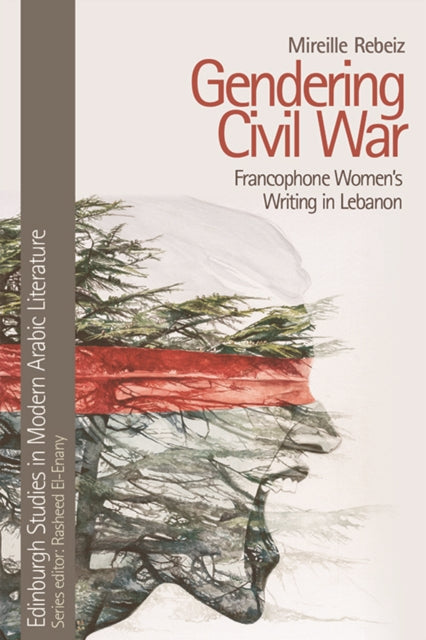
Mireille Rebeiz
Gendering Civil War: Francophone Women's Writing in Lebanon
Gendering Civil War: Francophone Women's Writing in Lebanon
💎 Earn 383 Points (£3.83) on this item.
YOU SAVE £23.30
- Condition: Brand new
- UK Delivery times: Usually arrives within 2 - 3 working days
- UK Shipping: Fee starts at £3.89. Subject to product weight & dimension
Bulk ordering. Want 15 or more copies? Get a personalised quote and bigger discounts. Learn more about bulk orders.
Couldn't load pickup availability
- More about Gendering Civil War: Francophone Women's Writing in Lebanon
This book explores the narratives of Lebanese women writers who use distinctive forms to address issues of violence, war trauma, and gender relations in a multi-ethnic postcolonial society. It analyzes French-language narratives published between the 1970s and the present day.
Format: Hardback
Length: 256 pages
Publication date: 31 March 2022
Publisher: Edinburgh University Press
In the vibrant tapestry of contemporary Lebanon, writers find themselves navigating a complex and often turbulent terrain, where the interplay of diverse cultural and political forces creates a myriad of challenges for women. Within this multiethnic postcolonial society, competing narratives and ideologies emerge, shaping the lived experiences of women in profound ways. This captivating book delves into the rich tapestry of French-language narratives authored by Lebanese women, shedding light on the civil war that ravaged the country from 1975 to 1991. Through a meticulous examination of a diverse corpus of writings by prominent figures such as Venus Khoury-Ghata, Etel Adnan, Evelyne Accad, Andree Chedid, Hyam Yared, and Georgia Makhlouf, the book explores the profound ways in which these writers employ distinctive narrative forms to address interrelated themes of violence, war trauma, and gender relations.
The civil war of 1975-1991 was a pivotal period in Lebanese history, marked by widespread destruction, displacement, and the erosion of social structures. The war not only inflicted physical harm on the population but also left deep emotional scars, exacerbating the already complex gender dynamics in the country. Lebanese women, who played a significant role in the resistance movement and bore the brunt of the war's consequences, sought to express their experiences and perspectives through their writing.
The book analyzes the narratives of these women writers, highlighting their use of distinctive narrative forms to address the multifaceted challenges they faced. These forms include memoirs, essays, and short stories, which allow the authors to delve into the depths of their personal experiences and explore the broader societal implications of the war. Through their writing, Lebanese women artists challenge traditional gender roles, subvert patriarchal structures, and advocate for gender equality and social justice.
One of the key themes explored in the book is the impact of violence on women and their role in the resistance movement. The authors vividly depict the experiences of women who were subjected to sexual violence, torture, and displacement, highlighting the resilience and strength of these survivors. They also explore the ways in which women used their voices and bodies to resist the war, organizing protests, participating in political activism, and providing support to those in need.
Another important theme is the exploration of war trauma and its long-term effects on individuals and society. The authors shed light on the psychological and emotional toll that the war took on the population, particularly on women who were often marginalized and left to bear the burden of rebuilding their lives. They examine the ways in which war trauma manifests itself in the characters of the women writers, highlighting the complexities of healing and recovery.
The book also explores the complex relationship between gender and power in Lebanese society. The authors examine the historical and cultural factors that have shaped gender roles and stereotypes, highlighting the ways in which these roles have been perpetuated and challenged. They also explore the ways in which women have used their writing to challenge these norms and advocate for gender equality and social justice.
Through their narratives, Lebanese women writers offer a powerful critique of the political and social structures that perpetuate violence and inequality. They challenge the dominant narratives of the war, highlighting the contributions of women and the injustices they have faced. They also offer a vision for a more inclusive and equitable society, where women's voices and perspectives are heard and valued.
This book is a valuable contribution to the field of women's studies and Middle Eastern studies, providing a deep understanding of the complex dynamics that shape contemporary Lebanese society. It offers a rich tapestry of narratives that showcase the resilience and creativity of Lebanese women artists, and serves as a reminder of the importance of storytelling and artistic expression in the face of adversity.
In conclusion, writers in contemporary Lebanon stand at the crossroads of challenging and often violent dynamics in a multiethnic postcolonial society, where competing cultural and political forces present specific and pressing problems for women. This book analyses French-language narratives published between the 1970s and the present day by Lebanese women writers focusing on the civil war of 1975 91. Drawing on a corpus of writings by Venus Khoury-Ghata, Etel Adnan, Evelyne Accad, Andree Chedid, Hyam Yared and Georgia Makhlouf, the book examines the use of distinctive narrative forms to address inter-linked questions of violence, war trauma and gender relations. The civil war of 1975-1991 was a pivotal period in Lebanese history, marked by widespread destruction, displacement, and the erosion of social structures. The war not only inflicted physical harm on the population but also left deep emotional scars, exacerbating the already complex gender dynamics in the country. Lebanese women, who played a significant role in the resistance movement and bore the brunt of the war's consequences, sought to express their experiences and perspectives through their writing. The book analyzes the narratives of these women writers, highlighting their use of distinctive narrative forms to address the multifaceted challenges they faced. These forms include memoirs, essays, and short stories, which allow the authors to delve into the depths of their personal experiences and explore the broader societal implications of the war. Through their writing, Lebanese women artists challenge traditional gender roles, subvert patriarchal structures, and advocate for gender equality and social justice. One of the key themes explored in the book is the impact of violence on women and their role in the resistance movement. The authors vividly depict the experiences of women who were subjected to sexual violence, torture, and displacement, highlighting the resilience and strength of these survivors. They also explore the ways in which women used their voices and bodies to resist the war, organizing protests, participating in political activism, and providing support to those in need. Another important theme is the exploration of war trauma and its long-term effects on individuals and society. The authors shed light on the psychological and emotional toll that the war took on the population, particularly on women who were often marginalized and left to bear the burden of rebuilding their lives. They examine the ways in which war trauma manifests itself in the characters of the women writers, highlighting the complexities of healing and recovery. The book also explores the complex relationship between gender and power in Lebanese society. The authors examine the historical and cultural factors that have shaped gender roles and stereotypes, highlighting the ways in which these roles have been perpetuated and challenged. They also explore the ways in which women have used their writing to challenge these norms and advocate for gender equality and social justice. Through their narratives, Lebanese women writers offer a powerful critique of the political and social structures that perpetuate violence and inequality. They challenge the dominant narratives of the war, highlighting the contributions of women and the injustices they have faced. They also offer a vision for a more inclusive and equitable society, where women's voices and perspectives are heard and valued. This book is a valuable contribution to the field of women's studies and Middle Eastern studies, providing a deep understanding of the complex dynamics that shape contemporary Lebanese society. It offers a rich tapestry of narratives that showcase the resilience and creativity of Lebanese women artists, and serves as a reminder of the importance of storytelling and artistic expression in the face of adversity.
Weight: 526g
Dimension: 234 x 156 x 16 (mm)
ISBN-13: 9781474499262
UK and International shipping information
UK and International shipping information
We deliver throughout the United Kingdom and to 128 countries and territories worldwide, including the United States, Australia, Canada, Germany, Spain and France.