Shulph Ink
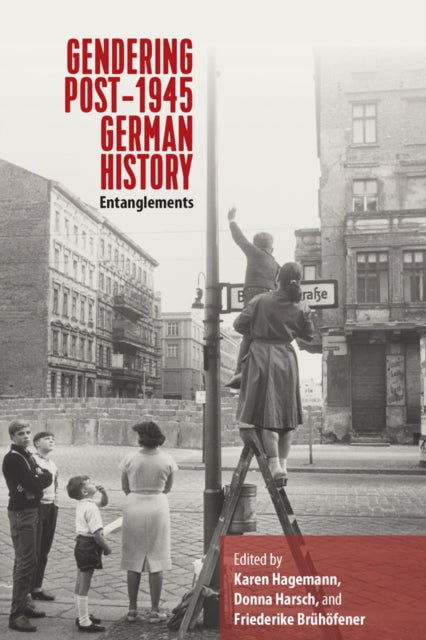
Gendering Post-1945 German History: Entanglements
Gendering Post-1945 German History: Entanglements
💎 Earn 136 Points (£1.36) on this item.
We can order this item for you. Delivery usually takes about 4 to 6 weeks.
This item is not held in our immediate stock. We will order it for you after checkout.
Estimated delivery: About 4 to 6 weeks
YOU SAVE £4.62
- Condition: Brand new
- UK Delivery times: Usually arrives within 2 - 3 working days
- UK Shipping: Fee starts at £2.39. Subject to product weight & dimension
Bulk ordering. Want 15 or more copies? Get a personalised quote and bigger discounts. Learn more about bulk orders.
Couldn't load pickup availability
- More about Gendering Post-1945 German History: Entanglements
This collection explores how East and West German gender relations were culturally, socially, and politically intertwined, synthesizing perspectives from entangled history and gender studies.
Format: Paperback / softback
Length: 408 pages
Publication date: 12 August 2022
Publisher: Berghahn Books
While the term "entanglement" has gained prominence in recent German history scholarship, studies of the postwar era have primarily focused on politics and economics across the two Germanys, with limited attention given to social and cultural phenomena such as gender. In parallel, historians of gender in Germany have often treated East and West Germany in isolation, neglecting the intersections and interrelationships between the two countries. This groundbreaking collection brings together established and emerging scholars to explore the intricate cultural, social, and political entanglements of East and West German gender relations.
The book offers a comprehensive and interdisciplinary approach, drawing on a range of disciplines including history, sociology, political science, and cultural studies. It examines how gender norms, stereotypes, and identities were shaped and transformed in both East and West Germany during the postwar period, taking into account the political, social, and economic contexts of the time. The authors analyze how gender relations intersected with other social and cultural phenomena such as class, race, and nationality, highlighting the complexities and contradictions that emerged.
One of the key themes of the book is the impact of the Cold War on gender relations in the two Germanys. The authors argue that the divide between East and West Germany created distinct gender regimes that were influenced by different political and economic systems. They explore how these regimes shaped the experiences of women and men, both within and across the two countries, and how they contributed to the development of gender inequality.
Another important aspect of the book is the role of women in the German workforce during the postwar period. The authors examine how women were recruited, promoted, and compensated in the East and West German economies, and how they faced discrimination and barriers to career advancement. They also explore how women's activism and resistance contributed to the transformation of gender relations in both countries.
The book also delves into the cultural and societal implications of gender relations in the two Germanys. The authors examine how gender norms and stereotypes were reproduced and challenged in popular culture, media, and education, and how they shaped the experiences of individuals and communities. They also explore how gender relations intersected with other social movements and ideologies, such as the feminist movement and the socialist movement.
In conclusion, this groundbreaking collection provides a valuable contribution to the field of German history and gender studies. By synthesizing the perspectives of entangled history and gender studies, the book offers a fresh and comprehensive understanding of the complex and multifaceted nature of East and West German gender relations during the postwar period. It will be of interest to scholars and students of history, sociology, political science, and cultural studies, as well as anyone interested in understanding the broader
The term "entanglement" has gained prominence in recent German history scholarship, studies of the postwar era have primarily focused on politics and economics across the two Germanys, with limited attention given to social and cultural phenomena such as gender. In parallel, historians of gender in Germany have often treated East and West Germany in isolation, neglecting the intersections and interrelationships between the two countries. This groundbreaking collection brings together established and emerging scholars to explore the intricate cultural, social, and political entanglements of East and West German gender relations.
The book offers a comprehensive and interdisciplinary approach, drawing on a range of disciplines including history, sociology, political science, and cultural studies. It examines how gender norms, stereotypes, and identities were shaped and transformed in both East and West Germany during the postwar period, taking into account the political, social, and economic contexts of the time. The authors analyze how gender relations intersected with other social and cultural phenomena such as class, race, and nationality, highlighting the complexities and contradictions that emerged.
One of the key themes of the book is the impact of the Cold War on gender relations in the two Germanys. The authors argue that the divide between East and West Germany created distinct gender regimes that were influenced by different political and economic systems. They explore how these regimes shaped the experiences of women and men, both within and across the two countries, and how they contributed to the development of gender inequality.
Another important aspect of the book is the role of women in the German workforce during the postwar period. The authors examine how women were recruited, promoted, and compensated in the East and West German economies, and how they faced discrimination and barriers to career advancement. They also explore how women's activism and resistance contributed to the transformation of gender relations in both countries.
The book also delves into the cultural and societal implications of gender relations in the two Germanys. The authors examine how gender norms and stereotypes were reproduced and challenged in popular culture, media, and education, and how they shaped the experiences of individuals and communities. They also explore how gender relations intersected with other social movements and ideologies, such as the feminist movement and the socialist movement.
In conclusion, this groundbreaking collection provides a valuable contribution to the field of German history and gender studies. By synthesizing the perspectives of entangled history and gender studies, the book offers a fresh and comprehensive understanding of the complex and multifaceted nature of East and West German gender relations during the postwar period. It will be of interest to scholars and students of history, sociology, political science, and cultural studies, as well as anyone interested in understanding the
Weight: 586g
Dimension: 152 x 228 x 24 (mm)
ISBN-13: 9781800734500
UK and International shipping information
UK and International shipping information
UK Delivery and returns information:
- Delivery within 2 - 3 days when ordering in the UK.
- Shipping fee for UK customers from £2.39. Fully tracked shipping service available.
- Returns policy: Return within 30 days of receipt for full refund.
International deliveries:
Shulph Ink now ships to Australia, Belgium, Canada, France, Germany, Ireland, Italy, India, Luxembourg Saudi Arabia, Singapore, Spain, Netherlands, New Zealand, United Arab Emirates, United States of America.
- Delivery times: within 5 - 10 days for international orders.
- Shipping fee: charges vary for overseas orders. Only tracked services are available for most international orders. Some countries have untracked shipping options.
- Customs charges: If ordering to addresses outside the United Kingdom, you may or may not incur additional customs and duties fees during local delivery.