GlennBurgess
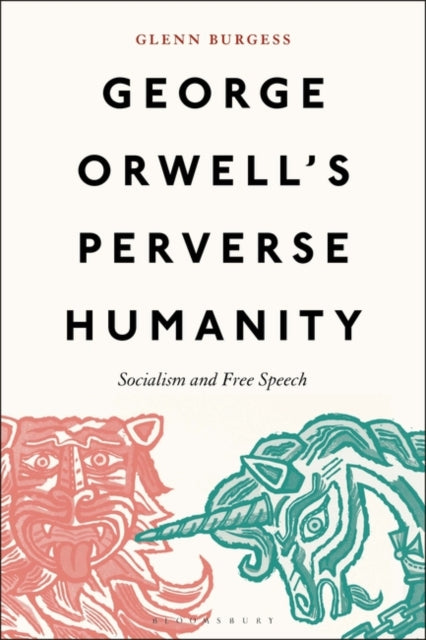
George Orwell's Perverse Humanity: Socialism and Free Speech
George Orwell's Perverse Humanity: Socialism and Free Speech
💎 Earn 94 Points (£0.94) on this item.
YOU SAVE £4.00
- Condition: Brand new
- UK Delivery times: Usually arrives within 2 - 3 working days
- UK Shipping: Fee starts at £2.39. Subject to product weight & dimension
Bulk ordering. Want 15 or more copies? Get a personalised quote and bigger discounts. Learn more about bulk orders.
Couldn't load pickup availability
- More about George Orwell's Perverse Humanity: Socialism and Free Speech
George Orwell's book "Perverse Humanity" explores his ideas about free speech, freedom of the press, writers' freedom of expression, honesty, and truthfulness, and how they are linked to his political vision of socialism. Orwell was an odd sort of socialist, conditioned by his individualist and liberal commitments, and his socialism was aimed at creating a fairer, more equal world that would permit human freedom and individuality to flourish. Freedom of thought was a central part of this, and its defense and use were essential parts of the struggle to ensure that socialism developed in a liberal, humane form.
Format: Paperback / softback
Length: 272 pages
Publication date: 04 May 2023
Publisher: Bloomsbury Publishing Plc
George Orwell's Perverse Humanity is a groundbreaking book that delves into the profound ideas of free speech and related matters, such as freedom of the press, writers' freedom of expression, honesty, and truthfulness. It explores the intricate connections between these principles and Orwell's political vision of socialism, a vision that has resonated with both the Left and the Right, as well as neo-conservatives and neo-socialists.
Orwell's socialism, as revealed by Glenn Burgess, was a unique blend of individualist and liberal commitments. His hopes for socialism were rooted in creating a fairer, more equal world that would allow human freedom and individuality to thrive, complementing rather than contradicting the work of liberalism. Freedom of thought was a central tenet of Orwell's socialism, and its defense and utilization were vital components of the struggle to ensure that socialism developed in a liberal, humane form that diverged from the totalitarian path of Soviet communism.
Written in celebration of Orwell's dictum, "We hold that the most perverse human being is more interesting than the most orthodox gramophone record," Perverse Humanity offers a fresh and captivating perspective on Orwell as a political thinker and activist. Through extensive archival research and the inclusion of new materials that affirm his active involvement in advocating for freedom, the book sheds light on a socialist ideology that has often been obscured by misconceptions and associations with totalitarian unfreedom.
In Perverse Humanity, Burgess delves into Orwell's life and work, exploring his experiences as a journalist, novelist, and political activist. He sheds light on the influences that shaped his ideas, including his upbringing in British imperialism, his encounter with the Spanish Civil War, and his growing skepticism towards authoritarianism. Burgess also examines Orwell's writings, including his famous novels such as Nineteen Eighty-Four, Animal Farm, and Down and Out in Paris and London, in order to unravel the complex web of ideas that informed his political vision.
One of the key themes that emerges from the book is the importance of individualism and freedom in the pursuit of socialism. Orwell believed that socialism could only be achieved by empowering individuals and fostering a sense of responsibility and self-determination. He opposed the notion of a centralized state that would dictate the lives of its citizens, advocating instead for a decentralized, democratic system that would allow for the expression of diverse opinions and ideas.
Orwell's socialism was also deeply rooted in his belief in honesty and truthfulness. He saw these values as essential components of a just and equitable society, and he believed that they were necessary for the development of a socialist society that could truly address the needs of its citizens. He criticized the tendency to use propaganda and misinformation to manipulate public opinion and promote authoritarianism, advocating instead for a culture of open debate and critical thinking.
Despite the enduring resonance of Orwell's ideas, his socialism has faced criticism and misunderstanding from both the Left and the Right. Some have accused him of promoting totalitarianism or advocating for a dystopian society, while others have dismissed his ideas as outdated or irrelevant. However, Burgess argues that Orwell's socialism is still relevant and valuable today, particularly in the face of growing authoritarianism and the threat to democratic values.
One of the key insights of Perverse Humanity is the way in which Orwell's socialism was shaped by his individualist and liberal commitments. He recognized the importance of preserving human freedom and individuality in the pursuit of social change, and he believed that socialism could only be achieved by empowering individuals and fostering a sense of responsibility and self-determination. This approach stood in contrast to the more centralized and top-down models of socialism that were prevalent in the 20th century, and it has continued to inspire social movements and activists around the world.
In conclusion, George Orwell's Perverse Humanity is a groundbreaking book that offers a fresh and captivating perspective on Orwell as a political thinker and activist. Through extensive archival research and the inclusion of new materials that affirm his active involvement in advocating for freedom, the book sheds light on a socialist ideology that has often been obscured by misconceptions and associations with totalitarian unfreedom. Orwell's vision of a fairer, more equal world that allows human freedom and individuality to thrive is still relevant and valuable today, particularly in the face of growing authoritarianism and the threat to democratic values. By delving into the complex web of ideas that informed his political vision, Perverse Humanity provides a valuable contribution to our understanding of Orwell and his enduring legacy.
Weight: 434g
Dimension: 152 x 229 x 24 (mm)
ISBN-13: 9781501394652
UK and International shipping information
UK and International shipping information
UK Delivery and returns information:
- Delivery within 2 - 3 days when ordering in the UK.
- Shipping fee for UK customers from £2.39. Fully tracked shipping service available.
- Returns policy: Return within 30 days of receipt for full refund.
International deliveries:
Shulph Ink now ships to Australia, Belgium, Canada, France, Germany, Ireland, Italy, India, Luxembourg Saudi Arabia, Singapore, Spain, Netherlands, New Zealand, United Arab Emirates, United States of America.
- Delivery times: within 5 - 10 days for international orders.
- Shipping fee: charges vary for overseas orders. Only tracked services are available for most international orders. Some countries have untracked shipping options.
- Customs charges: If ordering to addresses outside the United Kingdom, you may or may not incur additional customs and duties fees during local delivery.