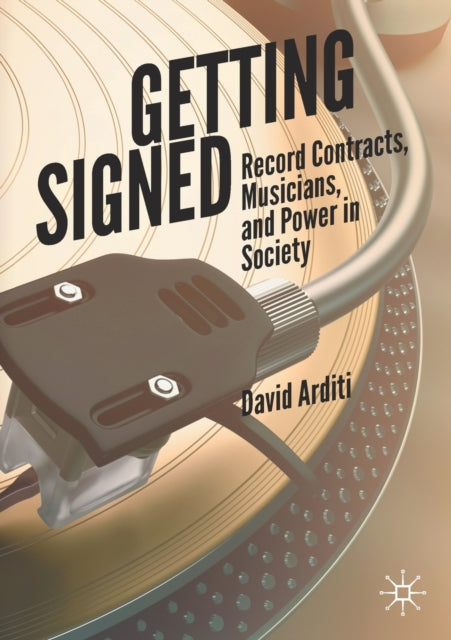
David Arditi
Getting Signed: Record Contracts, Musicians, and Power in Society
Getting Signed: Record Contracts, Musicians, and Power in Society
YOU SAVE £5.05
- Condition: Brand new
- UK Delivery times: Usually arrives within 2 - 3 working days
- UK Shipping: Fee starts at £3.89. Subject to product weight & dimension
Bulk ordering. Want 15 or more copies? Get a personalised quote and bigger discounts. Learn more about bulk orders.
Couldn't load pickup availability
- More about Getting Signed: Record Contracts, Musicians, and Power in Society
Record contracts are still important for aspiring musicians in the era of SoundCloud, as they provide a mythos of guaranteed success and reproduce modes of power and economic exploitation.
Format: Paperback / softback
Length: 256 pages
Publication date: 28 September 2020
Publisher: Springer Nature Switzerland AG
The pursuit of record contracts has long been a dream for aspiring musicians, but in the age of SoundCloud, is it still relevant? Despite the advent of streaming, social media, and viral content, the idea that signing a record contract is a sure path to success persists. In his book "Getting Signed," Arditi delves into the cultural phenomenon of musicians' contract aspirations, examining how they reproduce modes of power and economic exploitation, regardless of the route taken to secure a contract. Drawing from Marxist sociology, cultural sociology, critical theory, and media studies, Arditi unravels how the ideology of getting signed permeated the industry, created a myth of guaranteed success, and continues to endure in a digital age where power dynamics are evolving.
The record contract has long held a coveted position in the realm of aspiring musicians, symbolizing a gateway to fame and fortune. However, in the digital age, where music can be shared and discovered instantly, the relevance of record contracts has come under scrutiny. While some argue that the traditional record label model is still necessary to provide artists with the resources and support they need to succeed, others contend that the industry has been disrupted by the rise of streaming platforms and social media, rendering record contracts obsolete.
One of the primary arguments against the importance of record contracts is the rise of streaming. Streaming services such as Spotify, Apple Music, and Tidal have revolutionized the way music is consumed, allowing users to access millions of songs and albums for a monthly subscription fee. This has led to a decline in album sales, as consumers are now more likely to purchase individual songs or listen to entire albums on streaming platforms. As a result, record labels have seen their revenue streams decline, and they are now relying more on streaming royalties to sustain their operations.
However, while streaming has undoubtedly impacted the record industry, it has also created new opportunities for artists. With the ability to reach a global audience through streaming platforms, artists can build their fan base and generate revenue without the need for a record contract. Social media has also played a significant role in the rise of independent artists, as platforms such as Instagram, Twitter, and YouTube have provided artists with a platform to showcase their music and connect with fans.
Despite these advancements, the record contract and its mythos still persist in the music industry. Many musicians continue to pursue record contracts, believing that they are the only way to achieve success. They may pay to perform at record label showcases, attend auditions for reality TV shows like "The Voice" or "Idol," or even sign with independent record labels that offer limited resources and support. However, the reality is that record contracts are often exploitative, with artists often being paid pennies on the dollar for their work and having little control over their artistic output.
In "Getting Signed," Arditi delves into the cultural phenomenon of musicians' contract aspirations, examining how they reproduce modes of power and economic exploitation. He argues that the ideology of getting signed has permeated the industry, creating a myth of guaranteed success that is perpetuated by the media and the music industry itself. This myth has led to a culture of dependency, where musicians are willing to sacrifice their artistic integrity and creative freedom in exchange for the promise of a record contract.
Arditi also explores how the record contract has perpetuated inequality in the music industry. He argues that the traditional record label model is designed to benefit the industry's top artists, while leaving smaller and independent artists with limited opportunities for success. Record labels often prioritize commercial success over artistic merit, leading to a homogenization of music that prioritizes catchy hooks and mainstream appeal over innovative and experimental sounds.
Furthermore, Arditi argues that the record contract has contributed to the exploitation of musicians. He points out that record labels often take a significant percentage of artists' revenue, leaving them with little financial stability and little control over their own careers. This can lead to a cycle of debt and financial hardship, as artists are forced to work long hours and sacrifice their personal lives to pursue their dreams of success.
Despite these challenges, Arditi does not argue that record contracts are completely obsolete. He recognizes that there are still some benefits to signing a record contract, such as access to professional resources and support, and the potential for wider distribution and promotion. However, he argues that these benefits should be balanced with the rights.
In conclusion, the pursuit of record contracts has long been a dream for aspiring musicians, but in the age of SoundCloud, is it still relevant? While streaming, social media, and viral content have turned the recording industry upside down, the record contract and its mythos still persist. Arditi's book "Getting Signed" provides a critical analysis of musicians' contract aspirations as a cultural phenomenon that reproduces modes of power and economic exploitation, no matter how radical the route to contract. The book explores how the ideology of getting signed penetrated the industry, created a myth of guaranteed success, and persists in an era where power is being redefined in the light of digital technologies. While record contracts may still offer some benefits, they should be balanced with the potential risks and challenges faced by artists in the digital age. It is essential for musicians to be aware of the terms of their contracts and to seek professional advice before signing any agreements. Only then can they ensure that they are getting the best possible deal and that their artistic integrity is protected.
Weight: 346g
Dimension: 176 x 210 x 20 (mm)
ISBN-13: 9783030445867
Edition number: 1st ed. 2020
UK and International shipping information
UK and International shipping information
We deliver throughout the United Kingdom and to 128 countries and territories worldwide, including the United States, Australia, Canada, Germany, Spain and France.