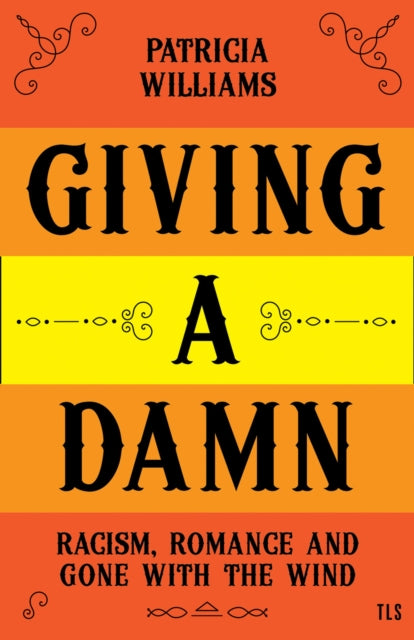
Patricia Williams
Giving A Damn: Racism, Romance and Gone with the Wind
Giving A Damn: Racism, Romance and Gone with the Wind
YOU SAVE £3.16
- Condition: Brand new
- UK Delivery times: Usually arrives within 2 - 3 working days
- UK Shipping: Fee starts at £3.89. Subject to product weight & dimension
Bulk ordering. Want 15 or more copies? Get a personalised quote and bigger discounts. Learn more about bulk orders.
Couldn't load pickup availability
- More about Giving A Damn: Racism, Romance and Gone with the Wind
The legacy of slavery continues to impact American society today, from how we speak to one another to how we treat each other and how our societies are organized. In Giving a Damn, legal scholar Patricia Williams argues that the unexamined history of enslavement in the West lies beneath current debates around immigration, freedom of speech, the culture wars, and wall-building. She traces the ability to dehumanize one another from the plantation to the US Presidents Twitter account. Williams' maternal great-grandmother was a slave, and her great-grandfather was a slave owner, leading to a world that has never been more segregated, incarcerated, or separated from each other. She wants to know which ideas brought the richest and most diverse nation on the planet to the brink of resurgent, violent division, and what this means for the rest of the world.
\n Format: Hardback
\n Length: 144 pages
\n Publication date: 29 April 2021
\n Publisher: HarperCollins Publishers
\n
The echoes of slavery continue to haunt American society, deeply ingrained in the language we use, the way we treat each other, and the very fabric of our communities. In her book, Giving a Damn, legal scholar Patricia Williams delves into the uncharted history of enslavement in the West, uncovering its profound impact on contemporary debates surrounding immigration, freedom of speech, culture wars, and wall-building.
Williams begins her exploration in the American South, where the legacy of slavery is often romanticized and sanitized. Gone with the Wind, for instance, portrays a nostalgic tale of Southern belle culture and charm, obscuring the reality of slavery at its core. However, Williams' maternal great-grandmother was a slave, and her great-grandfather a slave owner, highlighting the insidious consequences of papering over this painful history.
The result of this selective memory is a society that is more segregated, incarcerated, and divided than ever before. Williams seeks to understand the ideas that led to the brink of resurgent, violent division in the richest and most diverse nation on the planet, and she finds that slavery is at the root of many of these destructive beliefs.
One of the most insidious ideas that originated in slavery is the concept of otherness. The belief that certain groups of people are inherently inferior to others has been perpetuated throughout American history, leading to discrimination, prejudice, and violence. This idea was central to the justification of slavery and has continued to shape our understanding of race and ethnicity today.
Another key idea that emerged from slavery is the notion of boorishness. The idea that certain individuals or groups are unintelligent, uncivilized, and deserving of subjugation has been used to justify various forms of oppression and discrimination. This belief has been particularly prevalent in the treatment of Black and Indigenous people, who have been subjected to centuries of systemic racism and violence.
In addition to these ideas, slavery also gave rise
rise to the concept of inferiority. The belief that certain individuals or groups are inherently less valuable or worthy of respect has been deeply embedded in American culture, leading to a culture of exploitation and oppression. This idea has been particularly evident in the history of labor exploitation, where workers have been paid low wages, subjected to dangerous working conditions, and denied basic human rights.
The legacy of slavery continues to shape American society in profound ways. It manifests in the language we use, the way
way we treat each other, and the institutions we have created. The idea of otherness, boorishness, and inferiority has permeated every aspect of our lives, from the way we communicate to the way we engage in politics.
To address this legacy, it is essential to recognize the interconnectedness of all forms of oppression and discrimination. We must work to dismantle the systems of power that perpetuate these harmful beliefs and promote a more inclusive and equitable society. This requires a commitment to education, awareness, and action.
Education is a crucial tool in the fight against oppression and discrimination. It is essential to teach children about the history of slavery and its impact on American society. This includes teaching them about the experiences of Black and Indigenous people, who have been particularly affected by this history. It also involves teaching them about the ongoing struggles for racial justice and equality and the importance of empathy and compassion.
Awareness is another key component of the fight against oppression and discrimination. It is essential to raise awareness about the ongoing struggles of marginalized communities and the importance of solidarity. This can be done through community organizing, social media campaigns, and public speaking. It is also important to challenge harmful stereotypes and assumptions and promote a more nuanced and accurate understanding of different cultures and identities.
Finally, action is the most important component of the fight against oppression and discrimination. This requires individuals and communities to take concrete steps to promote equality and justice. This can include supporting anti-racist organizations, advocating for policy change, and participating in protests and demonstrations. It is also important to hold individuals and institutions accountable for their actions and promote a culture of transparency and accountability.
In conclusion, the legacy of slavery continues to haunt American society, deeply ingrained in the language we use, the way we treat each other, and the institutions we have created. To address this legacy, it is essential to recognize the interconnectedness of all forms of oppression and discrimination and work to dismantle the systems of power that perpetuate these harmful beliefs. This requires a commitment to education, awareness, and action. By promoting a more inclusive and equitable society, we can create a world that is free from the legacy of slavery and all forms of oppression and discrimination.
\n Weight: 222g\n
Dimension: 136 x 205 x 21 (mm)\n
ISBN-13: 9780008404505\n \n
UK and International shipping information
UK and International shipping information
We deliver throughout the United Kingdom and to 128 countries and territories worldwide, including the United States, Australia, Canada, Germany, Spain and France.