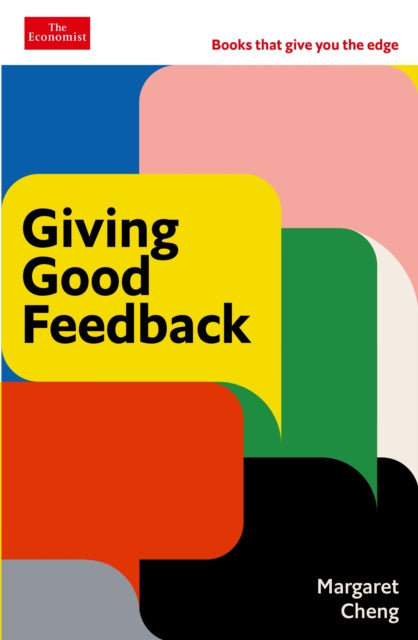
Margaret Cheng
Giving Good Feedback: Economist Edge: books that give you the edge
Giving Good Feedback: Economist Edge: books that give you the edge
💎 Earn 38 Points (£0.38) on this item.
YOU SAVE £3.21
- Condition: Brand new
- UK Delivery times: Usually arrives within 2 - 3 working days
- UK Shipping: Fee starts at £2.39. Subject to product weight & dimension
Bulk ordering. Want 15 or more copies? Get a personalised quote and bigger discounts. Learn more about bulk orders.
Couldn't load pickup availability
- More about Giving Good Feedback: Economist Edge: books that give you the edge
Feedback is essential for learning and improving, but it can be difficult to deliver effectively. Margaret Cheng's six golden rules and Giving Good Feedback Framework provide a clear guide to making feedback a more routine and less emotionally charged part of work communications.
Format: Paperback / softback
Length: 256 pages
Publication date: 05 October 2023
Publisher: Profile Books Ltd
Brilliant, as entertaining and interesting as it is practical - Graham Allcott, author of How to be a Productivity Ninja.
We are surrounded by feedback, whether we are being asked to like, rate, or otherwise comment on products, services, or even people. At work, the right kind of feedback delivered at the right time and in the right way can help us all to learn and improve. On the ground, though, that's easier said than done. Help is at hand. Margaret Cheng's six golden rules and the Giving Good Feedback Framework offer a clear guide to what feedback is, how we can master the things that get in the way, and deploy some simple techniques to make feedback a more routine - and less emotionally charged - part of our routine work communications.
Feedback is an essential part of our daily lives, whether it's from our colleagues, clients, or even our friends. It can be a powerful tool for growth and improvement, but it can also be a source of stress and anxiety. In this article, we'll explore the different types of feedback, how to give and receive feedback effectively, and the benefits of feedback for both individuals and organizations.
Types of Feedback:
There are several different types of feedback, each with its own purpose and benefits. Here are some of the most common types:
Performance Feedback: This type of feedback is given to an individual or team to assess their performance against a set of criteria or goals. It can be used to identify areas for improvement, provide recognition for good work, and set future performance expectations.
Coaching Feedback: Coaching feedback is given to an individual to help them develop their skills and abilities. It is typically focused on specific behaviors or actions that the individual needs to change or improve. Coaching feedback can be delivered in a one-on-one setting or in a group setting.
Peer Feedback: Peer feedback is given by colleagues or peers to an individual or team. It can be used to provide constructive criticism, identify areas for improvement, and build trust and collaboration within a team.
Self-Feedback: Self-feedback is given by an individual to assess their own performance or behavior. It can be used to identify areas for improvement, set personal goals, and track progress over time.
Giving and Receiving Feedback Effectively:
Giving feedback effectively requires a combination of empathy, openness, and specificity. Here are some tips for giving effective feedback:
Be Clear and Concise: When giving feedback, be clear and concise about what you are observing and what you are asking the individual to change or improve. Avoid using vague or ambiguous language, and focus on the specific behavior or action that needs to be addressed.
Use "I" Statements: When giving feedback, use "I" statements to avoid placing blame or making assumptions. Instead of saying, "You're not doing a good job," say, "I noticed that you are not meeting the expectations that we have for this project. Can you tell me what's going on?"
Be Respectful: When giving feedback, be respectful and considerate of the individual's feelings and perspectives. Avoid being critical or judgmental, and focus on the behavior or action that needs to be addressed rather than the individual themselves.
Provide Constructive Criticism: When providing constructive criticism, focus on the behavior or action that needs to be changed rather than the individual's personality or character. Use specific examples to illustrate the problem and offer suggestions for improvement.
Be Open to Feedback: Be open to feedback yourself and be willing to learn from your mistakes and improve your own performance. Feedback can be a valuable tool for self-improvement, and it can also help you build stronger relationships with others.
Receiving Feedback Effectively:
Receiving feedback effectively requires a combination of humility, openness, and a willingness to learn. Here are some tips for receiving effective feedback:
Listen Carefully: When receiving feedback, listen carefully to what the person is saying. Avoid interrupting or defending yourself, and focus on understanding their perspective.
Thank the Person for Their Feedback: Thank the person for their feedback, even if it's negative. This shows that you value their input and are willing to learn from it.
Ask Questions: Ask questions to clarify the feedback and understand the person's perspective. This can help you identify areas for improvement and develop a plan for action.
Take Action: Take action to address the areas for improvement identified by the feedback. This may involve changing your behavior, developing new skills, or seeking additional support or resources.
Conclusion:
Feedback is an essential part of our daily lives, and it can be a powerful tool for growth and improvement. By giving and receiving feedback effectively, we can build stronger relationships, improve our performance, and achieve our goals. However, it's important to approach feedback with empathy, openness, and a willingness to learn. By following these tips, we can make feedback a routine and less emotionally charged part of our work communications.
Weight: 206g
Dimension: 129 x 198 x 18 (mm)
ISBN-13: 9781800815285
Edition number: Main
UK and International shipping information
UK and International shipping information
UK Delivery and returns information:
- Delivery within 2 - 3 days when ordering in the UK.
- Shipping fee for UK customers from £2.39. Fully tracked shipping service available.
- Returns policy: Return within 30 days of receipt for full refund.
International deliveries:
Shulph Ink now ships to Australia, Belgium, Canada, France, Germany, Ireland, Italy, India, Luxembourg Saudi Arabia, Singapore, Spain, Netherlands, New Zealand, United Arab Emirates, United States of America.
- Delivery times: within 5 - 10 days for international orders.
- Shipping fee: charges vary for overseas orders. Only tracked services are available for most international orders. Some countries have untracked shipping options.
- Customs charges: If ordering to addresses outside the United Kingdom, you may or may not incur additional customs and duties fees during local delivery.