Shulph Ink
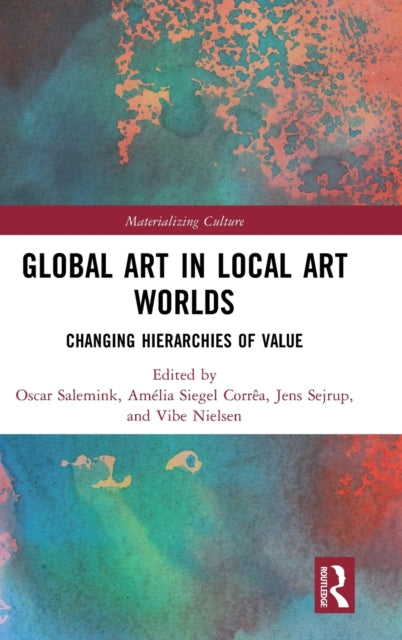
Global Art in Local Art Worlds: Changing Hierarchies of Value
Global Art in Local Art Worlds: Changing Hierarchies of Value
💎 Earn 689 Points (£6.89) on this item.
We can order this item for you. Delivery usually takes about 4 to 6 weeks.
This item is not held in our immediate stock. We will order it for you after checkout.
Estimated delivery: About 4 to 6 weeks
YOU SAVE £8.18
- Condition: Brand new
- UK Delivery times: Usually arrives within 2 - 3 working days
- UK Shipping: Fee starts at £2.39. Subject to product weight & dimension
Bulk ordering. Want 15 or more copies? Get a personalised quote and bigger discounts. Learn more about bulk orders.
Couldn't load pickup availability
- More about Global Art in Local Art Worlds: Changing Hierarchies of Value
This book explores how cultural valuations of artistic and art-institutional practices are attributed and negotiated locally, considering the intersections with claims of universality and cosmopolitanism. It brings together six empirical studies of object collection, circulation, classification, and exhibition in Brazil, China, India, Japan, South Africa, and Indigenous Australia, in light of Europe's loss of global hegemony.
Format: Hardback
Length: 304 pages
Publication date: 30 March 2023
Publisher: Taylor & Francis Ltd
This comprehensive book delves into the intricate dynamics of attributing and negotiating cultural values surrounding artistic and art-institutional practices across the globe. It examines the multifaceted ways in which these value assessments intersect with assertions of universality and cosmopolitanism. Drawing upon Michael Herzfeld's concept of the "global hierarchy of value," the volume presents six empirical studies that explore the collection, circulation, classification, and exhibition of objects in contemporary Brazil, China, India, Japan, South Africa, and Indigenous Australia, in the context of Europe's declining global dominance. Contributions from esteemed scholars shed light on the central role of valuation in artistic and art-institutional practices, encompassing a wide range of entities such as museums, museum architecture, galleries, auction houses, art fairs, and biennales.
The book begins by establishing a framework for understanding the complex interplay between cultural values and artistic practices. It highlights the diverse ways in which these values are shaped by historical, social, economic, and political factors, as well as by the specific contexts in which artistic endeavors are produced and consumed. The chapters that follow provide a rich tapestry of insights, drawing from a range of disciplines and methodologies.
In Brazil, for instance, the study explores the ways in which the country's vibrant art scene is shaped by the interplay between local traditions and global influences. It examines the role of museums and art galleries in promoting and preserving Brazilian art, as well as the challenges and opportunities they face in a rapidly changing cultural landscape. The chapter also explores the impact of cultural policies and initiatives on the valuation of Brazilian art and the ways in which artists and institutions navigate these policies to assert their cultural identities.
Similarly, in China, the book examines the complex dynamics of art market development and the role of government policies in shaping the valuation of Chinese art. It explores the rise of contemporary art in China and the ways in which it has challenged traditional notions of art and culture. The chapter also examines the challenges faced by artists and collectors in navigating the complex regulatory environment and the ways in which they seek to establish their own spaces for artistic expression and exchange.
In India, the book explores the role of art institutions in promoting cultural heritage and social change. It examines the ways in which art exhibitions and festivals have become platforms for showcasing Indian art and culture, as well as the challenges and opportunities they face in a rapidly evolving cultural landscape. The chapter also explores the impact of globalization on Indian art and the ways in which artists and institutions are responding to these changes.
In Japan, the book examines the ways in which art institutions and collectors are responding to the changing landscape of the art market. It explores the rise of new art forms and the challenges and opportunities they present for artists and collectors. The chapter also examines the role of museums and art galleries in promoting Japanese art and culture, as well as the ways in which they are adapting to the changing demands of their audiences.
In South Africa, the book explores the role of art institutions in promoting social justice and cultural diversity. It examines the ways in which art exhibitions and festivals have become platforms for addressing issues of race, gender, and social inequality. The chapter also explores the impact of colonialism and apartheid on South African art and the ways in which artists and institutions are working to reclaim and reimagine their cultural heritage.
In Indigenous Australia, the book explores the ways in which art institutions and artists are working to preserve and promote Indigenous culture and heritage. It examines the challenges and opportunities they face in a rapidly changing cultural landscape, as well as the ways in which they are seeking to establish their own spaces for artistic expression and cultural exchange.
Throughout the book, the authors draw upon a wealth of empirical evidence and theoretical frameworks to shed light on the complex processes of valuation and negotiation. They argue that the question of valuation lies at the heart of artistic and art-institutional practices writ large, and that understanding these processes is essential for promoting cultural diversity, social justice, and artistic innovation.
In conclusion, this comprehensive book provides a valuable contribution to the field of cultural studies and art history. It offers a nuanced and insightful analysis of the ways in which cultural values are attributed and negotiated around the world, and it demonstrates the ways in which these processes intersect with claims of universality and cosmopolitanism. By exploring the diverse practices and contexts in which artistic and art-institutional practices are situated, the book offers a rich understanding of the complex dynamics that shape our cultural landscape.
Weight: 606g
Dimension: 241 x 164 x 27 (mm)
ISBN-13: 9780367653279
UK and International shipping information
UK and International shipping information
UK Delivery and returns information:
- Delivery within 2 - 3 days when ordering in the UK.
- Shipping fee for UK customers from £2.39. Fully tracked shipping service available.
- Returns policy: Return within 30 days of receipt for full refund.
International deliveries:
Shulph Ink now ships to Australia, Belgium, Canada, France, Germany, Ireland, Italy, India, Luxembourg Saudi Arabia, Singapore, Spain, Netherlands, New Zealand, United Arab Emirates, United States of America.
- Delivery times: within 5 - 10 days for international orders.
- Shipping fee: charges vary for overseas orders. Only tracked services are available for most international orders. Some countries have untracked shipping options.
- Customs charges: If ordering to addresses outside the United Kingdom, you may or may not incur additional customs and duties fees during local delivery.