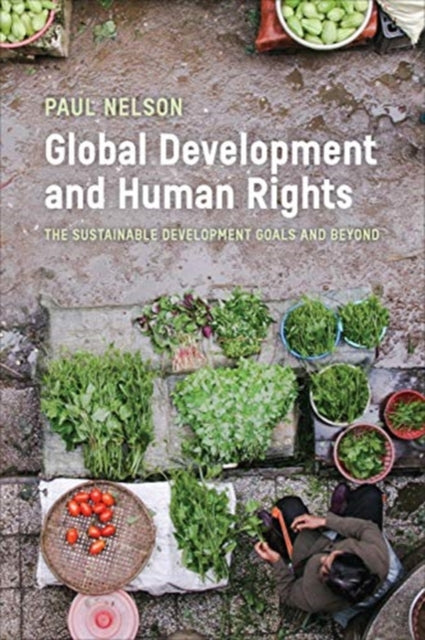
Paul Nelson
Global Development and Human Rights: The Sustainable Development Goals and Beyond
Global Development and Human Rights: The Sustainable Development Goals and Beyond
💎 Earn 84 Points (£0.84) on this item.
YOU SAVE £2.04
- Condition: Brand new
- UK Delivery times: Usually arrives within 2 - 3 working days
- UK Shipping: Fee starts at £2.39. Subject to product weight & dimension
Bulk ordering. Want 15 or more copies? Get a personalised quote and bigger discounts. Learn more about bulk orders.
Couldn't load pickup availability
- More about Global Development and Human Rights: The Sustainable Development Goals and Beyond
The Millennium Development Goals (MDGs) failed to meet the challenges associated with human rights initiatives, weakening their reputation as a successful aid organization. The Sustainable Development Goals (SDGs) were formed in 2016 to address these issues, with the intention of managing the issues fundamentally ignored by the MDGs. Nelson argues that transformative change arises from national and local movements and that human rights can offer leverage and political support to drive transformative national initiatives.
\n Format: Paperback / softback
\n Length: 256 pages
\n Publication date: 22 June 2021
\n Publisher: University of Toronto Press
\n
The Millennium Development Goals (MDGs) aimed to mobilize external aid to finance life-changing services in the global South from 2000 to 2015. However, the organization faced challenges in meeting the goals of making underprivileged communities prosperous, equitable, and sustainable. In his book, Global Development and Human Rights, Paul Nelson examines the current thirty-year effort to make transformative changes in the global South by exploring how this disconnect from human rights weakened the MDGs' reputation as a successful aid organization. To address the shortcomings of the MDGs, the Sustainable Development Goals (SDGs) were formed in 2016 with the intention of managing the issues fundamentally ignored by the MDGs. Nelson argues that transformative change arises from national and local movements and demonstrates how human rights can offer leverage and political support to drive transformative national initiatives.
The MDGs failed to address the fundamental issues of inequality, poverty, and human rights in the global South. They focused solely on economic growth and development, neglecting the rights and needs of marginalized communities. This disconnect from human rights weakened the MDGs' reputation as a successful aid organization, as it was seen as prioritizing short-term gains over long-term sustainability and human well-being.
To overcome these failings, the SDGs were formed with a more holistic approach that recognized the interconnectedness of economic, social, and environmental development. The SDGs aimed to address the root causes of poverty and inequality, including promoting gender equality, protecting human rights, and addressing climate change.
One of the key strengths of the SDGs is their recognition of the role of local and national movements in driving transformative change. Nelson argues that national and local movements are the drivers of sustainable development and that human rights can offer leverage and political support to these movements. By promoting human rights, organizations can help to ensure that the voices and needs of marginalized communities are heard and addressed in development initiatives.
Furthermore, human rights can provide a framework for measuring progress and accountability in development efforts. By incorporating human rights indicators into development goals and monitoring progress towards achieving them, organizations can ensure that they are making a positive impact on the lives of marginalized communities.
In conclusion, the MDGs failed to meet the challenges associated with human rights initiatives in the global South. The SDGs, on the other hand, recognize the importance of human rights and the role of local and national movements in driving transformative change. By promoting human rights and incorporating them into development goals, organizations can help to ensure that underprivileged communities are independently prosperous, equitable, and sustainable.
\n Weight: 402g\n
Dimension: 152 x 229 x 19 (mm)\n
ISBN-13: 9781487521257\n \n
This item can be found in:
UK and International shipping information
UK and International shipping information
UK Delivery and returns information:
- Delivery within 2 - 3 days when ordering in the UK.
- Shipping fee for UK customers from £2.39. Fully tracked shipping service available.
- Returns policy: Return within 30 days of receipt for full refund.
International deliveries:
Shulph Ink now ships to Australia, Belgium, Canada, France, Germany, Ireland, Italy, India, Luxembourg Saudi Arabia, Singapore, Spain, Netherlands, New Zealand, United Arab Emirates, United States of America.
- Delivery times: within 5 - 10 days for international orders.
- Shipping fee: charges vary for overseas orders. Only tracked services are available for most international orders. Some countries have untracked shipping options.
- Customs charges: If ordering to addresses outside the United Kingdom, you may or may not incur additional customs and duties fees during local delivery.