Shulph Ink
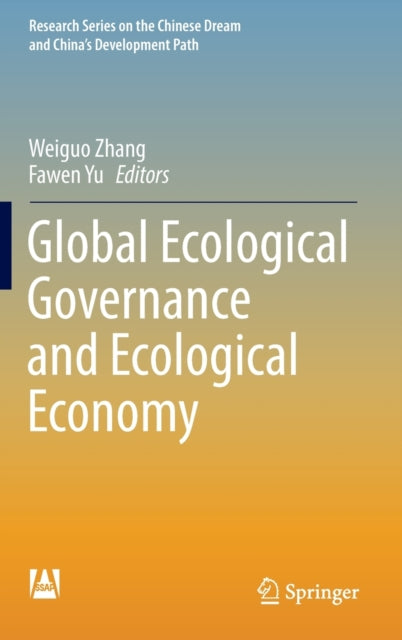
Global Ecological Governance and Ecological Economy
Global Ecological Governance and Ecological Economy
💎 Earn 536 Points (£5.36) on this item.
We can order this item for you. Delivery usually takes about 4 to 6 weeks.
This item is not held in our immediate stock. We will order it for you after checkout.
Estimated delivery: About 4 to 6 weeks
YOU SAVE £22.62
- Condition: Brand new
- UK Delivery times: Usually arrives within 2 - 3 working days
- UK Shipping: Fee starts at £2.39. Subject to product weight & dimension
Bulk ordering. Want 15 or more copies? Get a personalised quote and bigger discounts. Learn more about bulk orders.
Couldn't load pickup availability
- More about Global Ecological Governance and Ecological Economy
This book explores ecological economics in the context of global ecological governance, covering topics such as ecological footprint, energy saving, emission reduction, circular economy, green development, sustainable development, ecological civilization, and rural ecological governance. It is contributed by scholars attending the high-level forum hosted by the Chinese Ecological Economics Society, offering insights into cutting-edge concepts in the field.
Format: Hardback
Length: 212 pages
Publication date: 31 May 2022
Publisher: Springer Verlag, Singapore
This comprehensive book delves into the realm of ecological economics, exploring its applications within the framework of global ecological governance. It encompasses a wide range of topics, including ecological footprint analysis, energy conservation and emission reduction strategies, circular economy principles, green development initiatives, sustainable development practices, ecological civilization, and the ecological governance of rural areas. Additionally, it includes some theoretical studies related to efficient ecological economics. The book is a collaborative effort by scholars who participated in a high-level forum organized by the Chinese Ecological Economics Society (CEES), the world's first ecological economics society. This forum brought together leading experts in the field, fostering innovative concepts and advancements in ecological economics. The book offers valuable insights for scholars interested in exploring the intersection of global ecological governance and ecological economic studies, providing a comprehensive understanding of the challenges and opportunities in this critical domain.
Ecological economics is a branch of economics that focuses on the relationship between human economic activities and the environment. It examines the impact of human consumption and production on the natural world, including the depletion of resources, pollution, and climate change. Ecological economics aims to promote sustainable development by finding ways to balance economic growth with environmental protection.
One of the key concepts in ecological economics is the ecological footprint. This measure assesses the impact of a person or organization on the environment by calculating the amount of land, water, and energy required to support their activities. By understanding their ecological footprint, individuals and organizations can identify areas where they can reduce their environmental impact and promote sustainable practices.
Energy conservation and emission reduction are also important components of ecological economics. By reducing energy consumption and switching to renewable energy sources, individuals and organizations can reduce their carbon footprint and contribute to the fight against climate change. This can be achieved through measures such as energy-efficient lighting, insulation, and renewable energy technologies.
Circular economy principles are another important aspect of ecological economics. In a circular economy, resources are reused, recycled, and regenerated to minimize waste and minimize the depletion of natural resources. This can be achieved through practices such as product design, waste management, and recycling.
Green development initiatives are also a key component of ecological economics. These initiatives aim to promote sustainable economic growth by investing in environmentally friendly technologies and practices. This can include investments in renewable energy, sustainable agriculture, and urban planning.
Sustainable development practices are essential for achieving a balance between economic growth and environmental protection. These practices include the use of renewable energy sources, the conservation of natural resources, and the reduction of waste and pollution. By implementing sustainable development practices, individuals and organizations can contribute to the long-term health of the environment and promote sustainable economic growth.
Ecological civilization is a concept that emphasizes the need for a sustainable and harmonious relationship between humans and the environment. It recognizes that human society is dependent on the natural world for its survival and that we must live in harmony with the environment to ensure a sustainable future.
Ecological governance is a concept that emphasizes the need for effective governance and management of natural resources to ensure their sustainable use and protection. It involves the participation of stakeholders, including governments, businesses, and communities, in decision-making processes related to natural resource management.
Ecological economics plays a crucial role in promoting sustainable development and ecological governance. By examining the economic drivers of environmental degradation and the social and economic benefits of sustainable practices, ecological economics provides policymakers and decision-makers with the tools they need to make informed decisions that promote environmental protection and sustainable development.
In conclusion, ecological economics is a branch of economics that focuses on the relationship between human economic activities and the environment. It examines the impact of human consumption and production on the natural world and aims to promote sustainable development by finding ways to balance economic growth with environmental protection. Through the use of concepts such as the ecological footprint, energy conservation and emission reduction, circular economy principles, green development initiatives, sustainable development practices, ecological civilization, and ecological governance, ecological economics provides policymakers and decision-makers with the tools they need to make informed decisions that promote environmental protection and sustainable development.
Weight: 506g
Dimension: 235 x 155 (mm)
ISBN-13: 9789811670244
Edition number: 1st ed. 2022
This item can be found in:
UK and International shipping information
UK and International shipping information
UK Delivery and returns information:
- Delivery within 2 - 3 days when ordering in the UK.
- Shipping fee for UK customers from £2.39. Fully tracked shipping service available.
- Returns policy: Return within 30 days of receipt for full refund.
International deliveries:
Shulph Ink now ships to Australia, Belgium, Canada, France, Germany, Ireland, Italy, India, Luxembourg Saudi Arabia, Singapore, Spain, Netherlands, New Zealand, United Arab Emirates, United States of America.
- Delivery times: within 5 - 10 days for international orders.
- Shipping fee: charges vary for overseas orders. Only tracked services are available for most international orders. Some countries have untracked shipping options.
- Customs charges: If ordering to addresses outside the United Kingdom, you may or may not incur additional customs and duties fees during local delivery.