Kent E. Calder
Global Political Cities: Actors and Arenas of Influence in International Affairs
Global Political Cities: Actors and Arenas of Influence in International Affairs
💎 Earn 159 Points (£1.59) on this item.
We can order this item for you. Delivery usually takes about 4 to 6 weeks.
This item is not held in our immediate stock. We will order it for you after checkout.
Estimated delivery: About 4 to 6 weeks
YOU SAVE £4.14
- Condition: Brand new
- UK Delivery times: Usually arrives within 2 - 3 working days
- UK Shipping: Fee starts at £2.39. Subject to product weight & dimension
Bulk ordering. Want 15 or more copies? Get a personalised quote and bigger discounts. Learn more about bulk orders.
Couldn't load pickup availability
- More about Global Political Cities: Actors and Arenas of Influence in International Affairs
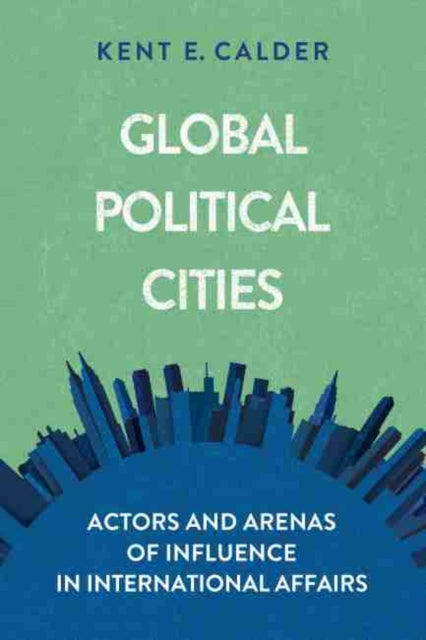
Global Political Cities explains why cities are better equipped than nations to cope with today's rapid changes, focusing on fifteen major cities across Europe, Asia, and the United States. It highlights the achievements of mayors, think tanks, mass media, and other global agenda setters and shows how these cities serve as the global stage for grassroots appeals and protests of international significance.
Format: Paperback / softback
Length: 286 pages
Publication date: 31 December 2020
Publisher: Brookings Institution
Cities have historically played a significant role in global politics, but their importance has grown even more in the post-cold war world. While many national governments struggle to meet the needs of their citizens, global cities such as London, New York, Tokyo, and Beijing are thriving. These cities are re-asserting their historic role at the forefront of international economic and political life, and they are playing a crucial role in shaping the future of the world.
One of the key factors that make cities so successful in today's world is their ability to adapt quickly to changing circumstances. Global Political Cities, a book by authors David Runciman and John Lloyd, explores why cities are better equipped to cope with today's lightning-fast changes than nations. The book focuses on fifteen major cities across Europe, Asia, and the United States, including New York, London, Tokyo, Brussels, Seoul, Geneva, and Hong Kong, as well as Beijing and Washington, D.C.
The authors argue that cities are better equipped to cope with global problems because they are more diverse, interconnected, and responsive than nations. Cities are home to a wide range of people from different backgrounds and cultures, and they are connected by a complex network of infrastructure, including transportation, communication, and financial systems. This diversity and connectivity allow cities to respond quickly to changing conditions, whether it's a natural disaster, a political crisis, or a technological innovation.
One of the key challenges that cities face in the post-cold war world is the rise of globalization. Globalization has led to the growth of international trade, investment, and migration, which has brought both opportunities and challenges to cities. While globalization has created new jobs and opportunities for people, it has also led to increased inequality, poverty, and environmental degradation. Cities are working to address these challenges by implementing policies that promote economic growth, social inclusion, and environmental sustainability.
Another factor that makes cities successful in today's world is their ability to attract and retain talent. Cities are home to a large number of universities, research institutions, and technology companies, which attract skilled workers from around the world. This talent pool allows cities to develop innovative solutions to global problems and to compete in the global marketplace.
Cities also play a crucial role in shaping public opinion and political discourse. Global Political Cities shows how think tanks, mass media, and other global agenda setters influence local urban political settings. These global agenda setters can shape public opinion by promoting their own policies and by influencing the media. This influence can be both positive and negative, and it can have a significant impact on the way that cities are governed.
In addition to their economic and political importance, cities are also important cultural centers. Cities are home to a wide range of cultural institutions, including museums, theaters, and music venues, which attract tourists from around the world. These cultural institutions can help to promote cultural diversity and to create a sense of community.
However, cities also face a number of challenges in the post-cold war world. One of the biggest challenges is the impact of climate change. Climate change is causing rising sea levels, more frequent extreme weather events, and other environmental problems. Cities are working to address these challenges by implementing policies that promote energy efficiency, renewable energy, and sustainable transportation.
Another challenge that cities face is the impact of urbanization. Urbanization is causing the growth of cities, which is leading to increased congestion, pollution, and social inequality. Cities are working to address these challenges by implementing policies that promote urban planning, affordable housing, and social inclusion.
Despite these challenges, cities are still thriving in the post-cold war world. Cities are home to a large number of people from different backgrounds and cultures, and they are connected by a complex network of infrastructure. This diversity and connectivity allow cities to respond quickly to changing conditions, and to compete in the global marketplace.
In conclusion, cities have historically played a significant role in global politics, but their importance has grown even more in the post-cold war world. Global Political Cities shows why cities are better equipped to cope with today's lightning-fast changes than nations. The book offers important insights for students of both international and comparative political economy, diplomats and other government officials, executives of businesses with global reach, and general readers interested in how the world is changing around them. By implementing policies that promote economic growth, social inclusion, and environmental sustainability, cities can help to transform both nations and the broader world in future.
Weight: 436g
Dimension: 153 x 229 x 23 (mm)
ISBN-13: 9780815739074
UK and International shipping information
UK and International shipping information
UK Delivery and returns information:
- Delivery within 2 - 3 days when ordering in the UK.
- Shipping fee for UK customers from £2.39. Fully tracked shipping service available.
- Returns policy: Return within 30 days of receipt for full refund.
International deliveries:
Shulph Ink now ships to Australia, Belgium, Canada, France, Germany, Ireland, Italy, India, Luxembourg Saudi Arabia, Singapore, Spain, Netherlands, New Zealand, United Arab Emirates, United States of America.
- Delivery times: within 5 - 10 days for international orders.
- Shipping fee: charges vary for overseas orders. Only tracked services are available for most international orders. Some countries have untracked shipping options.
- Customs charges: If ordering to addresses outside the United Kingdom, you may or may not incur additional customs and duties fees during local delivery.