Shulph Ink
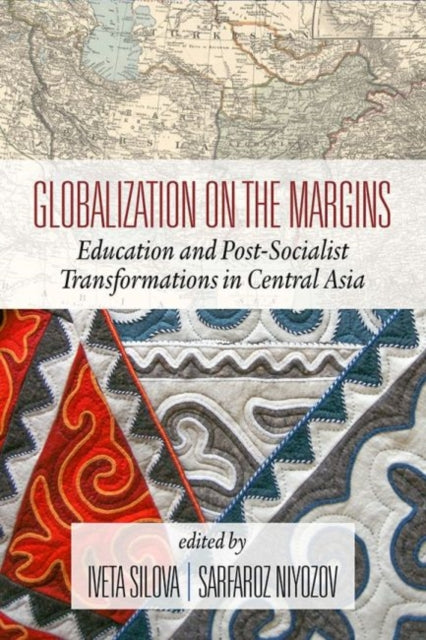
Globalization on the Margins: Education and Post-Socialist Transformations in Central Asia
Globalization on the Margins: Education and Post-Socialist Transformations in Central Asia
💎 Earn 455 Points (£4.55) on this item.
YOU SAVE £11.84
- Condition: Brand new
- UK Delivery times: Usually arrives within 2 - 3 working days
- UK Shipping: Fee starts at £2.39. Subject to product weight & dimension
Bulk ordering. Want 15 or more copies? Get a personalised quote and bigger discounts. Learn more about bulk orders.
Couldn't load pickup availability
- More about Globalization on the Margins: Education and Post-Socialist Transformations in Central Asia
Globalization on the Margins explores Central Asian education development since the Soviet Union's dissolution in 1991, focusing on the interaction between Soviet legacies and global education reform pressures. The second edition includes four thematic sections that update our understanding of recent developments and challenges in education in Kazakhstan, Kyrgyzstan, Tajikistan, Turkmenistan, and Uzbekistan. The essays reveal the complexity and uncertainty of the post-socialist education transformations, providing new lenses to critically example education as a contested field of diverse perspectives, competing forces, and multidirectional flow of ideas, concepts, and reforms.
Format: Hardback
Length: 602 pages
Publication date: 30 January 2020
Publisher: Information Age Publishing
Globalization on the Margins: Reflecting on Postsocialist Transformations in Central Asian Education Development
Since the dissolution of the Soviet Union in 1991, Central Asian education development has undergone significant changes and continuities. In the second edition of this book, the authors explore these transformations within the global context, focusing on the interaction between Soviet legacies and global education reform pressures in Kazakhstan, Kyrgyzstan, Tajikistan, Turkmenistan, and Uzbekistan. The book consists of four thematic sections, each reflecting a key theme in the educational life of the Central Asian states. These sections update our understanding of recent developments and challenges in education, but they also go beyond mere information update to complicate, re-engage, re-form, and re-define the margins. The essays reveal the complexity and uncertainty of the post-socialist education transformations, portraying the transition process as a contested field of diverse perspectives, competing forces, and multidirectional flow of ideas, concepts, and reforms.
The book brings together a diverse range of local and international authors, with various theoretical perspectives, methodological approaches, and conceptual lenses. It challenges the notion of the transition process as the influx of Western ideas into the region and provides new lenses to critically examine education as a contested field of diverse perspectives, competing forces, and multidirectional flow of ideas, concepts, and reforms in Central Asia.
The first section, "The Legacy of the Soviet Union," explores the impact of Soviet education policies and practices on Central Asian education development. It highlights the legacy of centralized control, uniformity, and the emphasis on Russian language and culture. The authors argue that these policies have had a lasting impact on the region's education system, and that the transition to a more democratic and decentralized education system has been challenging.
The second section, "Globalization and Education Reform Pressures," examines the impact of global education reform pressures on Central Asian education development. It highlights the increasing influence of international organizations, such as the World Bank and the United Nations, on education policies and practices in the region. The authors argue that these pressures have led to the adoption of neoliberal policies, which have resulted in the privatization of education, the reduction of public funding, and the marginalization of certain groups, such as women and minorities.
The third section, "Education and Social Transformation," explores the role of education in social transformation in Central Asia. It highlights the importance of education in promoting social inclusion, economic development, and political stability. The authors argue that education has played a critical role in the region's transition from a socialist to a market-based economy, but that it has also contributed to social inequality and exclusion.
The fourth section, "Margins and Contested Spaces," examines the margins and contested spaces in Central Asian education development. It highlights the marginalization of certain groups, such as women, minorities, and rural communities, and the challenges they face in accessing education. The authors argue that these marginalized groups have been excluded from the benefits of education and that this has contributed to social and economic inequality.
The book concludes by highlighting the need for a more inclusive and equitable education system in Central Asia. It calls for the adoption of policies that promote social inclusion, economic development, and political stability, and that address the marginalization of certain groups. The authors argue that this can be achieved through a combination of government policies, international cooperation, and community engagement.
In conclusion, Globalization on the Margins: Reflecting on Postsocialist Transformations in Central Asian Education Development is a valuable resource for anyone interested in the education development in Central Asia. It provides new lenses to critically examine education as a contested field of diverse perspectives, competing forces, and multidirectional flow of ideas, concepts, and reforms. The book brings together a diverse range of local and international authors, with various theoretical perspectives, methodological approaches, and conceptual lenses, and it challenges the notion of the transition process as the influx of Western ideas into the region. The book concludes by highlighting the need for a more inclusive and equitable education system in Central Asia and calls for the adoption of policies that promote social inclusion, economic development, and political stability.
Weight: 1090g
Dimension: 166 x 243 x 35 (mm)
ISBN-13: 9781641138833
Edition number: 2 Revised edition
UK and International shipping information
UK and International shipping information
UK Delivery and returns information:
- Delivery within 2 - 3 days when ordering in the UK.
- Shipping fee for UK customers from £2.39. Fully tracked shipping service available.
- Returns policy: Return within 30 days of receipt for full refund.
International deliveries:
Shulph Ink now ships to Australia, Belgium, Canada, France, Germany, Ireland, Italy, India, Luxembourg Saudi Arabia, Singapore, Spain, Netherlands, New Zealand, United Arab Emirates, United States of America.
- Delivery times: within 5 - 10 days for international orders.
- Shipping fee: charges vary for overseas orders. Only tracked services are available for most international orders. Some countries have untracked shipping options.
- Customs charges: If ordering to addresses outside the United Kingdom, you may or may not incur additional customs and duties fees during local delivery.